What Is Clean Eating? A Beginner’s Guide
6 days ago
6 minute read.
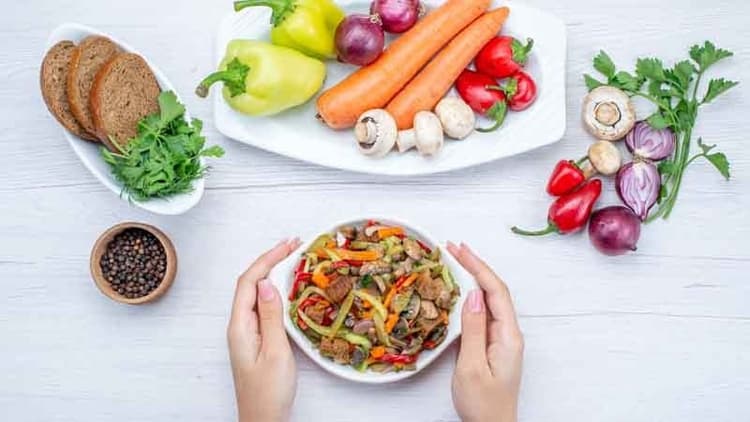
Have you ever heard someone say they’ve started “clean eating” and wondered what that really means? Is it just another diet trend? Is it about eating salad all the time? Not exactly.
Clean eating is not a strict diet. It’s not about counting every calorie or giving up your favorite foods forever. Clean eating is a simple way of choosing real, wholesome foods that nourish your body and help you feel your best.
In this guide, we’ll explain clean eating in simple words, explore its benefits, and show you how to start step by step - even if you’re a total beginner.
Also Read: How To Build A Balanced Plate?(No Dieting Needed)
What Is Clean Eating, Really?
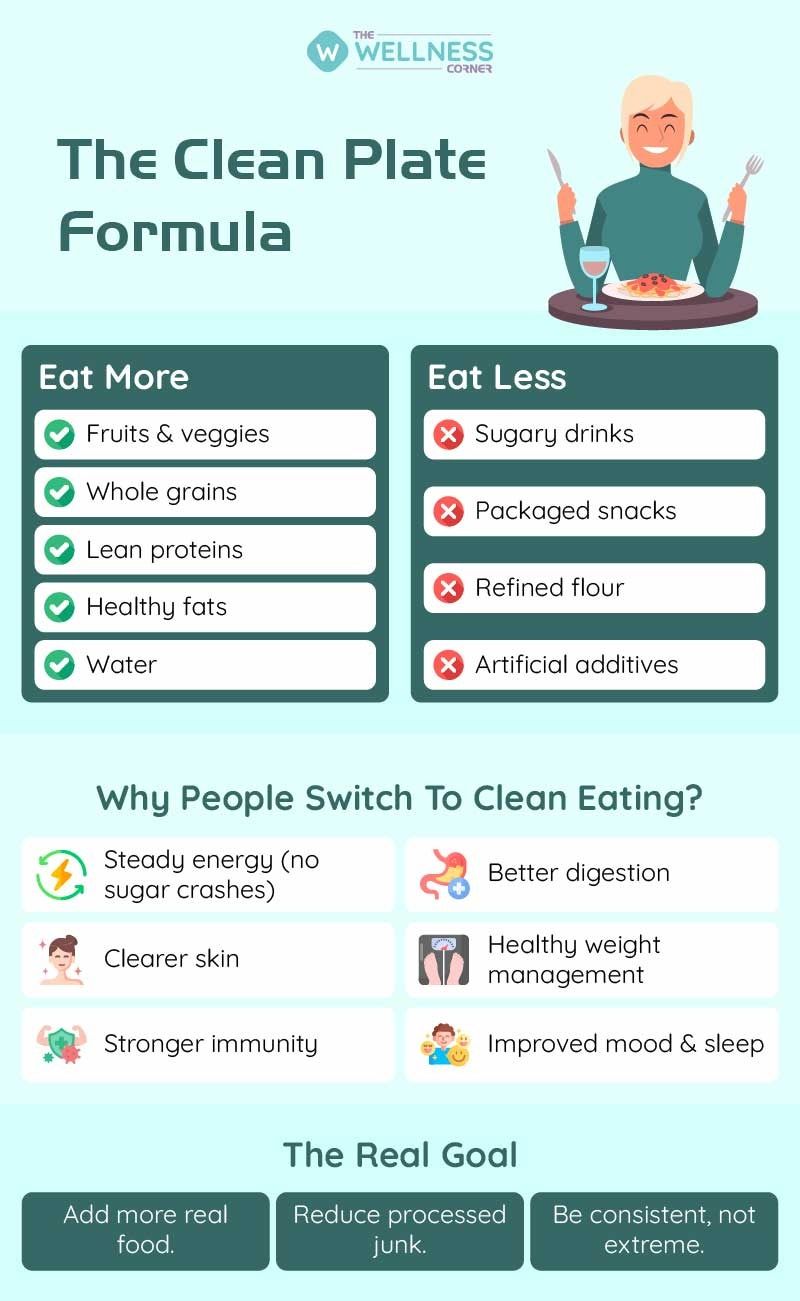
At its core, clean eating includes eating things as close to their natural state as possible.
That means:
- Eating fresh fruits and vegetables
- Choosing whole grains instead of refined ones
- Picking lean proteins and healthy fats
- Cutting back on processed and packaged foods
- Avoiding added sugars, artificial flavors, and preservatives
Clean eating is not about being perfect. It’s about being aware of what you're putting into your body and making better choices most of the time.
Think of it this way: If it grew in the ground, walked, swam, or flew, and hasn’t been changed much since, it’s probably a clean food.
Why Should You Try Clean Eating?
Clean eating has many benefits for your health, mood, and energy levels. Some of the biggest reasons people switch to clean eating include:
More Energy
When you eat whole foods, your body gets the right fuel it needs - no sugar crashes or sluggish feelings.
Also Read: Why Your Energy Levels Are Low And What To Eat About It?
Better Digestion
Whole foods are rich in fiber, which helps keep your digestive system healthy and regular.
Improved Skin
Eating clean can help clear up acne and give your skin a natural glow. Junk food and sugary snacks can trigger outbreaks.
Weight Management
You’re more likely to lose or maintain a healthy weight when you focus on real food and avoid processed junk.
Stronger Immunity
Fruits, vegetables, nuts, and seeds are full of vitamins and minerals that help your body fight off illness.
Better Sleep And Mood
Cutting back on sugar and eating more nutrient-rich foods may help you sleep better and feel calmer and happier.
What Foods Can You Include In A Clean Eating Plan?
You don’t need expensive or trendy items to eat clean - just stick to wholesome, minimally processed foods. Here are some important categories to focus on:
Fruits And Vegetables
These should form the foundation of your clean eating habits. Choose a variety of produce to guarantee a diverse range of nutrients.
Examples: Apples, bananas, spinach, carrots, tomatoes, cucumbers, strawberries, oranges, sweet potatoes
Whole Grains
Look for grains in their natural form, where the fiber and nutrients remain intact.
Examples: Oats, brown rice, millet, quinoa, whole wheat bread, barley
Lean Protein Sources
Protein is vital for muscle repair and helps keep you satisfied between meals.
Examples: Eggs, chicken breast, fish, beans, lentils, tofu, legumes and curd or yogurt.
Healthy Fats
Good fats support energy levels, brain function, and hormonal health.
Examples: Avocados, nuts (like almonds and walnuts), seeds (such as flaxseeds and chia seeds), olive oil, mustard oil
Hydrating Fluids
Water is essential for detoxification and overall health. Herbal teas are also a clean alternative to sugary beverages.
Avoid: Soft drinks, sweetened beverages

What Foods Should You Avoid Or Eat Less Of?
Clean eating is not about banning foods, but about being mindful. Here are the foods you should minimize as much as possible:
- Sugary beverages, including soda, juices, and energy drinks.
- Packaged snacks with long ingredient lists
- Processed meats like sausages, bacon, and salami
- Instant noodles, chips, and frozen meals
- White bread, white rice, and refined flour
- Baked goods with added sugars and artificial colors
- Foods with preservatives, flavor enhancers, and additives
Also Read: Five Healthy Alternatives To Diet Soda
Simple Clean Eating Swaps You Can Make Today
If you aren't ready for a complete lifestyle shift yet, that's fine! Here are some basic swaps to get started:
|
Instead of… |
Try this… |
|
White bread |
Whole wheat or multigrain bread |
|
Sugary cereal |
Oats with fruits and nuts |
|
Soda |
Water with lemon or herbal tea |
|
Chips |
Roasted nuts or air-popped popcorn |
|
Ice cream |
Greek yogurt with honey & berries |
|
White rice |
Brown rice or quinoa |
Clean Eating Tips For Beginners
You don’t need to be perfect or make huge changes overnight. Begin small and progress one step at a time.
1. Start With One Meal A Day
Try making just your breakfast or lunch clean. Once you’re comfortable, move on to the next meal.
2. Read Labels
Get into the habit of checking food labels. Watch out for hidden sugars, chemicals, and long ingredient lists.
3. Cook More At Home
Cooking gives you control over what’s going into your food. Start with simple recipes using fresh ingredients.
4. Eat Mindfully
Slow down and enjoy your food. Eating without distractions helps to avoid overeating and promotes digestion.
5. Shop Smart
Stick to the outer edges of the grocery store - that’s where you’ll find the freshest items like fruits, veggies, and dairy.
Clean Eating Sample Meal Plan
Here’s an example of what a day of clean eating could look like:
Breakfast
- Oatmeal with sliced banana, chia seeds, and honey drizzle.
- Herbal tea or black coffee
Also Read: Best Time To Eat Chia Seeds For Maximum Hair Growth
Lunch
- Grilled chicken or paneer bowl with quinoa, cucumbers, bell peppers, and olive oil dressing
- Fresh fruit on the side
Snack
- A handful of almonds or a smoothie with spinach, banana, and yogurt
Dinner
- Stir-fried vegetables with brown rice and tofu or lentils
- Warm lemon water

Common Myths About Clean Eating
Let’s clear up a few misunderstandings:
Myth 1: Clean Eating Is Expensive
Truth: You don’t need to buy fancy organic products. Seasonal fruits, basic grains, and home-cooked meals are affordable.
Myth 2: You Must Give Up All Your Favorite Foods
Truth: You can enjoy treats in moderation. Even desserts can be made using clean ingredients like dates or dark chocolate.
Myth 3: Clean Eating Means Being 100% Strict
Truth: Life happens! It’s okay to have a cheat meal or enjoy birthday cake. Clean eating is about balance, not guilt.
Final Thoughts
Clean eating is a simple and sustainable way to nourish your body. It’s not about cutting out everything you love. It’s about adding more of the good stuff - fresh fruits, veggies, whole grains, and real foods - while reducing processed junk.
Whether your goal is to feel better, look better, or simply be more mindful about what you eat, clean eating can help you get there.
Remember: Start small, be kind to yourself, and enjoy the journey toward a healthier, cleaner lifestyle.
Also Read: Are All Processed Foods Unhealthy?
Frequently Asked Questions About Clean Eating
1. Is clean eating the same as dieting?
No. Clean eating is not a short-term diet plan. It is a long-term lifestyle approach that focuses on choosing whole, minimally processed foods rather than restricting calories or eliminating entire food groups.
2. Do I need to buy only organic foods to eat clean?
Not necessarily. While organic options can be beneficial, clean eating is mainly about reducing processed foods and choosing fresh, whole ingredients. Seasonal and locally available produce works perfectly well.
3. Can I eat out while following clean eating?
Yes. Look for grilled, baked, or steamed options instead of fried foods. Choose meals with vegetables, lean proteins, and whole grains when possible.
4. Is clean eating suitable for weight loss?
Clean eating can support healthy weight management because it emphasizes nutrient-dense foods that keep you full and satisfied. However, results depend on portion sizes and overall lifestyle habits.
5. How long will it take for me to see results after starting to eat clean?
Many people notice improved energy and digestion within a few weeks. Long-term benefits such as better skin, stable weight, and improved immunity develop with consistency.
6. Is it okay to have cheat meals?
Absolutely. Clean eating is about balance, not perfection. Enjoying occasional treats mindfully will not undo your progress.
Leave a Comment
Sign-Up Now & Unlock
₹100 Cashback
Recently Published
Related Articles


Health Checks @ Home
Service
Explore



Follow us on:


© 2026 Truworth Health Technologies Pvt. Ltd.