The Impact Of Nighttime Snacking On Weight And Health
1 day ago
6 minute read.

Late nights have a personality of their own. The house is quieter, emails finally stop buzzing, and the couch starts calling your name. Somewhere between one last episode and scrolling your phone, the urge to snack quietly sneaks in. A handful of chips, a slice of leftover cake, or that mysterious packet from the pantry suddenly feels irresistible.
For many working professionals and busy families, nighttime snacking has become a daily habit rather than an occasional indulgence. But what does this habit really do to your body, weight, and long-term health?
Let’s unpack the science, the psychology, and the practical strategies behind night eating, so you can make smarter choices without feeling restricted. And if you want personalized nutrition support that fits your lifestyle, The Wellness Corner is ready to guide you toward healthier routines.
Also Read: Paying Odd Visits To Refrigerator? Tips To Avoid Midnight Snacking
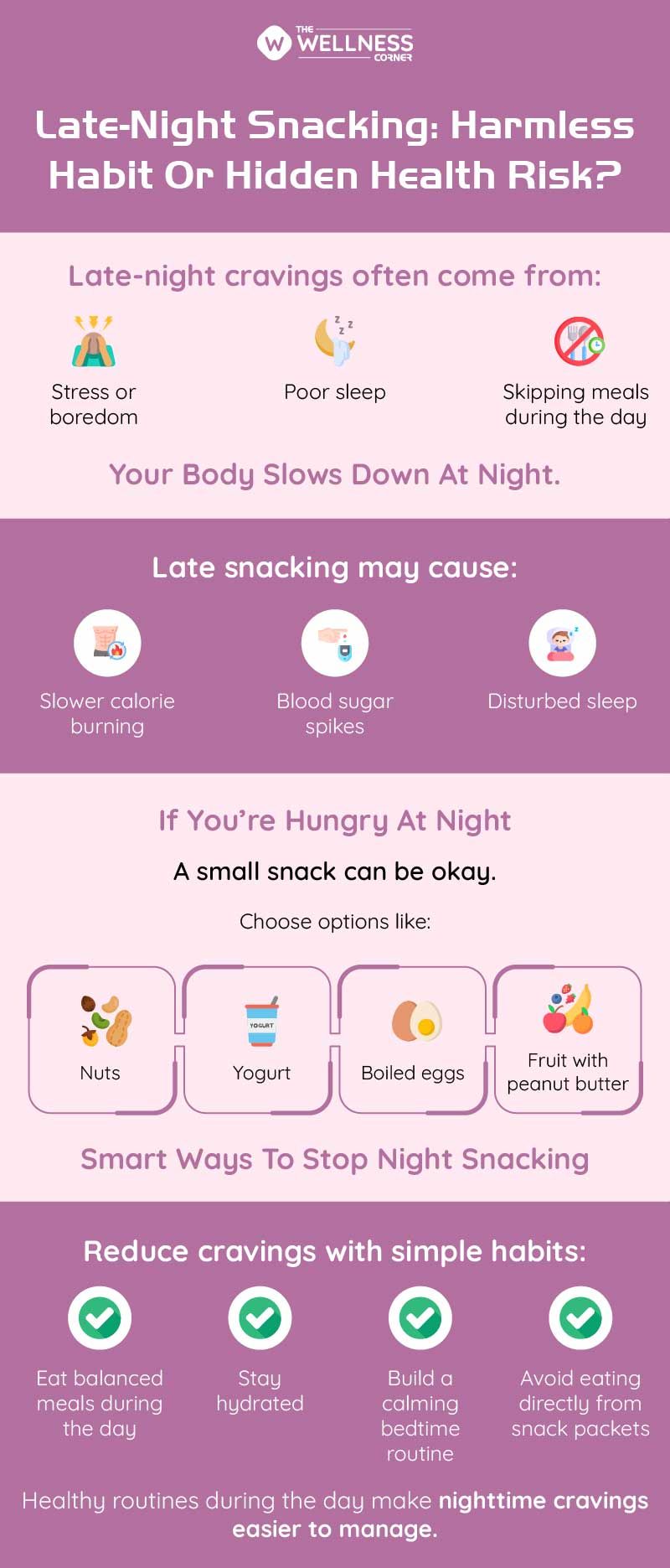
Why Night Time Snacking Feels So Tempting?
Hunger is not always about physical need. At night, cravings are often driven by fatigue, stress relief, boredom, or emotional comfort. After a long day, your brain seeks quick pleasure and easy energy. Sugary or salty snacks provide a fast dopamine hit, making them feel soothing in the moment.
Another common reason is irregular meals during the day. Skipping lunch, under-eating, or relying heavily on caffeine can leave your body genuinely hungry by evening. The body then compensates by demanding quick calories late at night.
Sleep deprivation also increases hunger hormones and lowers the hormones that signal fullness. This combination makes nighttime snacking feel almost unavoidable when sleep quality is poor.
How Your Body Processes Food At Night?
Your metabolism follows a natural circadian rhythm. During the day, your body is primed to digest food efficiently, utilize glucose for energy, and burn calories through physical activity. At night, digestion slows, insulin sensitivity decreases, and the body prepares for rest and repair.
Eating heavy or high sugar foods late at night can lead to higher blood sugar spikes and slower calorie burning. Over time, this pattern can contribute to the accumulation of fat, particularly around the abdomen.
Late meals may also interfere with digestion, causing bloating, acidity, or disturbed sleep, which further disrupts hormonal balance.
The Link Between Night Snacking And Weight Gain
Weight gain is not just about total calories, but also timing, food quality, and hormonal response. Nighttime snacking often involves ultra-processed foods that are high in refined carbs, unhealthy fats, and empty calories.
These foods are easy to overeat because portion control is weaker when you are tired or distracted. Even small nightly excesses add up over weeks and months.
Late eating can also reduce fat burning during sleep, increase insulin resistance, and disrupt appetite control the next day. This pattern can gradually lead to repeated cravings and excessive eating, making the habit increasingly difficult to control.
That said, not all evening eating automatically causes weight gain. A balanced, mindful snack can sometimes support stable blood sugar and prevent overnight hunger.
Also Read: Are All Processed Foods Unhealthy?
How Night Snacking Impacts Sleep Quality?
What you eat late in the evening directly affects how well you sleep. Heavy meals, spicy foods, and sugary snacks can increase heart rate, acid reflux, and digestive discomfort.
Poor sleep reduces growth hormone release, which plays a role in fat metabolism and muscle recovery. It also increases cortisol levels the next day, making cravings stronger and energy lower.
Even mild sleep disruption can slowly impact metabolism, mood, and immune function.
Hidden Health Effects Beyond Weight
Nighttime snacking can influence more than just the number on the scale.
Digestive health may suffer due to incomplete digestion before lying down.
Blood sugar fluctuations increase the risk of insulin resistance over time.
Inflammation levels may rise with frequent late consumption of processed foods.
Dental health may be affected if brushing routines are delayed or skipped after snacking.
Mental habits around emotional eating can strengthen unhealthy coping patterns.
These effects accumulate silently and may not be obvious until health markers begin shifting.
Also Read: Dental Care And Diabetes: A Connection You Should Not Ignore
When Night Snacking May Be Helpful?
Not all night eating is harmful. Certain individuals may benefit from a light, strategic snack, especially if they have long gaps between dinner and bedtime or experience nighttime hunger that disrupts sleep.
Athletes, shift workers, people with high metabolic demands, or those managing blood sugar conditions may require small evening nourishment.
The key is choosing foods that stabilize blood sugar without overloading digestion. Examples include a small bowl of yogurt, a handful of nuts, warm milk, or fruit with nut butter.
Mindfulness matters more than rigid rules.
Smart Strategies To Curb Unnecessary Night Cravings
One of the most effective ways to reduce night cravings is strengthening daytime nutrition. Balanced meals with adequate protein, fiber, and healthy fats keep hunger stable into the evening.
Hydration is another overlooked factor. Many cravings are actually mild dehydration signals.
When you have a bedtime routine that is calming, it helps you separate the physical hunger from the mental one. Brushing your teeth earlier, drinking herbal tea, or relaxing with a book signals closure to eating for the day.
If you do snack, portion it consciously rather than eating directly from packets. Sit down and enjoy it without screens so your brain registers satisfaction.
Choosing Better Late Evening Snack Options
If you genuinely feel hungry at night, choose options that support your body instead of stressing it.
The food rich with protein helps you stay full for longer and stabilizes the blood sugar.
Fiber supports digestion and gut health.
Warm foods are gentler on the digestive system.
Low sugar options prevent insulin spikes.
Examples include boiled eggs, cottage cheese, roasted chana, vegetable soup, or a banana with peanut butter.
Avoid heavy fried foods, sugary desserts, packaged chips, and sugary drinks close to bedtime.
Also Read: Health Benefits Of Fiber-Rich Food
Breaking The Emotional Snacking Loop
Many people snack at night not because of hunger but because it signals relaxation or reward. Identifying emotional triggers helps shift habits.
Ask yourself whether you are hungry or simply tired, bored, or stressed. Sometimes a shower, stretching, or early bedtime solves the craving better than food.
Replacing the habit with non food comfort rituals slowly rewires behavior without feeling deprived.
Consistency Creates Sustainable Results
The goal is not perfection. Occasional indulgence will not derail your health. What matters is the pattern you follow most days.
Small changes like earlier dinners, protein-rich meals, mindful snacking, and consistent sleep timing gradually improve metabolism and energy.
Long-term health thrives on balance rather than extreme restrictions.
Also Read: Should You Drink A Protein Shake Before Bed?
Personalized Guidance Makes The Difference
Everybody responds differently to eating patterns. Age, activity level, stress, hormones, and medical history all influence how night eating affects you.
If weight management, digestive issues, or fatigue have been persistent challenges, personalized guidance can provide clarity and sustainable solutions.
Take Control Of Your Health With The Wellness Corner
If you want to build healthier eating routines without guilt or confusion, The Wellness Corner offers expert support tailored to your lifestyle.
From nutrition planning to holistic wellness coaching, their team helps you create habits that truly last.
Your nights should restore you, not quietly sabotage your health. Make the wise choice to get good grades for your body.
Frequently Asked Questions (FAQs)
1. Does eating at night always cause weight gain?
Not necessarily. Weight gain usually depends on the total number of calories consumed and the type of food eaten. However, frequent late-night snacking on high-calorie, processed foods can increase the risk of weight gain over time.
2. Is it unhealthy to eat after dinner?
Eating after dinner is not automatically unhealthy. A small, balanced snack such as yogurt, nuts, or fruit can be fine if you are genuinely hungry. The problem usually arises when late-night eating becomes frequent and involves sugary or highly processed foods.
3. Why do people feel more cravings at night?
Nighttime cravings are often linked to fatigue, stress, boredom, or irregular eating patterns during the day. Poor sleep and hormonal changes can also increase hunger and reduce the feeling of fullness.
4. What are some healthier late-night snack options?
Healthier options include a small bowl of yogurt, a handful of nuts, boiled eggs, fruit with nut butter, roasted chana, or warm milk. These options supply essential nutrients while remaining gentle on the digestive system.
5. How can I stop unnecessary nighttime snacking?
Eating balanced meals during the day, staying hydrated, creating a relaxing bedtime routine, and identifying emotional triggers can help reduce unnecessary late-night cravings.
Leave a Comment

Sign-Up Now & Unlock
₹100 Cashback
Recently Published
Related Articles


Health Checks @ Home
Service
Explore



Follow us on:


© 2026 Truworth Health Technologies Pvt. Ltd.