What Flying Does To Your Body… And Why No One Talks About It?
22 days ago
6 minute read.

You board a flight feeling perfectly fine. A few hours later, you step off feeling strangely swollen, exhausted, dehydrated, foggy, and mildly irritable. You blame the airline coffee, the cramped seat, or the lack of sleep.
But here’s the truth.
Flying quietly places your body in an artificial environment that it was never designed to handle for long stretches of time. And while we often talk about flight delays, jet lag, and baggage claims, very few conversations focus on what is actually happening inside your body at 35,000 feet.
Whether you travel occasionally or fly frequently for business, understanding the physical effects of air travel can help you protect your energy, productivity, and overall wellbeing.
Let’s unpack what really happens when you fly and why it matters more than you think.
Also Read: Scared To Fly Again After The Recent Plane Crash? How To Manage That Anxiety?
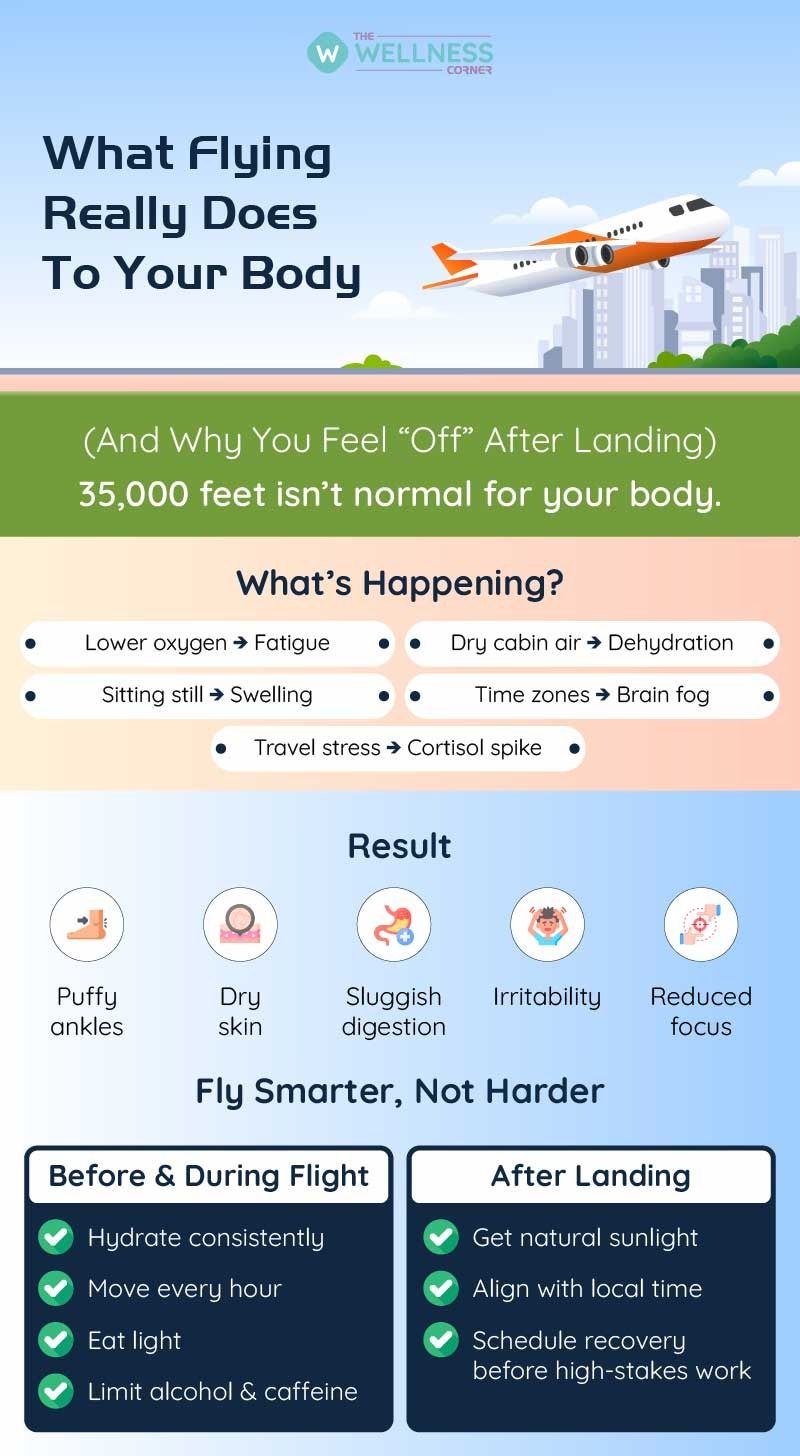
The Cabin Isn’t Normal Air. Your Body Knows It
The airplane cabins are not pressurized enough to be on the sea-level conditions. Most commercial aircraft cabins are pressurized to mimic an altitude of 6,000 to 8,000 feet above sea level. That means the oxygen levels are lower than what your body is used to on the ground.
For healthy individuals, this reduction is usually safe. But it still makes you body work harder. You may notice:
- Mild shortness of breath
- Slight dizziness
- Increased fatigue
- Subtle headaches
Your blood oxygen saturation can drop slightly during flight. It is not dramatic, but it is enough to make you feel tired or foggy. For individuals with respiratory or cardiovascular conditions, the effect can be more noticeable.
Even if you are fit and healthy, your system is adjusting to thinner air for hours at a time.
Dehydration Happens Faster Than You Realize
Airplane cabin humidity levels are extremely low, often less than 20 percent. For comparison, comfortable indoor humidity ranges between 30 and 60 percent.
This dry environment pulls moisture from your skin, eyes, nasal passages, and even your respiratory tract. You might feel:
- Dry lips and skin
- Irritated eyes
- Scratchy throat
- Increased thirst
The tricky part is that dehydration can also affect cognitive performance. Even mild dehydration can reduce focus, increase fatigue, and impact mood. For corporate travelers who need to land and head straight into meetings, this can quietly undermine performance.
Also Read: Why Drinking Water Alone Isn’t Enough To Stay Hydrated?

Your Circulation Slows Down
Long periods of sitting restrict blood flow, especially in your legs. Reduced movement combined with cabin pressure can cause fluid retention and swelling.
You may notice:
- Puffy feet or ankles
- Tight shoes after landing
- A heavy feeling in your legs
In rare cases, prolonged immobility can increase the risk of deep vein thrombosis, particularly on long-haul flights. While this risk is low for most healthy travelers, regular movement is essential.
The human body was designed for motion, not confinement in narrow seats for hours.
Your Gut Gets Confused
Ever feel bloated during or after a flight? That is not your imagination.
Gas expands at higher altitudes due to pressure changes. The reduced cabin pressure allows gases in your digestive system to expand, which can lead to bloating and discomfort.
Additionally, changes in routine, altered meal timing, dehydration, and lower activity levels can slow digestion. Combined with salty airplane meals, this can leave you feeling sluggish and uncomfortable.
For frequent flyers, these repeated digestive disruptions can affect appetite regulation and overall gut health.
Jet Lag Is More Than Just Sleep Loss
While crossing time zones, you can experience disturbance in your circadian rhythm. This internal clock regulates sleep, digestion, hormone production, and cognitive alertness.
Jet lag can cause:
- Insomnia or excessive sleepiness
- Brain fog
- Mood swings
- Digestive disturbances
- Reduced concentration
What many people overlook is that circadian misalignment also affects cortisol and melatonin levels. These hormones influence stress response and immune function. Frequent time zone shifts can place significant strain on your system.
Business travelers who hop continents regularly may experience chronic circadian disruption, which impacts both mental sharpness and emotional resilience.
Also Read: Crossing Time Zones? Don’t Let Jet Lag Win

Your Immune System Takes A Hit
Airplanes bring together hundreds of people in a confined space. Although modern aircraft use HEPA filtration systems, the close proximity still increases exposure to pathogens.
But that is only part of the story.
Sleep disruption, dehydration, and stress weaken immune defenses. Even a short flight can temporarily reduce immune efficiency, making you more vulnerable to catching a cold or feeling run down after travel.
This is one reason many people fall sick a few days after flying.

Your Stress Levels Quietly Rise
Air travel is rarely calm from start to finish. Security checks, delays, crowded terminals, tight connections, and unpredictable schedules all activate the body’s stress response.
Cortisol and adrenaline levels rise, keeping you alert. While this is useful in short bursts, repeated activation without adequate recovery can leave you feeling mentally drained.
For corporate professionals, this cumulative stress often goes unnoticed until it shows up as irritability, reduced focus, or exhaustion after what seemed like a routine trip.
Also Read: Effects Of Cortisol Hormone Imbalance On The Body
Why No One Talks About It?
Flying has become so common that we treat it like a neutral activity. It is simply a means to an end.
But just because something is normalized does not mean it is biologically effortless.
Most conversations focus on productivity, travel hacks, or loyalty programs. Very few address how to actively support your body before, during, and after a flight.
Understanding these physiological effects empowers you to make smarter choices instead of pushing through exhaustion.
How To Support Your Body While Flying?
You cannot change cabin pressure or humidity levels. But you can reduce their impact.
Hydrate Consistently
Drink water before, during, and after your flight. Limit alcohol and caffeine, both of which increase dehydration.
Move Regularly
Stand up every hour on long flights. Rotate your ankles, stretch your calves, and gently move your shoulders and neck.
Support Circulation
Compression socks can help on long-haul journeys, especially if you are prone to swelling.
Adjust Your Sleep Strategically
If crossing time zones, begin shifting your sleep schedule slightly before departure. Getting natural sunlight when you arrive can help you reset your circadian rhythm.
Eat Light And Balanced Meals
Choose easily digestible foods. Avoid excessive salt and heavy meals, as they may exacerbate bloating.

Breathe Deeply
Simple breathing exercises can calm your nervous system and counter travel stress.
Also Read: Deep Breathing & Techniques To Relieve Anxiety: Learn How To Do It Right!
Most importantly, schedule recovery time. Avoid stacking high-stakes meetings immediately after landing whenever possible.
Flying Smart Is The New Productivity
In a fast-paced corporate culture, resilience matters. Performance is not only about skill or experience. It is also about energy management.
Frequent travel without proper recovery can quietly erode focus, creativity, and decision-making capacity. By recognizing how flying impacts your body, you take the first step toward protecting long-term well-being.
Travel may be unavoidable. Burnout is not.

Frequently Asked Questions
1. Is flying dangerous for healthy individuals?
For most healthy people, flying is safe. However, it can cause temporary fatigue, dehydration, and mild discomfort due to cabin conditions.
2. Why do I feel more tired after flying than after a long car ride?
Lower oxygen levels, dehydration, restricted movement, and stress responses make flying physiologically more demanding than ground travel.
3. How can I reduce jet lag quickly?
Hydrate well, get sufficient sunlight exposure at your destination, align your meals with local time, and avoid taking long daytime naps.
4. Do short flights affect the body too?
Yes. Even short flights can cause dehydration and mild fatigue, especially if combined with stress and lack of sleep.
5. Should frequent flyers take extra precautions?
Absolutely. Regular hydration, movement, sleep planning, and immune support become even more important with repeated travel.
Your Wellbeing Should Travel With You
Your calendar may demand mobility. Your body demands care.
If you or your organization want to build a healthier, more resilient workforce, it starts with awareness and practical support. From stress management and sleep health to nutrition guidance and mental wellbeing tools, proactive care makes all the difference.
Explore holistic, science-backed wellness solutions at The Wellness Corner and discover how you can empower yourself and your teams to stay energized, focused, and truly well, no matter where work takes you.
Leave a Comment

Sign-Up Now & Unlock
₹100 Cashback
Recently Published
Related Articles


Health Checks @ Home
Service
Explore



Follow us on:


© 2026 Truworth Health Technologies Pvt. Ltd.