Can Watermelon Turn Toxic? Doctors Explain A Rare Poisoning Case
3 days ago
4 minute read.

Few fruits are as refreshing as watermelon, especially during peak summer. It is hydrating, naturally sweet, and widely considered a healthy choice.
So when news of a rare “watermelon poisoning” case in Mumbai surfaced, it understandably raised concern.
Can a fruit as common and trusted as watermelon actually make you sick?
In brief, yes - but not for the reasons most people assume.
This is not about the fruit itself being harmful. It is about how it is handled, stored, and consumed.
Understanding the difference is key to staying safe without unnecessary fear.
Also Read: Eating Watermelon This Summer? Don’t Throw Away Its Healthy Seeds!
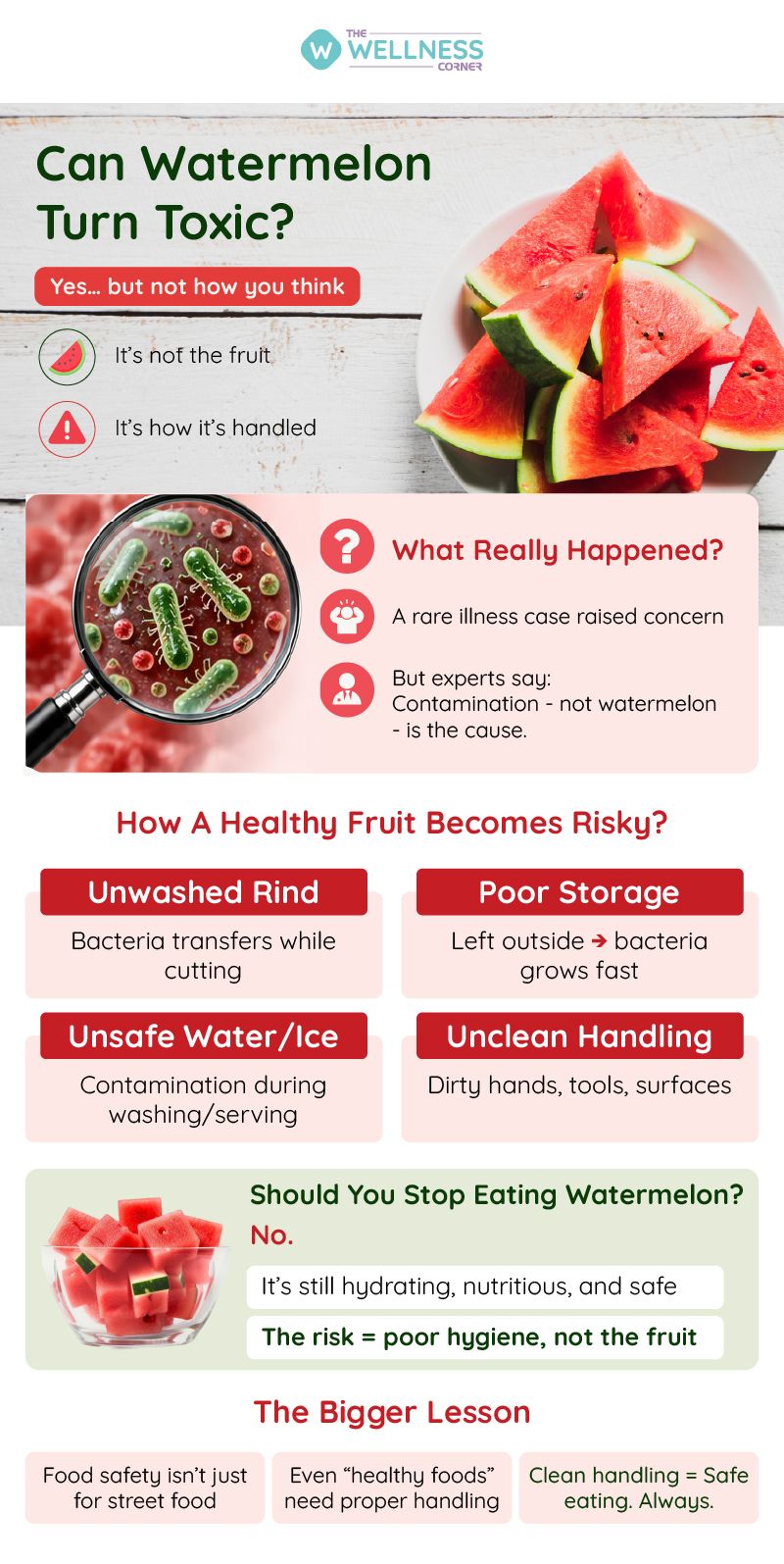
What Happened In The Mumbai Case?
Reports suggested that a person fell ill after consuming watermelon, sparking discussions about possible contamination.
While such cases are uncommon, doctors often point out that foodborne illnesses linked to fruits are usually caused by external factors rather than the fruit itself.
Possible causes may include:
- Contamination during handling or cutting
- Exposure to bacteria due to improper storage
- Use of unsafe water for washing
- Cross-contamination from surfaces or utensils
This highlights an important point.
Even healthy foods can become unsafe if basic hygiene practices are not followed.

How Can Watermelon Become Unsafe?
Watermelon has a thick outer rind that protects the fruit inside.
However, once it is cut open, it becomes more vulnerable.
Here are some common ways contamination can occur:
Unwashed Outer Surface
If the outer rind is not washed before cutting, bacteria on the surface can transfer to the edible portion through the knife.
Poor Storage Conditions
Cut watermelon left at room temperature for long periods can become a breeding ground for bacteria.
Contaminated Water Or Ice
Using unsafe water for washing or serving can introduce harmful microorganisms.
Unhygienic Handling
Street-side cutting or improper handling without clean hands or tools can increase risk.

Symptoms Of Foodborne Illness
If contaminated watermelon is consumed, symptoms may appear within a few hours.
Common signs include:
These symptoms are not specific to watermelon and can occur with any contaminated food.
In most cases, they are mild and resolve with rest and hydration.
Also Read: Surprising Causes Of Dehydration!
However, severe symptoms may require medical attention.
Should You Stop Eating Watermelon?
Absolutely not.
Watermelon remains a nutritious and safe fruit when handled properly.
It is rich in water content, supports hydration, and provides essential nutrients.
The goal is not to avoid it but to consume it safely.

Simple Steps To Enjoy Watermelon Safely
A few simple precautions can significantly reduce the risk of contamination.
Wash Before You Cut
Always rinse the outer surface thoroughly under running water before slicing.
Use Clean Utensils
Ensure that knives, cutting boards, and surfaces are clean.
Store It Properly
Refrigerate cut watermelon and consume it within a reasonable time.
Avoid leaving it out in the heat.
Be Cautious With Pre-Cut Fruit
If you are buying pre-cut watermelon, ensure it is stored in hygienic, refrigerated conditions.
Trust Your Senses
If the fruit smells unusual or looks off, it is best not to consume it.
The Bigger Lesson: Food Safety Matters Everywhere
This incident is not just about watermelon.
It is a reminder that food safety applies to all foods, including fruits and vegetables.
Often, we associate foodborne illness with street food or packaged meals, but even fresh produce can pose risks if not handled correctly.
Simple habits can go a long way in preventing illness.

Why Awareness Is Important?
In a fast-paced world, convenience often takes priority over caution.
Pre-cut fruits, quick snacks, and ready-to-eat options are common choices.
While these are convenient, they also require greater awareness of hygiene and storage practices.
Also Read: 5 Myths You Should Know About Hygiene
Being informed helps you make safer choices without compromising on convenience.
When To Seek Medical Help?
Most cases of mild foodborne illness improve on their own.
However, you should seek medical attention if you experience:
- Persistent vomiting or diarrhea
- Signs of dehydration
- High fever
- Symptoms lasting more than a couple of days
Timely care ensures quicker recovery and prevents complications.
Stay Safe, Stay Informed With The Wellness Corner
Your health is influenced by everyday choices, including how you handle and consume food.
The Wellness Corner offers expert guidance on nutrition, hygiene, and preventive health to help you make informed decisions for your well-being.
With the right knowledge, you can enjoy your favorite foods safely and confidently.

Frequently Asked Questions (FAQs)
1. Can watermelon really cause food poisoning?
The fruit itself is safe, but contamination during handling or storage can lead to illness.
2. How can I tell if watermelon is unsafe to eat?
Look for unusual smells, textures, or tastes as warning signs.
3. Is pre-cut watermelon safe?
It can be, if stored properly under hygienic and refrigerated conditions.
4. What should I do if I feel sick after eating watermelon?
Stay hydrated and rest. Seek medical help if symptoms are severe or persistent.
5. Should I avoid watermelon during the summer?
No, it is a healthy and hydrating fruit when consumed safely.
Leave a Comment

Sign-Up Now & Unlock
₹100 Cashback
Recently Published
Related Articles


Health Checks @ Home
Service
Explore



Follow us on:


© 2026 Truworth Health Technologies Pvt. Ltd.