How Dangerous Is Hantavirus? Understanding The Risks
1 day ago
4 minute read.

Many people rarely pay attention to rodents found in storage areas, aging buildings, or outdoor spaces.
But occasionally, headlines about hantavirus infections remind us that some viruses spread in ways many people are unaware of.
Although hantavirus infections are relatively rare, they can become serious when they occur. News reports and isolated cases often create concern because the illness can progress rapidly and affect the lungs or kidneys.
So, how dangerous is hantavirus really?
The answer depends on several factors, including the type of hantavirus, the timeliness of symptom recognition, and the promptness of medical care.
Understanding the risks, symptoms, and prevention methods can help people stay informed without unnecessary panic.
Also Read: Diet To Combat Seasonal Infections
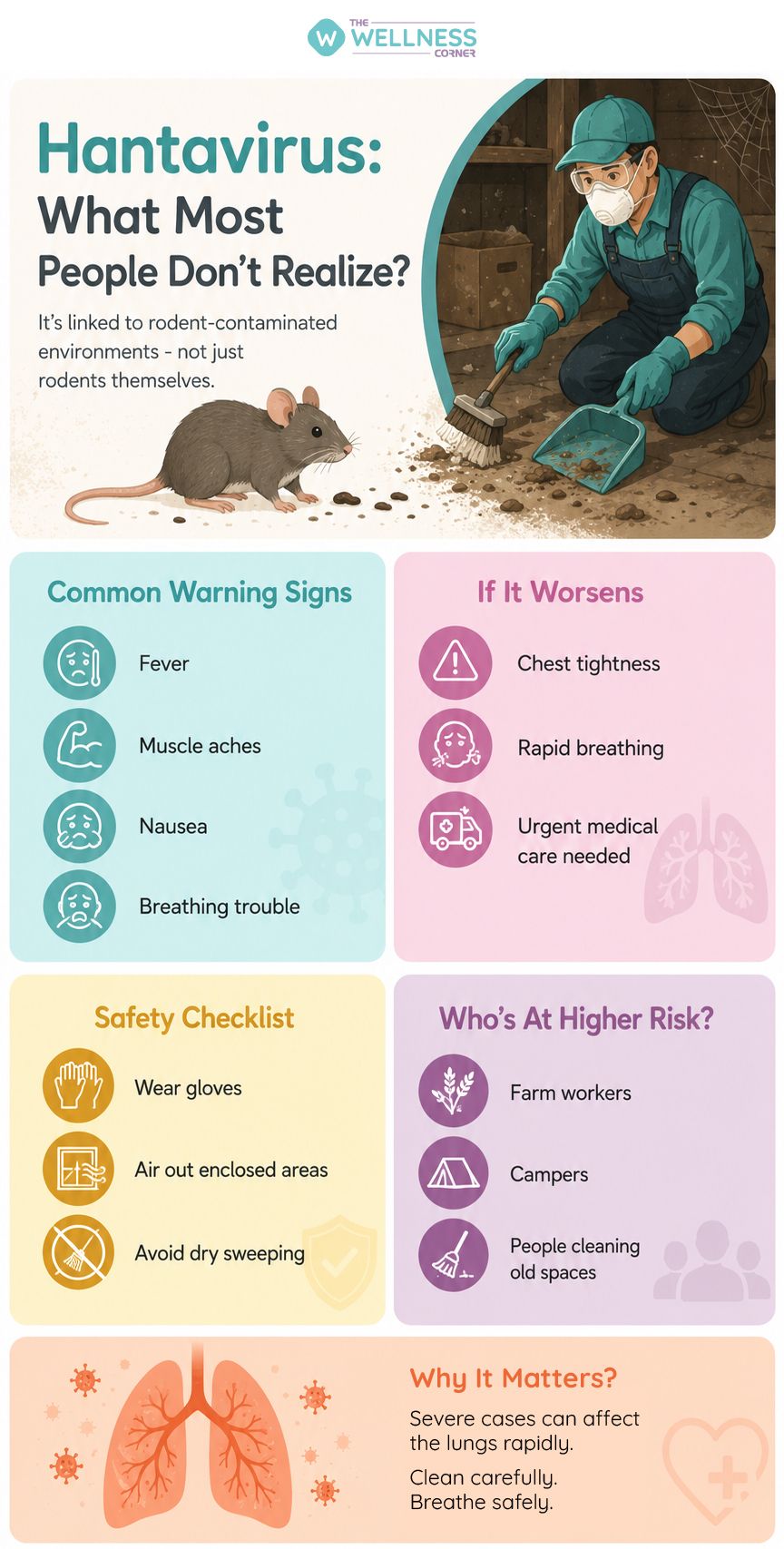
What Is Hantavirus?
Hantavirus is a family of viruses that is mainly spread by rodents.
Humans can become infected through contact with:
- Rodent urine
- Droppings
- Saliva
- Contaminated dust particles
In many cases, people are exposed when cleaning enclosed spaces where infected rodents have been present.
The virus does not spread through casual everyday contact like the common cold.
Different types of hantaviruses exist worldwide, and the illnesses they cause may vary.
How Does Hantavirus Spread?
Breathing in contaminated particles is one of the most common ways the infection spreads.
When contaminated dust particles become airborne, they may carry viral particles into the respiratory system.
This can happen while:
- Sweeping rodent droppings
- Cleaning abandoned spaces
- Handling contaminated materials
- Working in poorly ventilated areas
Direct contact with rodents or rodent bites may also pose risks in certain situations.

Why Hantavirus Can Be Dangerous?
What makes hantavirus concerning is not how common it is, but how severe it can become in some individuals.
Certain strains can lead to serious complications involving the lungs or kidneys.
One of the most well-known conditions linked to hantavirus is Hantavirus Pulmonary Syndrome (HPS), which affects breathing and lung function.
In some cases, symptoms may worsen rapidly over a short period.
Early diagnosis and supportive medical care are extremely important.
Also Read - Make Sure Your Lungs Get That Extra Love: Breathing Exercises To Improve Lung Functioning
Early Symptoms Can Feel Like The Flu
One challenge with hantavirus is that early symptoms can resemble common viral illnesses.
Initial signs may include:
- Fever
- Fatigue
- Muscle aches
- Headache
- Nausea
- Chills
Because these symptoms are non-specific, the illness may not immediately raise suspicion.
As the infection progresses, breathing difficulties and chest discomfort may develop in more severe cases.
When Symptoms Become Serious?
In certain individuals, the illness can quickly affect lung function.
This may lead to:
- Shortness of breath
- Rapid breathing
- Fluid buildup in the lungs
- Severe respiratory distress
These symptoms require immediate medical attention.
Not every hantavirus infection becomes severe, but cases involving respiratory complications can become life-threatening without prompt care.
Who May Be At Higher Risk?
People with increased exposure to rodent-infested environments may face a greater risk.
This can include:
- Farm workers
- Construction workers
- Campers or hikers
- People cleaning unused buildings or storage areas
Living or working in areas with poor rodent control may also increase exposure risk.
How To Reduce The Risk Of Hantavirus?
Prevention mainly focuses on minimizing contact with rodents and contaminated spaces.
1. Avoid Sweeping Dry Rodent Droppings
Sweeping may cause infected dust particles to become airborne.
Instead, affected areas should be cleaned carefully using appropriate disinfecting methods.
2. Improve Ventilation
Open windows and allow fresh air circulation before cleaning enclosed spaces.
3. Control Rodent Infestations
Sealing entry points and maintaining cleanliness can help reduce rodent activity.
4. Use Protective Equipment
Gloves and masks may help reduce exposure risk during cleaning activities.

Is Hantavirus Common?
Hantavirus infections are considered relatively rare in many countries.
However, isolated outbreaks and sporadic cases still occur.
Because the illness can become severe, public health authorities continue monitoring cases carefully.
The rarity of the infection should not lead to fear, but it does highlight the importance of awareness and prevention.
Can Hantavirus Be Treated?
There is currently no specific antiviral cure widely used for hantavirus infections.
Treatment mainly focuses on supportive medical care.
This may include:
- Oxygen support
- Fluid management
- Hospital monitoring
- Respiratory support in severe cases
The earlier medical care begins, the better the chances of managing complications effectively.
Also Read: Regular Check-Ups For Your Respiratory Health In Winter
Why Awareness Matters?
Many infectious diseases receive attention only during outbreaks or news coverage.
But awareness plays a critical role in prevention.
Understanding how infections spread helps people make safer choices without becoming overly anxious.
Simple precautions, especially in rodent-prone environments, can significantly reduce risk.
The Bigger Picture: Prevention Often Starts With Small Habits
Health risks are not always about dramatic events.
Sometimes they are connected to everyday environments and overlooked exposures.
Being mindful of hygiene, ventilation, and rodent control may seem simple, but these habits can play an important role in reducing infection risks.
Staying informed is one of the best forms of protection.
Stay Informed About Your Health With The Wellness Corner
Understanding infectious diseases and preventive health practices is an important part of overall well-being.
The Wellness Corner offers expert-backed guidance on wellness, lifestyle management, preventive care, and health awareness to help individuals make informed choices for themselves and their families.
Because better awareness often leads to better health decisions.
Frequently Asked Questions (FAQs)
1. What causes hantavirus infection?
Hantavirus infection is usually caused by exposure to infected rodent urine, droppings, or saliva.
2. Is it possible for hantavirus to pass from one person to another?
Most hantavirus strains are not commonly spread through casual human contact.
3. What are the first symptoms of hantavirus?
Initial signs commonly involve fever, tiredness, body pain, and headaches.
4. Is hantavirus always fatal?
No, but severe cases can become life-threatening without timely medical care.
5. How can I lower my risk of exposure?
Reducing rodent exposure, improving ventilation, and following safe cleaning practices can help lower risk.
Leave a Comment

Sign-Up Now & Unlock
₹100 Cashback
Recently Published
Related Articles


Health Checks @ Home
Service
Explore



Follow us on:


© 2026 Truworth Health Technologies Pvt. Ltd.