Life After Gallbladder Removal: What To Expect In The Long Term?
1 day ago
4 minute read.

Gallbladder removal surgery, also known as cholecystectomy, is one of the most common surgical procedures worldwide.
For many people, the surgery brings relief from painful gallstones, inflammation, or recurring digestive discomfort. But once the surgery is over, a new question often follows.
“What happens now?”
Can you eat normally again? Will digestion change forever? Are there long-term effects you should know about?
The good news is that most people live healthy and normal lives after gallbladder removal. However, your body may take some time to adjust, and understanding these changes can help you manage your health better in the long run.
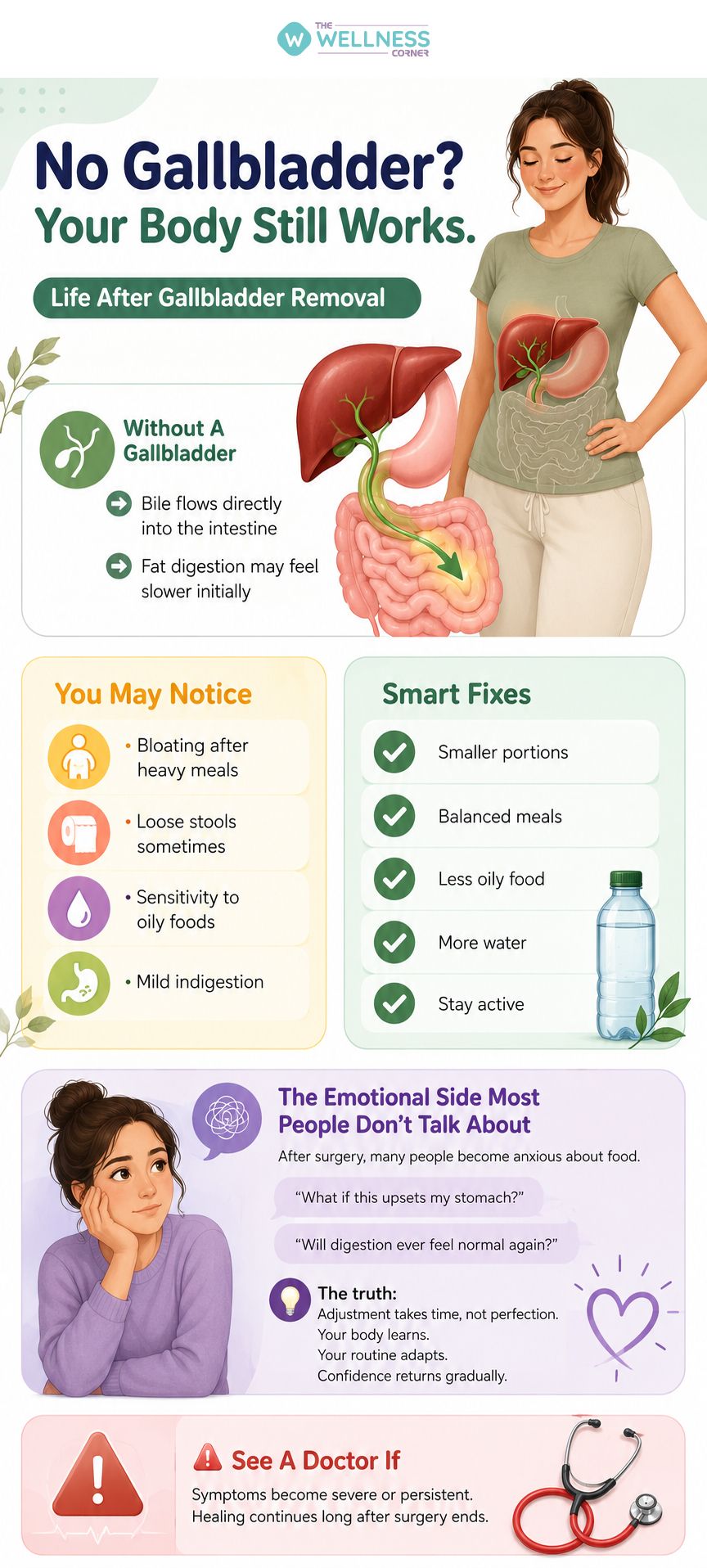
What Does The Gallbladder Actually Do?
The gallbladder is a small organ positioned just below the liver.
Its main role is to store bile, a digestive fluid produced by the liver. Bile plays an important role in digesting the fats present in your meals.
Normally, the gallbladder releases bile into the digestive system when needed, especially after fatty meals.
After removal, bile no longer gets stored in the gallbladder. Instead, it flows directly from the liver into the intestine.
This change may sound minor, but it can affect digestion in certain ways.
Also Read - Saunf Vs Ajwain Water: Which One Works Better For Digestion?

What Changes After Gallbladder Removal?
Your body continues to digest food without a gallbladder, but the process becomes less efficient and less regulated.
Instead of releasing a concentrated amount of bile during meals, the liver continuously sends smaller amounts into the intestine.
For many people, this adjustment happens smoothly.
For others, it may lead to temporary or long-term changes in digestion.
Common Long-Term Effects People May Notice
Not everyone experiences the same symptoms after surgery.
Some people feel completely normal within weeks, while others notice subtle digestive differences over time.
1. Sensitivity To Fatty Foods
High-fat meals may become harder to tolerate initially.
You might experience:
- Bloating
- Loose stools
- Stomach discomfort
This happens because bile is no longer released in a concentrated way to digest heavy meals.
Also Read: How Dietary Choices Affect Bloating And Gas?
2. Changes In Bowel Habits
Some individuals notice more frequent bowel movements after surgery.
This is often linked to the continuous flow of bile into the digestive tract.
For most people, symptoms improve gradually with dietary adjustments.
3. Occasional Digestive Discomfort
Mild indigestion or gas can occur, especially after large or oily meals.
Eating smaller, balanced meals may help reduce discomfort.
Can You Live Normally Without A Gallbladder?
Yes, absolutely.
Your liver continues to make bile, allowing the digestive process to function normally.
Many people return to their regular routines and enjoy a normal quality of life after recovery.
The key is understanding how your body responds and making adjustments where needed.

Foods That May Help After Surgery
Diet plays an important role in supporting digestion after gallbladder removal.
Choose Lighter Meals
Smaller meals are often easier to digest than heavy portions.
Also Read: Get Your Food Portions Under Control
Focus On Fiber Gradually
Fiber supports digestion, but increasing it too quickly may cause bloating.
Add it slowly over time.
Stay Hydrated
Adequate water intake supports overall digestive health.
Limit Excessively Greasy Foods
Fried or oily foods may trigger discomfort in some individuals.
Moderation is important.
The Emotional Side Of Recovery
Healing physically is just one aspect of the overall recovery process.
Some people become anxious about eating certain foods or worry about long-term health effects.
This is normal.
Understanding that adjustment takes time can help reduce unnecessary stress.
Paying attention to your body without becoming overly restrictive is important.
Are There Any Long-Term Health Risks?
Most people do not experience serious complications after gallbladder removal.
However, a small number may continue to experience digestive symptoms.
Persistent issues should be discussed with a healthcare professional, especially if symptoms interfere with daily life.
Regular check-ups and balanced lifestyle habits remain important.
Tips For Long-Term Digestive Comfort
Simple habits can support better digestion after surgery.
- Eat slowly and mindfully
- Avoid overeating
- Choose balanced meals
- Stay physically active
- Monitor foods that trigger discomfort
Over time, many people learn which foods work best for their bodies.
The Bigger Picture: Your Body Learns To Adapt
One of the remarkable things about the body is its ability to adapt.
While digestion may feel different at first, your system gradually adjusts to functioning without a gallbladder.
Patience and consistency play a major role in recovery.
Instead of focusing on restrictions, focus on supporting your body with balanced habits.
Take Care Of Your Digestive Health With The Wellness Corner
Recovering from gallbladder removal is not just about surgical recovery. It is about learning how to support your body in the long term.
The Wellness Corner offers expert guidance on nutrition, digestive wellness, and healthy lifestyle habits to help you feel confident about your health after surgery.
With the right support, you can build sustainable routines that work for your body.
Frequently Asked Questions (FAQs)
1. Can I eat normally after gallbladder removal?
Yes, most people can return to a regular diet over time, though some may need to limit very fatty foods initially.
2. Will digestion permanently change after surgery?
Digestion may feel slightly different, but the body usually adapts well.
3. Why do some people experience loose stools after surgery?
Continuous bile flow into the intestine can affect bowel movements in some individuals.
4. How long does it take to adjust after gallbladder removal?
Recovery and adjustment vary, but many people improve within weeks to months.
5. Should I follow a special diet forever?
Not necessarily. Most people can enjoy a balanced diet with a few mindful adjustments.
Leave a Comment

Sign-Up Now & Unlock
₹100 Cashback
Recently Published
Related Articles


Health Checks @ Home
Service
Explore



Follow us on:


© 2026 Truworth Health Technologies Pvt. Ltd.