7 Sneaky Hacks To Fit A Full Workout Into Your 2026 Busy Schedule
8 days ago
5 minute read.
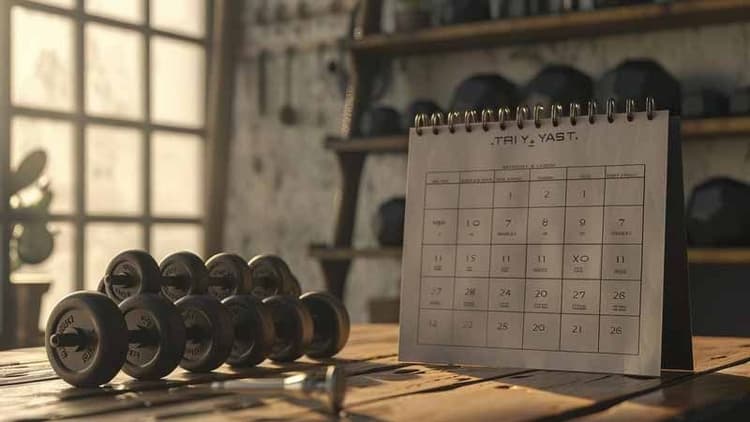
Let’s be honest. “I don’t have time” has become the anthem of modern professionals.
Between back-to-back meetings, endless notifications, tight deadlines, family commitments, and the invisible mental load we all carry, fitness often gets pushed to the bottom of our to-do lists. Not because it is unimportant. But it feels optional when compared to everything else demanding your attention.
Here’s the uncomfortable truth. Your schedule will not magically free up in 2026. If anything, it will get fuller. The only way to prioritize your health is to stop waiting for extra time and start using the time you already have more strategically.
The good news is that fitting in a full workout does not require two uninterrupted hours at the gym. It requires smarter systems, small behavioral shifts, and realistic strategies that work in the real world.
Here are seven practical and slightly sneaky ways to make fitness non-negotiable, even on your busiest days.
Also Read: Slow Or Fast Reps? Find The Best Tempo For Your Workout Goals
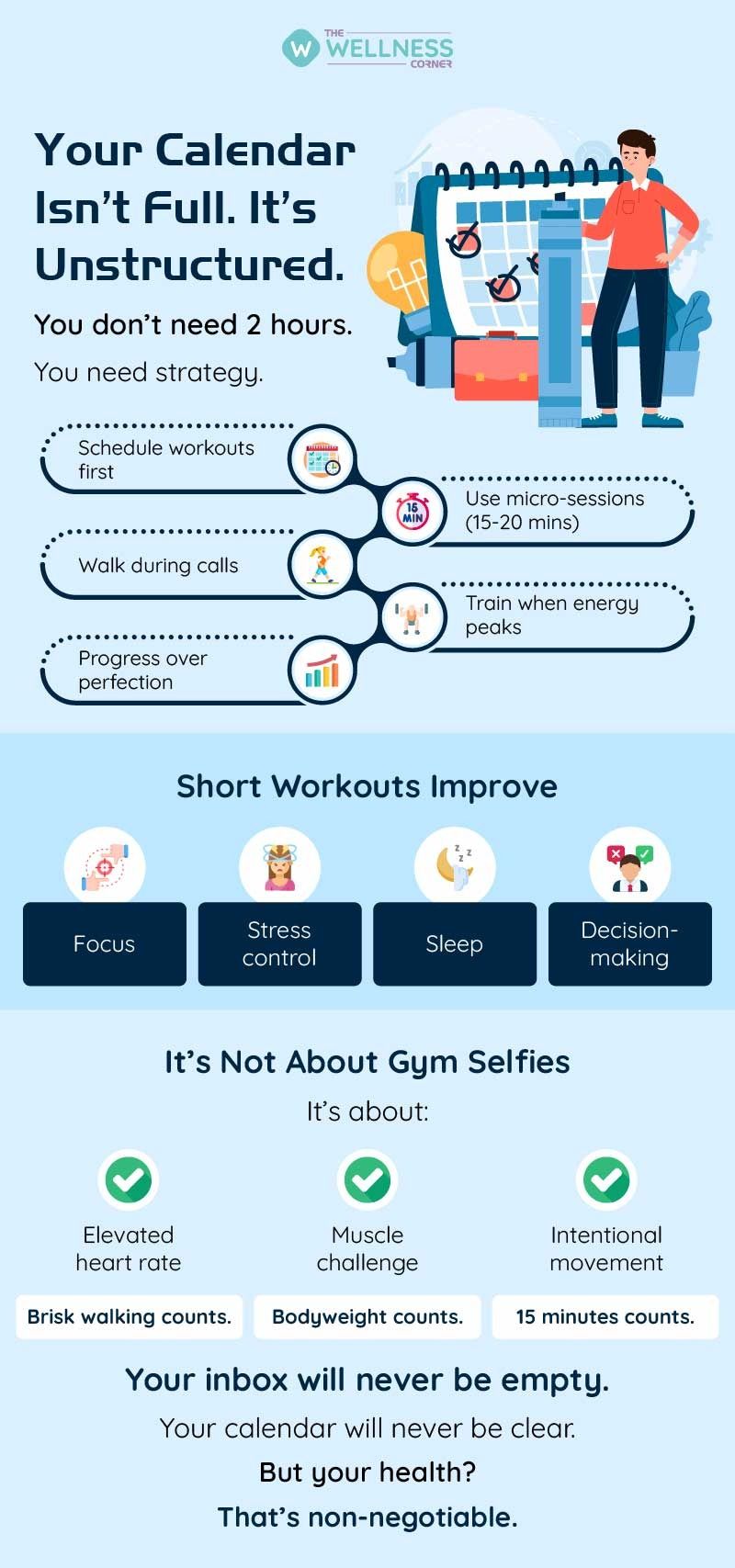
1. The 20 Minute Rule That Changes Everything
Most people skip workouts because they believe exercise must be long to be effective. That belief is outdated.
A focused 20-minute session of strength training, high-intensity intervals, or mobility work can deliver measurable benefits. When you remove the pressure of a one-hour commitment, your resistance drops dramatically.
Instead of asking whether you have time, ask, “Can I dedicate just 20 minutes to myself today?”
Twenty minutes before your morning shower. Twenty minutes between meetings. Twenty minutes before dinner.
Short sessions done consistently outperform long workouts done occasionally. The secret is intensity and intention, not duration.
2. Calendar It Like A Board Meeting
If it is not on your calendar, it does not exist.
Corporate professionals protect meetings, presentations, and client calls because they are scheduled. Your workout deserves the same respect.
Block exercise time in your calendar as a non-movable appointment. Do not label it “gym.” Label it something that signals importance, such as “Performance Maintenance” or “Energy Strategy.”
When colleagues try to schedule over it, treat it like any other important engagement. You would not casually cancel a client meeting. Stop casually canceling on your health.
3. Stack Habits To Save Time
One of the smartest ways to fit workouts into a packed schedule is habit stacking.
Habit stacking means attaching a new behavior to something you already do daily. For example:
After brushing your teeth in the morning, do 15 squats and 10 push-ups.
After logging off your last meeting, do a 10 minute core routine.
While watching your favorite show, stretch or foam roll.
These micro workouts add up. Over time, they build strength, flexibility, and discipline without demanding extra planning.
Fitness does not have to live in a separate compartment of your life. It can blend into what you already do.
Also Read: Can’t Squat? Here Are 3 Alternatives!
4. Turn Dead Time Into Active Time
Look at your day carefully. You will find hidden pockets of time.
Waiting for a call to start.
Arriving early to pick someone up.
Scrolling mindlessly before bed.
Standing during long virtual meetings.
These moments are opportunities.
Keep resistance bands at your desk. Do calf raises while brushing your teeth. Walk during phone calls. Take the stairs whenever possible.
Individually, these actions seem small. Collectively, they create meaningful movement across your week.
The goal is not perfection. It is momentum.
5. Embrace The Power Of Hybrid Workouts
Workouts don’t only happen in a gym. In fact, limiting yourself to one location often becomes the biggest barrier.
Create a flexible fitness system:
Two structured strength sessions per week.
One outdoor walk or jog.
Two short mobility routines at home.
One weekend activity, like cycling, swimming, or hiking.
This hybrid approach removes the all or nothing mindset. If you cannot make it to the gym, you still move. If travel disrupts your routine, you adapt.
Busy professionals need flexible strategies, not rigid rules.
Also Read: Reasons To Start Swimming!
6. Use Energy-Based Scheduling
Most people schedule workouts when they “have time.” A better strategy is to schedule them when you have energy.
Are you mentally sharp in the morning? Train then.
Do you experience an afternoon slump? Insert a quick workout to reset.
Do you decompress best after work? Make evenings your movement window.
Pay attention to your natural rhythm. Exercise can amplify productivity when aligned with your energy curve.
A 25-minute workout at the right time can sharpen focus more effectively than another cup of coffee.
7. Redefine What A Full Workout Means
One reason professionals struggle to stay consistent is unrealistic expectations.
A full workout does not have to mean:
- A packed gym session.
- Perfect gym attire.
- A complicated program.
A full workout simply means challenging your muscles, elevating your heart rate, and moving with purpose.
- Bodyweight circuits count.
- Brisk walking counts.
- Short strength sessions count.
- Mobility sessions count.
Consistency beats complexity every single time.
When you remove the pressure to be perfect, you make space for progress.
Also Read: How To Improve Flexibility And Mobility Without Stretching?
The Productivity Connection No One Talks About
Here is what many corporate leaders are beginning to recognize. Fitness is not just about physical appearance. It is about cognitive performance.
Regular movement improves focus, decision making, stress resilience, and emotional regulation. It supports better sleep, which directly impacts executive functioning. It enhances mood, which influences leadership presence.
When you invest in fitness, you are investing in clarity, stamina, and sharper thinking.
In a competitive professional landscape, energy is an unfair advantage.
Build A System, Not Just Motivation
Motivation fluctuates. Systems endure.
Lay out your workout clothes the night before.
Keep simple equipment at home.
Have a backup 15-minute routine saved on your phone.
Set realistic weekly movement goals.
When fitness becomes automated, it stops feeling like an extra task. It becomes part of your identity.
You are not someone trying to work out. You are someone who moves daily.
That subtle shift changes everything.
Also Read - Free Movement: The Buzzing Fitness Trend
Frequently Asked Questions
1. Can short workouts really replace longer gym sessions?
Yes. When done with intensity and consistency, short workouts can improve strength, endurance, and overall fitness effectively.
2. How many days a week should busy professionals exercise?
Aim for at least three to five days of intentional movement, combining strength, cardio, and mobility.
3. What if I miss a workout?
Skip the guilt. Resume the next day. One missed session does not define your overall discipline.
4. Is walking enough as exercise?
Brisk walking is excellent for cardiovascular health, especially when combined with strength training twice a week.
5. How do I stay consistent during travel?
Use bodyweight exercises, hotel room routines, and walking meetings to maintain momentum.
Make 2026 The Year You Protect Your Energy
Your schedule will always be full. Your inbox will never be empty. There will always be another meeting.
Health is not a side goal, it is the engine behind every goal.
If you want sustainable performance, sharper focus, and stronger resilience in 2026, it starts with intentional movement.
At The Wellness Corner, we believe employee wellbeing is not a luxury. It is a strategic advantage. Through personalized wellness programs, fitness guidance, mental health support, and holistic corporate solutions, we help professionals and organizations build healthier, high-performing teams.
Your calendar may be busy. Your health still deserves a permanent slot.
Leave a Comment
Sign-Up Now & Unlock
₹100 Cashback
Recently Published
Related Articles


Health Checks @ Home
Service
Explore



Follow us on:


© 2026 Truworth Health Technologies Pvt. Ltd.