Yoga Moves To Avoid After Giving Birth
1 month ago
5 minute read.
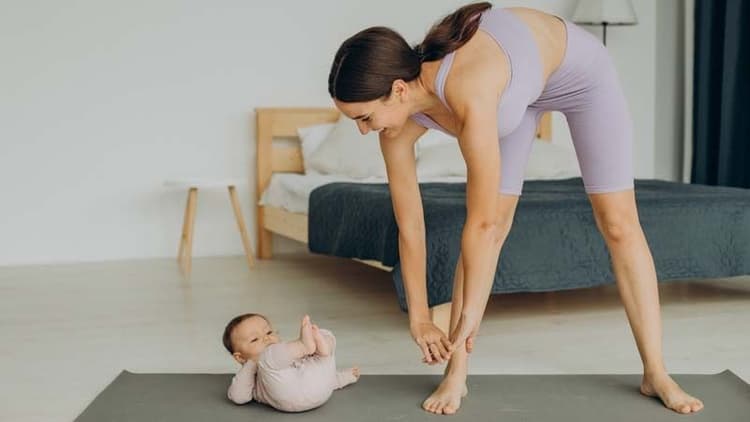
Childbirth is a profound physical and emotional experience. After delivery, many women feel eager to return to movement, rebuild strength, and reconnect with their bodies. Yoga often feels like a natural choice because of its calming, restorative image. However, the postpartum body is still healing, adjusting, and far more vulnerable than it may appear on the surface.
Jumping back into certain yoga poses too soon can slow recovery, worsen pain, or create long-term issues related to the pelvic floor, core muscles, and lower back. Understanding which yoga moves to avoid after giving birth is just as important as knowing which ones to embrace.
This guide will help you move mindfully, protect your healing body, and build a strong foundation for long-term wellness.
Also Read: Here's How To Stay Healthy For A Natural Childbirth!
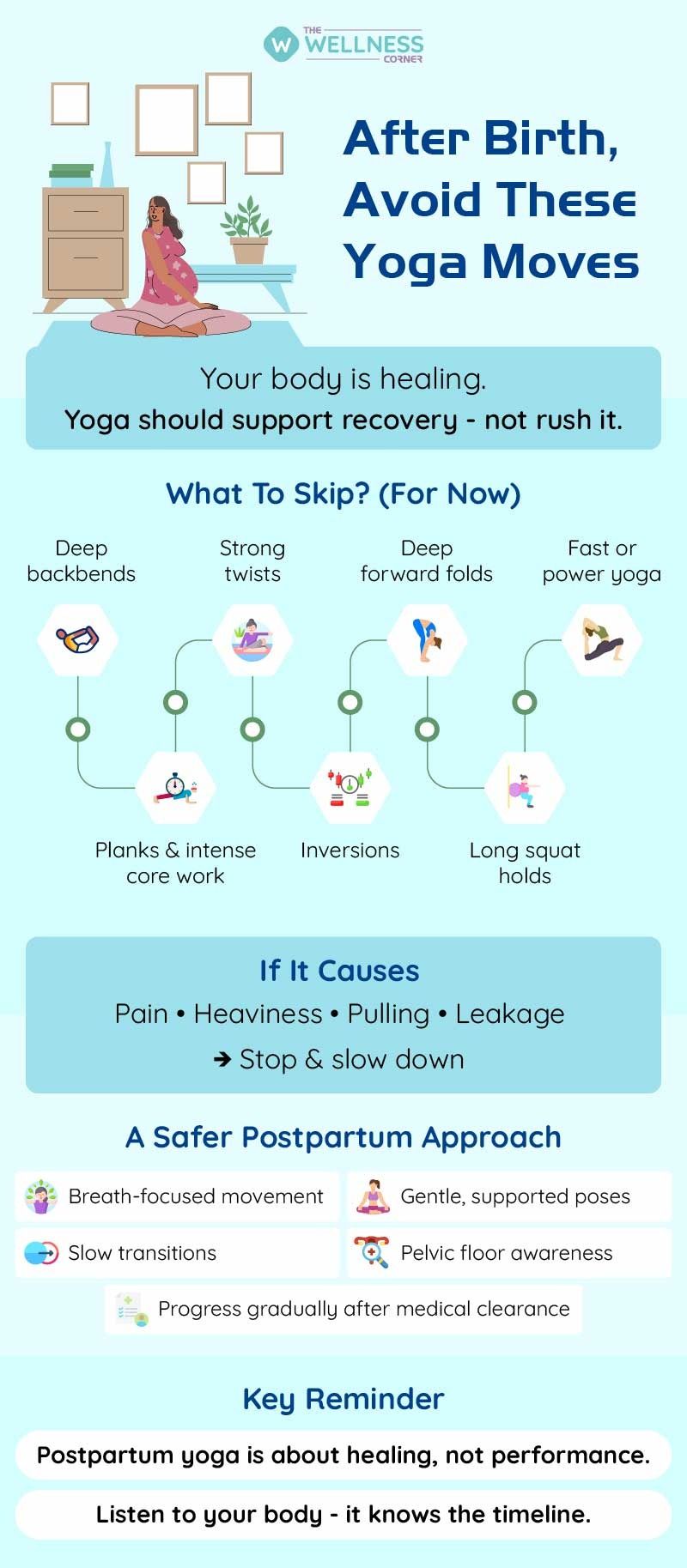
Why Postpartum Yoga Needs A Different Approach?
After childbirth, the body goes through significant changes. There is a stretch or separation in abdominal muscles, a condition which is known as diastasis recti. The pelvic floor muscles are often weakened, regardless of whether the delivery was vaginal or via C-section. Hormonal shifts also make joints more flexible and less stable.
Because of this, poses that felt easy before pregnancy may now place unnecessary strain on healing tissues. Postpartum yoga should focus on restoration, breath awareness, and gentle strengthening rather than intensity or flexibility.
Deep Backbends That Overload The Spine
Poses such as wheel pose, camel pose, and full upward bow place strong pressure on the spine and abdominal wall.
In the postpartum phase, the core muscles are not yet ready to support deep spinal extension. Practicing intense backbends too early can worsen lower back pain and delay abdominal healing.
Instead of deep backbends, gentle heart openers with support and controlled breathing are safer choices in the early months after birth.
Also Read: Mindful Breathing
Strong Core-Intensive Poses
Plank pose, boat pose, full chaturanga, and advanced arm balances demand significant core engagement.
After delivery, the deep abdominal muscles often lack the strength and coordination needed for these poses. Performing them too soon can increase abdominal separation and strain the pelvic floor.
The focus should be on reconnecting with the core through breathing, gentle engagement, and slow progression rather than aggressive strengthening.
Also Read: Exercises Post Delivery
Intense Twists That Stress The Abdomen
Deep-seated twists and revolved poses compress the abdomen and spine.
In the early postpartum period, these movements can interfere with healing, especially if there is abdominal separation or sensitivity around the midsection. Twisting too deeply may also strain internal organs that are still shifting back into place.
Gentle, open twists performed slowly and within a comfortable range are safer alternatives when approved by a healthcare provider.
Inversions That Increase Pelvic Pressure
Inversions such as headstand, shoulder stand, or handstand are often considered advanced yoga poses even for experienced practitioners.
After childbirth, these poses can place downward pressure on a weakened pelvic floor, increasing the risk of prolapse or pelvic discomfort. They also demand upper body and core strength that may not yet be restored.
Until pelvic floor strength is fully rebuilt and medical clearance is given, inversions are best avoided.
Deep Forward Folds That Overstretch Healing Muscles
Seated forward bends, standing forward folds, and intense hamstring stretches can overstretch ligaments that are still influenced by pregnancy hormones.
During the postpartum phase, flexibility may feel increased, but this does not mean the body is ready for deep stretching. Overstretching can lead to joint instability and muscle strain.
Gentle, supported forward bends with a focus on spinal length rather than depth are more appropriate.
Also Read: Stubborn Post-Pregnancy Weight? Adopt These Lifestyle Changes to Reduce It
Poses That Put Pressure On The Pelvic Floor
Squats held for long durations, malasana, and poses involving strong downward force can overload the pelvic floor.
After childbirth, the pelvic floor needs gradual strengthening, not prolonged pressure. Overdoing these poses too soon can contribute to urinary leakage, heaviness, or discomfort.
Controlled movements and pelvic floor awareness should come before prolonged holds.
Fast-Paced Or Power Yoga Flows
Rapid transitions, repeated sun salutations, and power yoga sequences may feel energizing, but they are often too demanding for a recovering body.
Fast-paced yoga does not allow enough time for proper muscle engagement or alignment, increasing the risk of injury. Fatigue can also compromise form, especially when sleep deprivation is common after childbirth.
Slow, mindful movement is far more beneficial during the postpartum recovery period.
Also Read: Getting Into Shape After Child Birth
Listening To Your Body Is Not Optional
One of the biggest mistakes new mothers make is ignoring discomfort in the name of getting back in shape.
Pain, heaviness, leaking urine, or a pulling sensation in the abdomen are signals to slow down. Yoga after childbirth should feel supportive, not draining or painful.
Recovery timelines vary widely. Some women may feel ready to resume gentle yoga after six weeks, while others may need more time. There is no universal schedule.
When Can You Safely Return To Yoga?
Most healthcare professionals recommend waiting at least six weeks after a vaginal delivery and longer after a C-section before returning to structured exercise. Even then, starting with gentle, postpartum-specific yoga is key.
A pelvic floor assessment and medical clearance can help guide safe progression. Building a strong foundation first prevents setbacks later.
The Right Way To Reintroduce Yoga After Birth
Start with breath-focused practices that reconnect you to your body. Gentle stretches, supported poses, and slow movements help rebuild awareness and strength.
Focus on posture, alignment, and relaxation rather than calorie burn or flexibility goals. Yoga during this phase is about healing, not performance.
With time, patience, and consistency, strength and confidence naturally return.
Supporting Postpartum Recovery With The Wellness Corner
Every postpartum journey is unique. The right guidance can make the difference between a smooth recovery and ongoing discomfort.
The Wellness Corner provides access to expert doctors, physiotherapists, and wellness professionals who specialize in postpartum health. From pelvic floor support to personalized recovery plans, holistic care ensures you move safely and confidently.
Frequently Asked Questions
Is yoga safe after giving birth?
Yes, when practiced gently and with proper guidance. Postpartum-specific yoga is the safest approach.
How soon can I start yoga after delivery?
Most women can begin gentle practices after medical clearance, usually around six weeks postpartum.
Should I avoid yoga if I had a C-section?
Yes, initially. Abdominal healing takes longer after a C-section, so yoga should be introduced gradually under guidance.
Can yoga help with postpartum back pain?
Yes, gentle yoga can relieve back pain when done correctly and at the right stage of recovery.
What is the biggest mistake new mothers make with yoga?
Returning too quickly to advanced poses without allowing the body enough time to heal.
Leave a Comment

Sign-Up Now & Unlock
₹100 Cashback
Recently Published
Related Articles


Health Checks @ Home
Service
Explore



Follow us on:


© 2026 Truworth Health Technologies Pvt. Ltd.