Buying Mangoes? Identify Artificially Ripened Fruits Quickly With These Simple Checks
2 days ago
4 minute read.

Few things match the joy of biting into a perfectly ripe mango. The aroma, the softness, the sweetness that instantly reminds you of summer. But what if that beautiful-looking mango isn’t naturally ripened?
In today’s fast-moving markets, many fruits are artificially ripened to meet demand and speed up sales. While this makes mangoes available earlier and in larger quantities, it also raises concerns about quality, taste, and even health.
The good news is that you don’t need to be an expert to identify the difference. With a few simple observations, you can make better choices and enjoy mangoes the way they are meant to be enjoyed.
Also Read: How Many Mangoes Should You Eat In A Day?
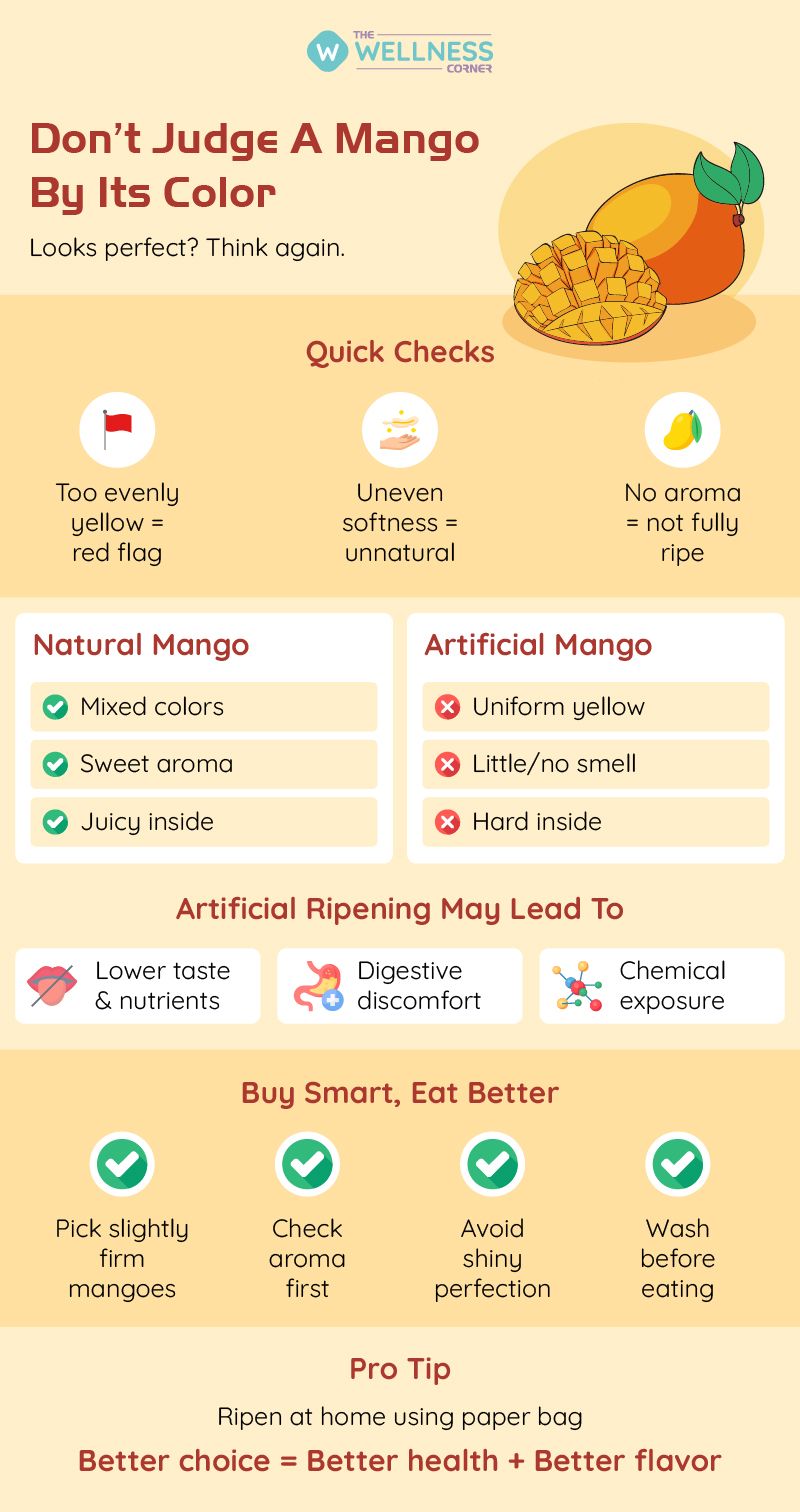
Why Are Mangoes Artificially Ripened?
Mangoes are naturally ripened using ethylene gas released during the fruit’s maturation process. However, to accelerate this process, some vendors use chemicals to force ripening.
The intention is simple:
- To reduce waiting time
- To make fruits look uniformly ripe
- To increase shelf availability
While not all artificial ripening methods are unsafe, certain practices can affect the fruit’s quality and may not be ideal for regular consumption.
Also Read: Here’s How Fruit Juices Can Support Your Fitness Journey
How Natural Ripening Really Works?
Naturally ripened mangoes take their time. They mature gradually, developing flavor, sweetness, and aroma as they ripen.
This process allows:
- Balanced sweetness
- Better texture
- Rich aroma
- Nutrient retention
Artificial ripening, on the other hand, often prioritizes appearance over internal quality.
Quick Signs To Identify Artificially Ripened Mangoes
1. Look At The Color Carefully
Uniform bright yellow mangoes may look appealing, but natural mangoes usually have a mix of colors. You may notice green patches alongside yellow or orange tones.
If the fruit looks too perfect and evenly colored, it could be artificially ripened.
2. Check The Texture
Gently press the mango.
Naturally ripened mangoes feel slightly soft and yield evenly when pressed. Artificially ripened ones may feel soft on the outside but remain firm or hard in certain areas.
Uneven softness is a key sign to watch for.
3. Smell The Aroma
A ripe mango has a distinct, sweet fragrance near the stem.
If there is little to no smell, or if the fruit smells slightly chemical or off, it may not be naturally ripened.
4. Observe The Skin For Powdery Residue
Sometimes, artificially ripened mangoes may have a white or powdery coating on the surface.
This could be a sign of chemical use during the ripening process. Always wash fruits thoroughly before consumption.
5. Cut It Open And Look Inside
The inside of a naturally ripened mango is juicy, evenly colored, and aromatic.
Artificially ripened mangoes may appear:
- Pale or dull inside
- Overly firm near the seed
- Less juicy than expected
The difference becomes clearer once you cut the fruit.
6. Taste Tells The Truth
Flavor is one of the most reliable indicators.
Naturally ripened mangoes are rich, sweet, and slightly tangy. Artificially ripened ones may taste bland, overly sweet without depth, or slightly off.
Are Artificially Ripened Mangoes Harmful?
This is a common concern.
While some approved methods of artificial ripening are considered safe when done correctly, improper practices can raise health concerns.
Possible issues may include:
- Digestive discomfort
- Headaches in sensitive individuals
- Reduced nutritional quality
This is why it is always better to choose fruits that are ripened naturally whenever possible.
Smart Tips For Buying Better Mangoes
- Choose mangoes that are slightly firm with a natural mix of colors
- Avoid fruits that look overly shiny or perfectly uniform.
- Smell the fruit before buying.
- Buy from trusted vendors who follow safe practices.
- Wash and soak mangoes before consuming.
A little attention at the time of purchase can go a long way in ensuring quality.
Also Read: An Easy Way To Lose Weight! Eat A Bowl Of These Fruits Every Day To Get Amazing Results
Can You Ripen Mangoes Safely At Home?
Yes, and it is quite simple.
Place raw mangoes in a paper bag or wrap them in newspaper. Keep them at room temperature and allow them to ripen naturally over a few days.
This method mimics the natural ripening process and helps preserve flavor and nutrients.
Why Choosing The Right Mango Matters?
Mangoes are not just about taste. They are also packed with nutrients like vitamins, antioxidants, and fiber.
When you choose naturally ripened mangoes, you are more likely to enjoy:
- Better taste and texture
- Higher nutritional value
- A more satisfying eating experience
It is a small choice that can make a meaningful difference.
The Bigger Picture: Awareness Leads To Better Choices
In today’s world, convenience often comes at the cost of quality. Having the right knowledge empowers you to make better choices.
You don’t need complicated tools or expert knowledge. Just a few simple checks can help you identify what you are buying.
Once you become more aware, choosing better fruits becomes second nature.
Make Healthier Choices With The Wellness Corner
At The Wellness, we believe that small, mindful choices can lead to better overall health.
From understanding what goes into your food to making informed lifestyle decisions, the right guidance can help you build healthier habits over time.
Frequently Asked Questions (FAQs)
1. How can I tell if a mango is naturally ripened?
Look for uneven color, natural aroma, and consistent softness.
2. Is it safe to eat artificially ripened mangoes?
Some methods are considered safe, but it is best to choose naturally ripened fruits when possible.
3. Why do artificially ripened mangoes taste different?
They often lack the full flavor development that comes with natural ripening.
4. Can I ripen mangoes at home?
Yes, keeping them in a paper bag at room temperature helps them ripen naturally.
5. Should I wash mangoes before eating?
Yes, always wash them thoroughly to remove any surface residue.
Leave a Comment

Sign-Up Now & Unlock
₹100 Cashback
Recently Published
Related Articles


Health Checks @ Home
Service
Explore



Follow us on:


© 2026 Truworth Health Technologies Pvt. Ltd.