Papaya Is Super Healthy But Don’t Eat It With These 6 Foods
1 month ago
5 minute read.
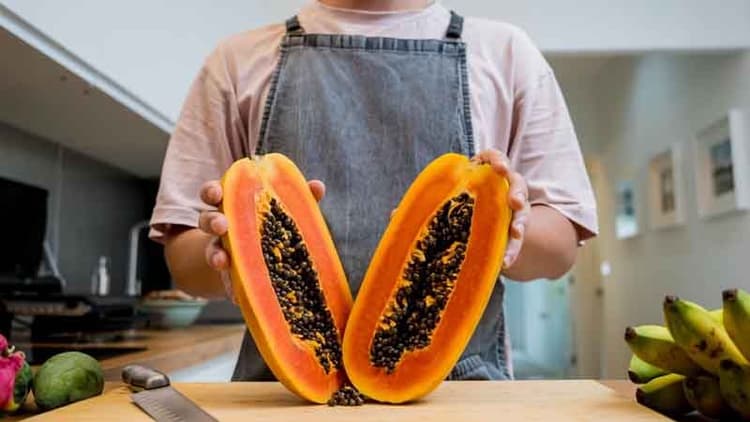
A Tropical Superfruit With A Few Surprising Rules
Papaya is often praised as one of the most powerful fruits you can add to your daily diet. It is light on the stomach, naturally sweet, and packed with nutrients that support digestion, immunity, and skin health. Whether eaten first thing in the morning or as a refreshing snack, papaya has earned its place as a wellness favorite.
But here’s something many people don’t realize. Even the healthiest foods can lose their benefits or cause discomfort when combined with the wrong ingredients.
Yes, papaya is incredibly nutritious. But pairing it incorrectly may lead to digestive issues, reduced nutrient absorption, or mild discomfort in some individuals.
Let’s explore why papaya is so beneficial and which food combinations you may want to avoid for better health.
Also Read: An Easy Way To Lose Weight! Eat A Bowl Of These Fruits Every Day To Get Amazing Results
Why Papaya Should Be A Part Of Your Everyday Diet?
Before we get into combinations, it’s important to understand what makes papaya so special.
Papaya is rich in an enzyme known as papain that aids in protein digestion and promotes better digestive function. It is also rich in vitamin C, vitamin A, fiber, and antioxidants that protect your body from inflammation and oxidative stress.
Regular consumption of papaya may help improve gut health, boost immunity, and promote clearer skin. It is also hydrating and low in calories, making it ideal for weight management.
However, its powerful digestive properties are exactly why certain food pairings may not work well.
The Science Behind Food Combinations
Your digestive system works best when foods are broken down efficiently. Some combinations can either slow down digestion or create conflicting digestive demands.
Papaya digests quickly due to its enzyme content. When paired with foods that take longer to digest, it may ferment in the stomach, leading to bloating, gas, or discomfort.
This does not mean these combinations are dangerous, but being mindful can help you feel lighter and more comfortable after meals.
Also Read: How Dietary Choices Affect Bloating And Gas?
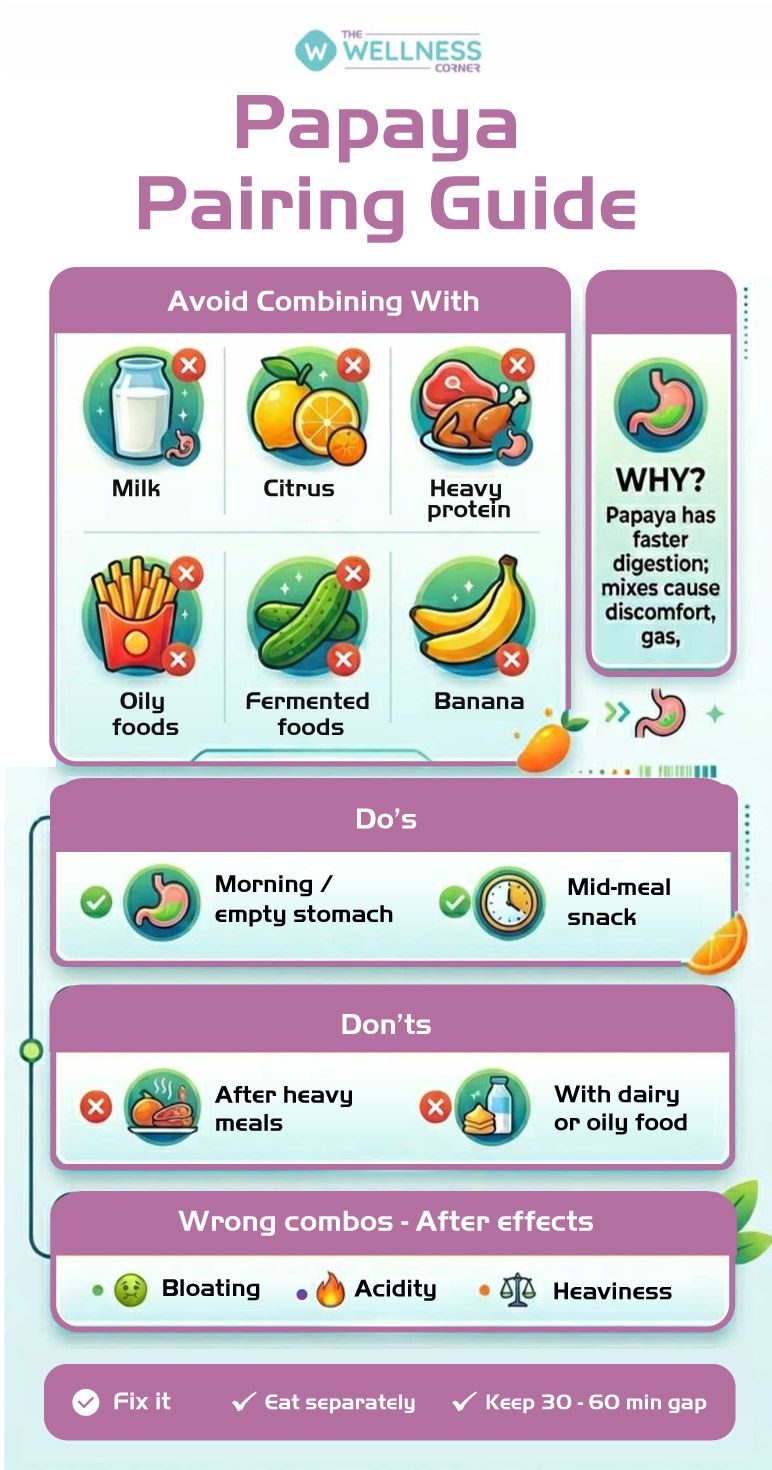
6 Foods You Should Avoid Pairing With Papaya
1. Milk And Dairy Products
This is one of the most commonly discussed combinations. Mixing papaya with milk or dairy can sometimes cause digestive discomfort such as bloating or acidity in sensitive individuals.
The enzymes in papaya may interfere with how dairy proteins are digested, making the combination feel heavy on the stomach.
If you enjoy both, it is better to consume them at different times rather than together.
2. Citrus Fruits
Combining papaya with citrus fruits like oranges or lemons may lead to excessive acidity for some people.
Both are rich in vitamin C, but their acidic nature can sometimes irritate the stomach lining when consumed together, especially on an empty stomach.
If you have a sensitive digestive system, it’s wise to space them out.
3. High Protein Foods
Papaya contains enzymes that break down protein efficiently. While this sounds beneficial, combining it with heavy protein sources like meat, eggs, or legumes in the same meal may create digestive imbalance.
The difference in digestion speeds can sometimes cause discomfort or bloating.
Papaya works best when consumed alone or as part of a light meal.
Also Read: Indian Foods That Offer Better Fat Balance Than Avocados And More Protein Than Quinoa
4. Fried And Oily Foods
Pairing papaya with deep-fried or oily foods can counteract its digestive benefits.
While papaya is light and easy to digest, oily foods slow down digestion. This mismatch may leave you feeling heavy and sluggish instead of refreshed.
For best results, enjoy papaya separately as a clean, light snack.
5. Fermented Foods
Fermented foods like pickles or certain traditional condiments already contain active bacteria. When combined with papaya, which digests quickly, it may lead to mild digestive disturbances in some individuals.
The combination may not suit everyone, especially those prone to gas or bloating.
Also Read: The Goodness Of Fermented Food
6. Bananas
Papaya and bananas are both healthy, but together they may feel too heavy for some people.
This combination can slow digestion and may lead to a feeling of fullness, bloating, or discomfort, particularly if consumed in large quantities.
If you enjoy both fruits, try having them at different times of the day.
When Is The Best Time To Eat Papaya?
Timing plays a key role in maximizing the benefits of papaya.
Eating papaya on an empty stomach in the morning allows your body to absorb its nutrients efficiently and supports digestion throughout the day.
It can also be consumed as a mid-morning or evening snack when your stomach is not overloaded with heavy meals.
Avoid eating papaya immediately after a large meal, as this may reduce its effectiveness and cause discomfort.
Signs A Food Combination Isn’t Working for You
Every individual’s body responds differently. Even if a combination is generally considered unsuitable, it may not affect everyone the same way.
Watch for these signs:
- Bloating or gas after eating
- Acidity or heartburn
- A feeling of heaviness or discomfort
- Irregular digestion
If you notice these symptoms consistently after certain combinations, it’s best to adjust your eating habits accordingly.
Simple Tips To Enjoy Papaya The Right Way
- Eat papaya as a standalone fruit whenever possible
- Keep a gap of at least 30 to 60 minutes between papaya and other heavy foods
- Choose ripe papaya for better digestion and taste
- Stick to moderate portions instead of overeating
Small changes in how you consume papaya can significantly improve how your body responds to it.
The Bottom Line: It’s About Balance, Not Restrictions
Papaya is a powerful addition to your diet, but like many natural foods, it works best when consumed mindfully.
You don’t need to eliminate combinations completely, but being aware of how your body reacts can help you make better choices.
Healthy eating is not just about what you eat, but also how you combine and time your meals.
Make Smarter Food Choices With The Wellness Corner
Understanding your body’s needs can feel overwhelming, especially with so much conflicting information out there.
At The Wellness Corner, you can connect with experts who help you build personalized nutrition plans, improve digestion, and create sustainable eating habits that suit your lifestyle.
Whether you want to enhance your gut health, manage weight, or simply feel better every day, the right guidance can make all the difference.
Frequently Asked Questions (FAQs)
1. Can I eat papaya every day?
Yes, papaya can be eaten daily in moderate amounts as part of a balanced diet.
2. Is it safe to mix papaya with milk?
It’s generally better to avoid combining them, especially if you have a sensitive stomach.
3. When is the best time to eat papaya?
Morning on an empty stomach or between meals is ideal.
4. Can papaya cause digestive issues?
Papaya itself is easy to digest, but incorrect combinations may cause discomfort in some people.
5. Should I avoid these combinations completely?
Not necessarily. Pay attention to how your body reacts and adjust your diet accordingly.
Leave a Comment

Sign-Up Now & Unlock
₹100 Cashback
Recently Published
Related Articles


Health Checks @ Home
Service
Explore



Follow us on:


© 2026 Truworth Health Technologies Pvt. Ltd.