Office Eating Habits That Are Slowly Damaging Health
1 day ago
5 minute read.

A typical workday often revolves around deadlines, meetings, and back-to-back tasks. In the middle of all this, eating becomes more of an afterthought than a priority. You grab what is quick, convenient, and easily available. Over time, these small choices begin to form patterns, and those patterns quietly shape your health.
What makes this concerning is that most of these habits do not feel harmful in the moment. A skipped breakfast here, an extra cup of coffee there, or a late lunch might seem harmless. But when repeated daily, they can gradually impact energy levels, metabolism, and overall well-being.
The truth is simple. Workplace eating habits play a far bigger role in long-term health than most people realize.
Also Read: 6 High Protein Snacks To Keep In The Office For Your 4 PM Hunger
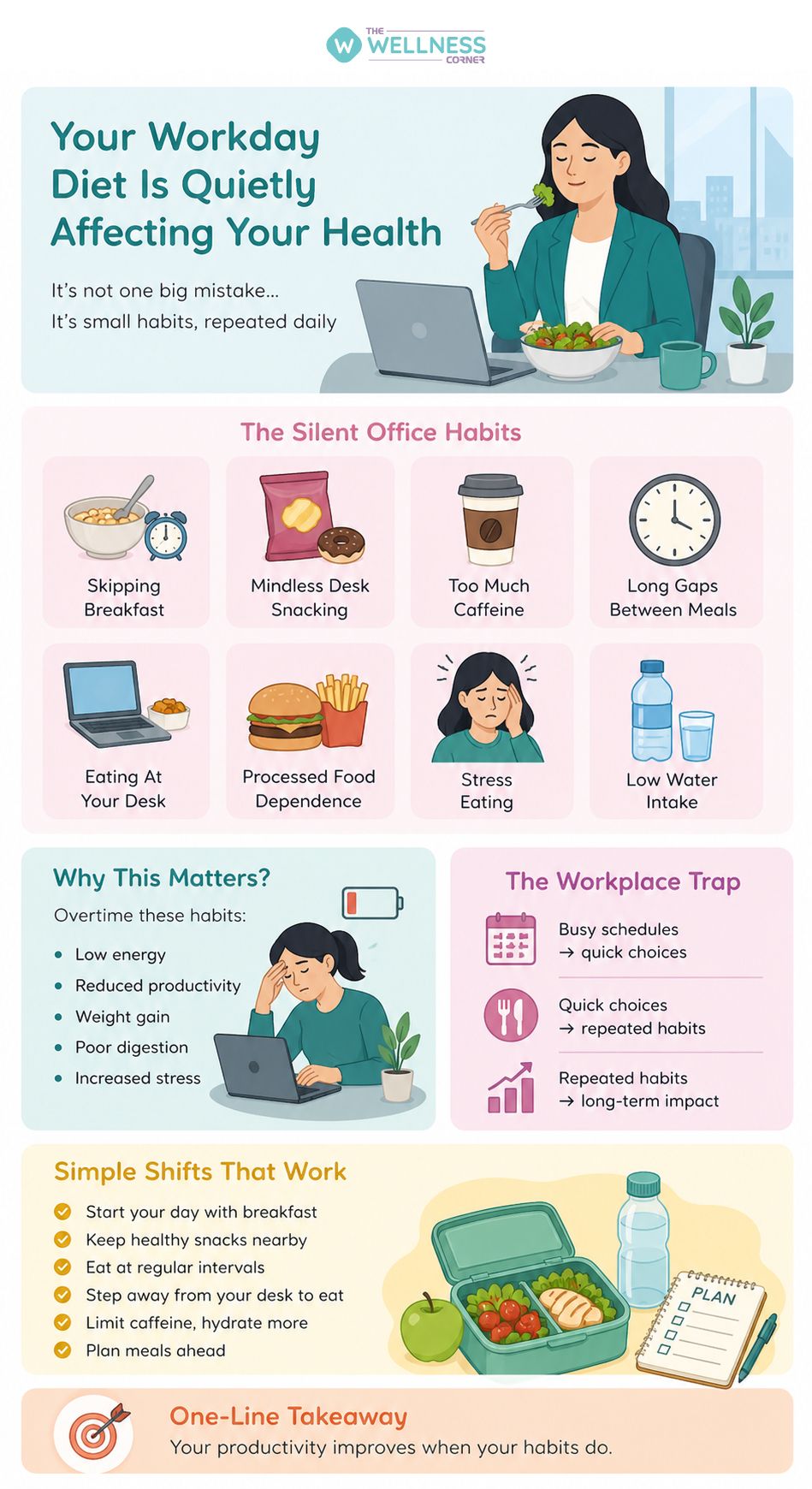
Skipping Breakfast And Starting On Empty
Mornings are often rushed, and breakfast is usually the first thing to be sacrificed. Many professionals head straight into work without fueling their bodies.
While this may save time, it often leads to low energy levels, poor concentration, and overeating later in the day. When the body does not get the fuel it needs early on, it tends to compensate with cravings, especially for sugary and high-calorie foods.
Starting your morning with a well-rounded meal helps establish a positive rhythm for the rest of the day. Without it, productivity and focus can take a hit.
Mindless Snacking At The Desk
Snacking is not the problem. Mindless snacking is.
Keeping a packet of chips or biscuits at your desk often leads to eating without awareness. You reach for a bite during emails, meetings, or even while thinking through a task. Before you know it, the entire packet is gone.
These snacks are usually high in salt, sugar, and unhealthy fats. Regular consumption adds up quickly and contributes to weight gain and energy crashes.
Also Read: 10 Power Pack Food Combos For Snacking

Overdependence On Caffeine
Coffee has become a workplace staple. While a cup or two can help improve alertness, excessive caffeine intake can do more harm than good.
Relying on coffee to stay energized often masks underlying fatigue. It can also lead to disrupted sleep patterns, increased anxiety, and dependency.
The real issue is not coffee itself but using it as a substitute for proper rest and nutrition.
Also Read: How To Break Caffeine Addiction?
Long Gaps Between Meals
Busy schedules often push meals further down the priority list. Meetings run over time, deadlines take over, and lunch gets delayed.
When you go for long hours without eating, your blood sugar levels drop. This can lead to irritability, reduced focus, and sudden cravings for unhealthy foods.
Eating well-balanced meals at consistent intervals supports stable energy throughout the day and reduces the likelihood of overeating later.

Eating Lunch At Your Desk
For many professionals, lunch breaks have become optional. Having meals at the desk while continuing to work has become a common habit.
While it may feel productive, it often leads to overeating and poor digestion. When you are distracted, you are less likely to notice portion sizes or how full you feel.
Taking even a short break away from your desk can improve digestion and help you reset mentally.
Also Read: How Long Should You Wait Between Meals For Optimal Digestion?
The Convenience Trap Of Processed Foods
Office cafeterias, vending machines, and food delivery apps make processed food easily accessible. These options are quick and satisfying in the short term, but often lack essential nutrients.
Frequent consumption of processed meals can lead to fatigue, reduced immunity, and long-term health issues.
Convenience should not come at the cost of nutrition.

Emotional Eating Under Stress
Workplace stress is real, and food often becomes a coping mechanism. Intense deadlines, rising expectations, and ongoing pressure can often lead to stress-driven eating habits.
This usually involves comfort foods that are high in sugar or fat. Although they might offer short-term comfort, they fail to tackle the underlying source of stress.
Recognizing this pattern is the first step toward building healthier coping strategies.
Also Read: Simple Ways To Control Emotional Eating
Not Drinking Enough Water
Hydration is one of the most overlooked aspects of workplace health. Many people confuse thirst with hunger and end up eating more instead of drinking water.
Dehydration can lead to headaches, fatigue, and reduced concentration. It also affects digestion and overall energy levels.
Keeping a water bottle at your desk and setting reminders can make a significant difference.
The Domino Effect On Health And Productivity
Each of these habits may appear minor on its own, but collectively they can lead to a significant impact. Poor eating patterns can lead to low energy, reduced focus, and increased stress.
Over time, this impacts not just physical health but also work performance and overall quality of life.
The workplace environment plays a significant role in shaping these habits. Identifying the issue is the first move toward making a positive change.
Simple Shifts That Make A Big Difference
Improving workplace eating habits does not require drastic changes. Making small changes regularly can result in noticeable and lasting improvements.
Start by planning your meals in advance. Keep healthy snacks within reach. Take short breaks to eat mindfully. Stay hydrated throughout the day.
Most importantly, listen to your body. It often signals what it needs, but those signals are easy to ignore in a busy work environment.
Final Thoughts
Healthy eating at work is not about perfection. It is about awareness and balance.
The choices you make during your workday have a lasting impact on your health. By making small, conscious changes, you can build habits that support both your well-being and your productivity.
Because taking care of your health should never be an afterthought, even on your busiest days.
Ready To Build Healthier Workplace Habits?
If you are looking to create a healthier, more productive lifestyle for yourself or your team, it is time to take a more structured approach.
Explore how The Wellness Corner can help you transform everyday habits into sustainable wellness practices.
Because better habits lead to better performance.
FAQs
1. Why are office eating habits important?
They directly impact energy levels, focus, and long-term health.
2. Is snacking at work unhealthy?
Not necessarily. It depends on what and how you snack. Mindful, healthy snacking can be beneficial.
3. How can I avoid unhealthy eating at work?
Plan your meals, keep healthy snacks, and avoid long gaps between meals.
4. How much water should I drink during work hours?
Aim for regular hydration throughout the day, typically 8-10 during working hours, another 4-6 glasses in the rest of the day.
5. Can small changes really make a difference?
Yes. Consistent small changes often lead to significant long-term improvements in health and productivity.
Leave a Comment
Sign-Up Now & Unlock
₹100 Cashback
Recently Published
Related Articles



Health Checks @ Home
Service
Explore



Follow us on:


© 2026 Truworth Health Technologies Pvt. Ltd.