Always Hungry After A Packet Of Chips? The Hidden Ingredient That Keeps You Reaching For More
5 days ago
5 minute read.

You open a packet of chips, thinking you will have just a few. You barely notice, and the whole packet is already finished.
But instead of feeling satisfied, you are still craving more.
It feels confusing. You just ate, so why does your body still want food?
The answer may lie in how certain processed foods are designed. It is not just about taste. It is about how specific ingredients interact with your brain and appetite signals.
Let’s explore what is really happening and why it is so hard to stop at just one handful.
Also Read: Are All Processed Foods Unhealthy?
The Science Of Feeling Full
Your body has a natural system to regulate hunger and fullness.
When you eat a balanced meal, signals are sent to your brain to indicate that you have had enough. These signals are influenced by:
- Nutrient content of the food
- Fiber and protein levels
- Hormones that control appetite
Whole foods tend to support this system effectively. They help you feel satisfied and reduce the urge to keep eating.
Processed snacks, however, can disrupt this balance.
The Hidden Culprit: Flavor Engineering
Many packaged snacks are designed to be extremely appealing. This is not accidental.
Food manufacturers carefully combine ingredients like salt, fat, and refined carbohydrates to create what is often called a “hyper-palatable” effect.
This combination makes the food:
- Highly rewarding to the brain
- Easy to eat quickly
- Difficult to stop consuming
Instead of triggering fullness, it keeps your brain engaged and wanting more.
Also Read: Carbohydrate Counting For Diabetics

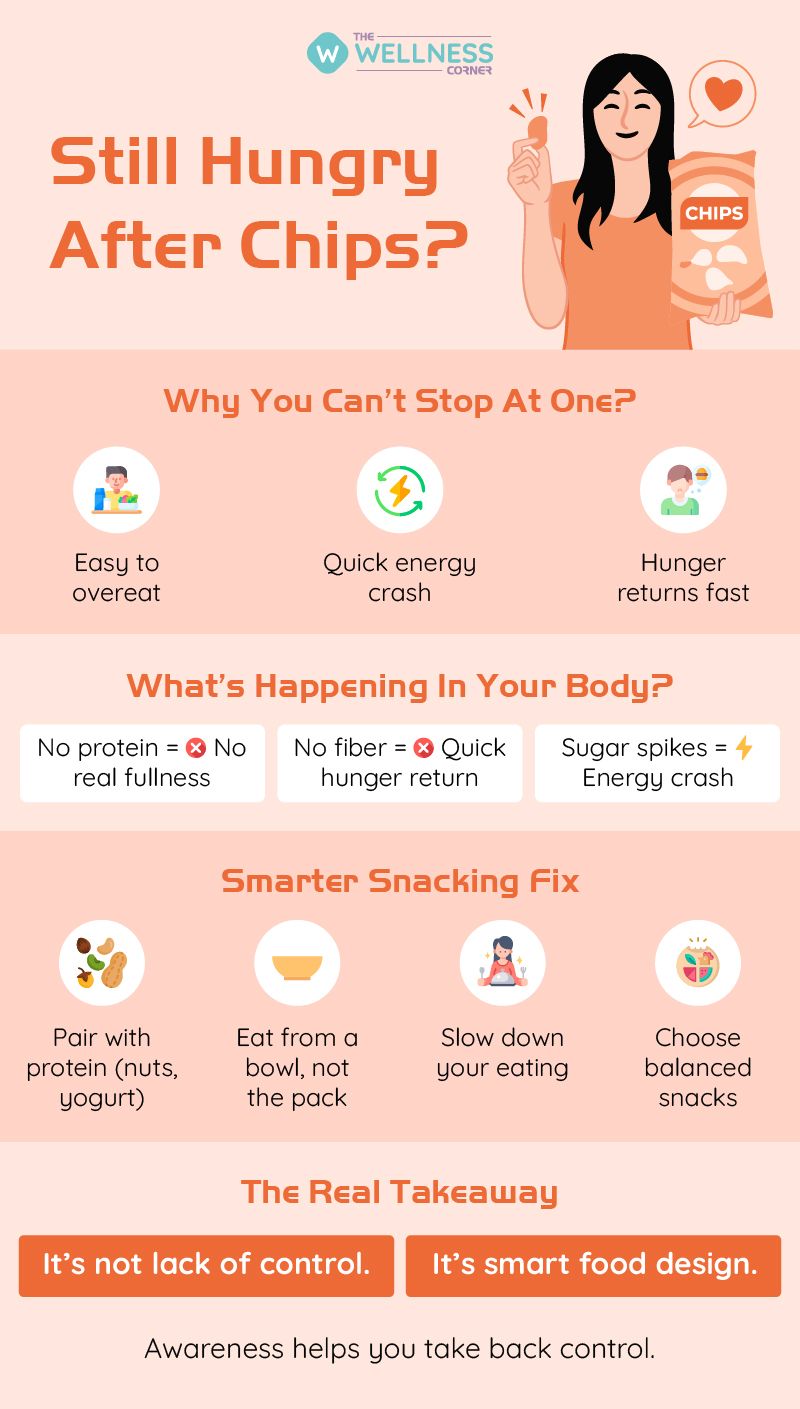
Why Chips Don’t Satisfy Your Hunger?
A packet of chips may seem filling, but nutritionally, it often lacks key components that promote satiety.
Most chips are:
- Low in protein
- Low in fiber
- High in refined carbohydrates and fats
This means they provide quick energy but do not keep you full for long.
As a result, your body continues to signal hunger even after you have eaten.
The Role Of Refined Carbohydrates
Refined carbohydrates are broken down and absorbed by the body at a rapid pace.
This can lead to a rapid rise in blood sugar levels followed by a sudden drop.
When blood sugar drops, your body responds by increasing hunger signals, making you want to eat again soon after.
This cycle can make it feel like you are constantly hungry.
Also Read: Evening Exercise Works Best For Lowering Blood Sugar Levels

Salt And Fat: A Powerful Combination
Salt enhances flavor, while fat adds richness and texture.
Together, they create a sensory experience that is highly satisfying in the moment but not necessarily fulfilling.
This combination can override your natural appetite controls, making it easier to overeat without realizing it.
The “Mindless Eating” Effect
Another factor at play is how chips are usually consumed.
They are often eaten while watching TV, scrolling through your phone, or working.
When your attention is divided, you may not fully register how much you are eating. This can lead to consuming more than intended without feeling satisfied.
Also Read - From Chips To Carrots: How To Train Your Brain To Love Healthy Foods?
Portion Sizes Can Be Misleading
Packets of chips are often designed in a way that encourages overconsumption.
What seems like a single serving may actually contain multiple servings.
Without realizing it, you may be eating far more than your body needs.

How This Impacts Your Overall Eating Habits?
Regularly consuming foods that do not promote fullness can affect your overall diet.
It may lead to:
- Frequent snacking
- Increased calorie intake
- Difficulty managing portion sizes
- Reduced intake of nutrient-rich foods
Over time, this can impact both energy levels and overall health.
Smarter Ways To Handle Cravings
You do not have to completely eliminate chips, but being mindful can help you make better choices.
Pair Snacks With Protein Or Fiber
Adding protein or fiber-rich foods can help you feel fuller for longer.
For example, combine a small portion of chips with nuts or yogurt.
Choose Portion-Controlled Servings
Instead of eating directly from the packet, take a small portion in a bowl.
This helps you stay aware of how much you are consuming.
Slow Down While Eating
Take your time to enjoy each bite. Eating slowly gives your body time to register fullness.
Opt For More Balanced Snacks
Consider snacks that include a mix of nutrients, such as fruits, nuts, or whole-grain options.
Stay Hydrated
Sometimes thirst can be mistaken for hunger. Drinking enough water can help reduce unnecessary snacking.

The Bigger Picture: It’s Not Just About Willpower
If you find it hard to stop eating chips, it is not simply a lack of control.
Many processed foods are designed to keep you coming back for more. Understanding this can help you make more conscious choices without feeling guilty.
It is about awareness, not restriction.
Make Healthier Choices With The Wellness Corner
Building better eating habits does not have to be complicated.
The Wellness Corner offers expert guidance to help you understand your cravings, improve your nutrition, and make choices that support your well-being.
With the right approach, you can enjoy your favorite foods while maintaining balance.

Frequently Asked Questions (FAQs)
1. Why do chips not make me feel full?
They are low in protein and fiber, which are essential for satiety.
2. Is it bad to eat chips regularly?
Occasional consumption is fine, but frequent intake may affect overall diet quality.
3. Why do I crave more after eating chips?
The combination of salt, fat, and refined carbs can increase cravings.
4. How can I control portion sizes?
Serve a small portion in a bowl instead of eating from the packet.
5. Are there healthier snack alternatives?
Yes, options like fruits, nuts, and whole-grain snacks provide better nutrition and satiety.
Leave a Comment

Sign-Up Now & Unlock
₹100 Cashback
Recently Published
Related Articles


Health Checks @ Home
Service
Explore



Follow us on:


© 2026 Truworth Health Technologies Pvt. Ltd.