Why Young Adults Are Dehydrated Even After Gluing Themselves To Water Bottles?
8 hours ago
5 minute read.
Water bottles have practically become a lifestyle accessory for young adults today.
From gym sessions and office desks to college campuses and social media posts, hydration culture is everywhere. Many people carry large water bottles throughout the day, constantly sip water, and still complain about symptoms like:
- Dry lips
- Fatigue
- Headaches
- Low energy
- Brain fog
- Dizziness
- Dry skin
This leaves many wondering:
“If I am drinking so much water, why do I still feel dehydrated?”
The answer is more complex than simply “drink more water.”
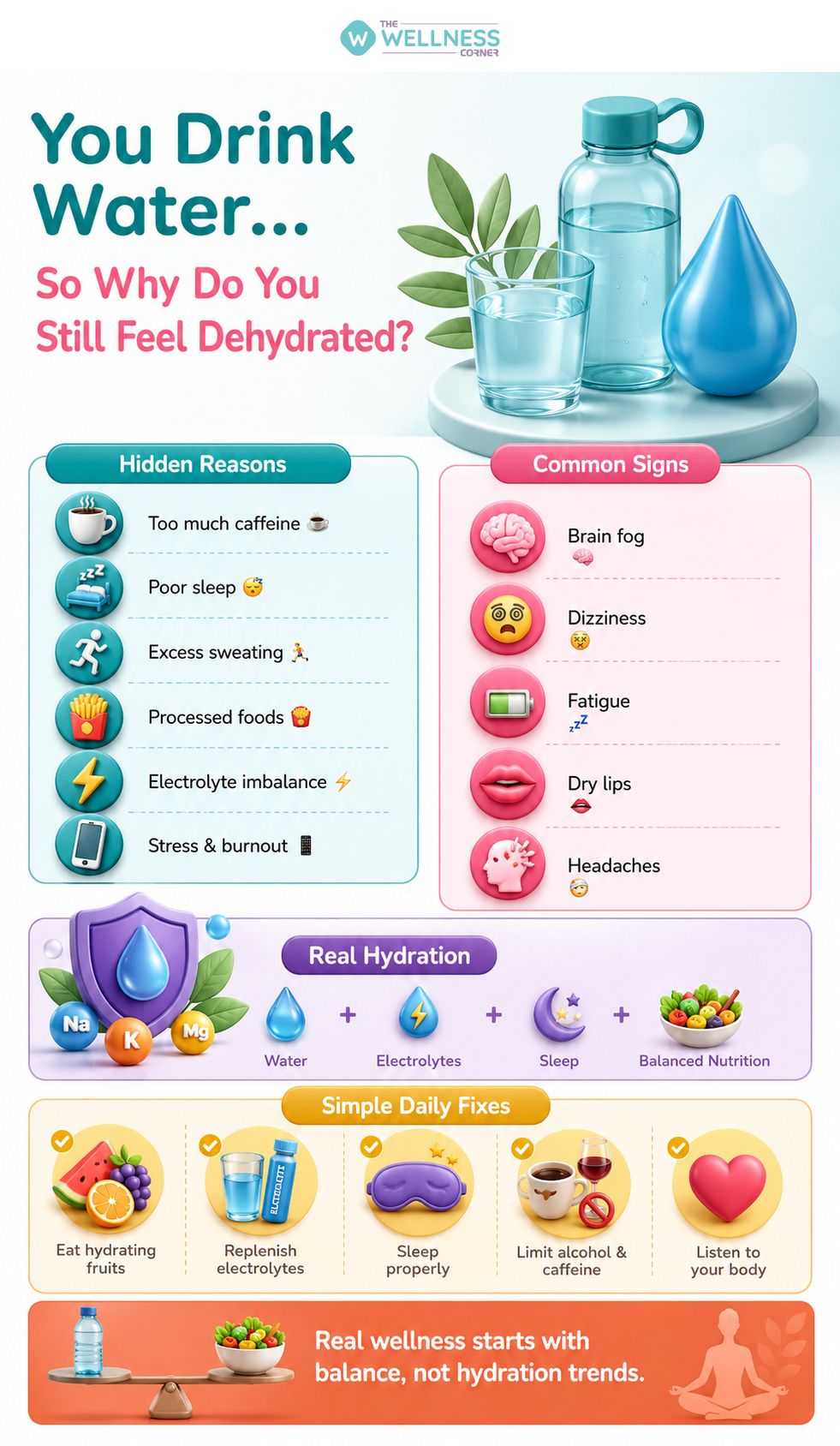
Hydration is not only about water intake. It also depends on electrolytes, diet, lifestyle habits, sleep, stress, physical activity, caffeine intake, and how the body retains fluids.
In some cases, people may technically be consuming enough water while still struggling with poor hydration balance.
Understanding why this happens can help young adults build healthier and more effective hydration habits.
Also Read: Common Drinks That Can Be Extremely Dehydrating In Summers
Hydration Is About More Than Just Water
Most people think dehydration simply means not drinking enough water.
But the body’s hydration system is far more complicated.
Proper hydration depends on balance between:
- Fluids
- Electrolytes
- Minerals
- Kidney function
- Hormones
Electrolytes like sodium, potassium, magnesium, and calcium help regulate fluid movement inside and outside cells.
Without proper balance, the body may struggle to use water efficiently.
Why Young Adults Often Experience Dehydration?
Modern lifestyles create several hidden habits that quietly contribute to dehydration.
Even people who carry water bottles all day may still experience fluid imbalance for multiple reasons.
1. Excessive Caffeine Intake
Coffee, energy drinks, pre-workout supplements, and caffeinated beverages are extremely common among young adults.
While moderate caffeine intake is usually manageable, excessive amounts may increase fluid loss in some individuals.
Many people unknowingly replace balanced hydration with:
- Multiple coffees
- Energy drinks
- Sugary caffeinated beverages
This may contribute to dehydration symptoms over time.
Also Read - Overdosing On Caffeine: How Much Is Enough?

2. Electrolyte Imbalance
Drinking large amounts of plain water without adequate electrolytes may sometimes dilute sodium and mineral balance.
This is especially relevant for people who:
- Exercise heavily
- Sweat excessively
- Live in hot climates
- Spend long hours outdoors
Hydration is not simply about volume. The body also needs proper mineral balance to retain and utilize fluids effectively.
3. High Consumption Of Processed Foods
Many packaged and processed foods contain large amounts of sodium.
Excess sodium may increase thirst and fluid imbalance, especially when paired with low intake of nutrient-rich foods.
Fast food, instant meals, packaged snacks, and processed sauces may quietly affect hydration status.
Also Read: Are All Processed Foods Unhealthy?

4. Poor Sleep Habits
Sleep and hydration are more connected than many people realize.
Lack of sleep may influence:
- Hormonal regulation
- Fluid balance
- Energy levels
- Recovery processes
Young adults often juggle work, studies, social life, and screen time, which may lead to chronic sleep deprivation.
The result can sometimes feel similar to dehydration symptoms.
Also Read: Is The 8-Hour Sleep Rule A Myth? What Science Really Says?
5. Excessive Sweating Without Proper Recovery
Fitness culture has become increasingly popular among younger generations.
While exercise is beneficial, intense workouts combined with inadequate recovery may increase fluid and electrolyte loss.
People who exercise frequently without replenishing minerals may notice:
- Muscle cramps
- Fatigue
- Headaches
- Dizziness
- Persistent thirst
Also Read: Excessive Sweating! How To Combat Them?
6. Alcohol Consumption
Alcohol affects hydration significantly because it increases fluid loss through urination.
Social drinking habits among young adults may contribute to dehydration even when water intake appears high overall.
This is one reason hangovers often involve:
- Dry mouth
- Headaches
- Fatigue
- Dizziness
7. Stress And Mental Fatigue
Chronic stress affects the body in multiple ways.
High stress levels may influence sleep, eating habits, digestion, hormone balance, and hydration patterns.
Some people under stress forget to eat balanced meals while relying heavily on caffeine and irregular routines.
The body’s overall balance can gradually become disrupted.

Signs You May Still Be Dehydrated
Hydration problems are not always obvious.
Possible signs may include:
- Dark urine
- Dry skin
- Headaches
- Fatigue
- Dizziness
- Muscle cramps
- Dry mouth
- Poor concentration
Persistent symptoms should not always be self-diagnosed as dehydration, however. Medical evaluation may sometimes be necessary.
Can You Drink Too Much Water?
Surprisingly, yes.
Overhydration can sometimes dilute sodium levels excessively, especially when extremely large amounts of water are consumed rapidly without electrolyte replacement.
This condition is uncommon but highlights an important point:
More water is not always automatically better.
Balance matters.
How To Hydrate More Effectively?
Healthy hydration habits involve more than carrying a water bottle everywhere.
1.Eat Water-Rich Foods
Fruits and vegetables naturally contribute to hydration.
Examples include:
- Watermelon
- Cucumber
- Oranges
- Tomatoes
- Strawberries
2. Balance Electrolytes Naturally
Mineral-rich foods can help support fluid balance.
Foods and beverages like:
- Bananas
- Spinach
- Tomatoes
- Oranges and oranges juice
- Watermelon
- Coconut water
- Oral rehydration solutions (ORS)
- Milk and buttermilk
3. Limit Excess Caffeine And Alcohol
Moderation helps reduce unnecessary fluid loss.
4. Prioritize Sleep
Recovery and hydration work closely together.
5. Rehydrate Properly After Exercise
Sweating heavily may require both fluids and electrolyte replenishment.
- Water
- Coconut water
- Oral rehydration solutions (ORS)
- Electrolyte drinks or sports drinks
- Lemon water with a pinch of salt
- Buttermilk or chaas
6. Listen To Your Body
Thirst, energy levels, urine color, and physical symptoms can all provide useful clues.
The Bigger Picture: Wellness Trends Sometimes Oversimplify Health
Social media often promotes hydration as a simple “drink more water” solution.
But the human body is more nuanced than that.
True hydration depends on overall lifestyle balance, including nutrition, sleep, movement, stress management, and recovery.
Sometimes the issue is not lack of water alone.
It is the body struggling to maintain equilibrium in a fast-paced lifestyle.
Support Your Everyday Wellness With The Wellness Corner
Good health is built through balanced daily habits, not quick fixes or extreme trends.
The Wellness Corner offers expert-backed guidance on hydration, nutrition, fitness, emotional wellness, preventive health, and lifestyle management to help individuals make smarter and more sustainable health choices.
Because real wellness is about supporting the body as a whole.
Frequently Asked Questions (FAQs)
1. Can someone be dehydrated even if they drink a lot of water?
Yes, electrolyte imbalance, caffeine, diet, and lifestyle factors may still contribute to dehydration symptoms.
2. What are common signs of dehydration?
Fatigue, headaches, dizziness, dry mouth, and dark urine are some common signs.
3. Do electrolytes matter for hydration?
Yes, electrolytes help regulate fluid balance within the body.
4. Can caffeine contribute to dehydration?
Excessive caffeine intake increases fluid loss in individuals.
5. Is drinking too much water harmful?
In rare cases, excessive water intake without electrolyte balance may affect sodium levels in the body.
Leave a Comment

Sign-Up Now & Unlock
₹100 Cashback
Recently Published
Related Articles



Health Checks @ Home
Service
Explore



Follow us on:


© 2026 Truworth Health Technologies Pvt. Ltd.