What Your Snack Cravings Say About Your Health?
18 hours ago
5 minute read.

It usually starts innocently. A sudden urge for something salty in the afternoon. A late-night craving for chocolate. Or that uncontrollable need to munch on something crunchy while working. Snack cravings often feel random, but they’re rarely meaningless.
Your body is constantly communicating with you. Sometimes, it uses hunger cues. Other times, it uses cravings. When you understand what your snack cravings are really trying to say, you can make smarter choices that support your health instead of working against it.
Let’s decode some of the most common snack cravings and uncover what your body might actually be asking for.
Also Read: The Impact Of Nighttime Snacking On Weight And Health
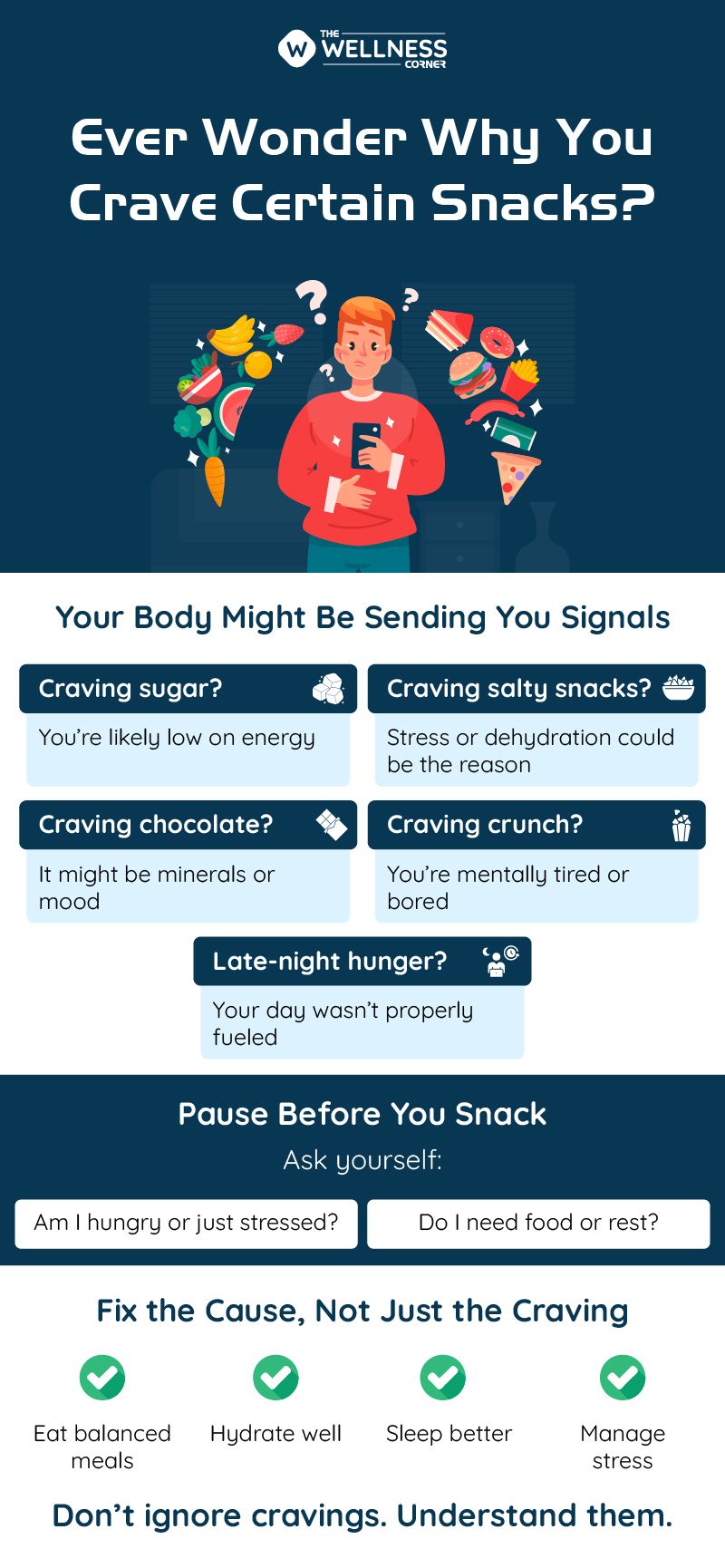
Why Do We Crave Certain Snacks In The First Place?
Cravings are influenced by a mix of physical, emotional, and lifestyle factors. These include:
- Nutrient deficiencies
- Blood sugar fluctuations
- Hormonal changes
- Stress and emotional triggers
- Poor sleep
- Dehydration
Your brain often signals cravings when something is off balance. While not every craving points to a deficiency, recurring patterns are worth paying attention to.

Craving Something Sweet? Your Energy Levels May Be Off
If you find yourself reaching for chocolates, desserts, or sugary drinks, your body may be responding to a sudden dip in blood sugar.
What It Could Mean?
- Irregular meals
- High refined carbohydrate intake
- Lack of protein or fiber
- Fatigue or poor sleep
Sugar offers quick energy, but it also leads to crashes that trigger even more cravings.
Also Read: Snacks To Charge You Up And Fight Fatigue

Smarter Swaps
- Fresh fruit with nut butter
- Greek yogurt with berries
- Dark chocolate in moderation
Balancing meals with protein, healthy fats, and complex carbs can dramatically reduce sweet cravings.
Salty Snack Cravings Might Signal Stress Or Dehydration
That urge for chips, popcorn, or fries may not be about hunger at all.
What It Could Mean?
- Dehydration
- High stress levels
- Electrolyte imbalance
- Lack of quality sleep
Also Read: Surprising Causes Of Dehydration!
When you’re stressed, your body releases cortisol, which can increase the desire for salty comfort foods.

Smarter Swaps
- Roasted nuts with minimal salt
- Homemade popcorn
- Coconut water, buttermilk, or infused water
Sometimes, simply drinking a glass of water can curb a salty craving.
Constant Chocolate Cravings Could Be More Than Just A Sweet Tooth
Chocolate cravings are extremely common, especially among women.
What It Could Mean?
- Low magnesium levels
- Emotional stress
- Hormonal changes
- Need for comfort
Magnesium plays a role in muscle function, nerve health, and stress management.
Smarter Swaps
- Dark chocolate with high cocoa content
- Nuts and seeds
- Bananas or leafy greens
If chocolate cravings are intense and frequent, consider evaluating your mineral intake.
Also Read: How To Select Dark Chocolate?

Craving Crunchy Foods? Your Mind Might Be Tired
Crunchy cravings often have less to do with nutrition and more to do with mental stimulation.
What It Could Mean?
- Mental fatigue
- Boredom
- Stress
- Jaw tension
Crunching can feel satisfying and grounding, especially during long work hours.
Smarter Swaps?
- Carrot sticks or cucumber
- Roasted chickpeas
- Apple slices
Choosing crunch from whole foods keeps the satisfaction without the excess calories.

Cheesy Or Creamy Cravings May Indicate A Need For Comfort Or Fat
If you’re constantly thinking about cheese, creamy dips, or buttery snacks, your body may be seeking fats or emotional comfort.
What It Could Mean?
- Inadequate healthy fat intake
- Emotional stress
- Habitual eating patterns
Healthy fats are essential for hormone balance, brain health, and satiety.
Smarter Swaps
- Avocado
- Nuts and seeds
- Full-fat yogurt or paneer in moderation
When your meals include enough healthy fats, cravings often naturally decrease.
Late-Night Snacking Often Signals Poor Meal Timing
Cravings that strike at night are rarely about hunger alone.
What It Could Mean?
- Skipping meals earlier in the day
- High stress levels
- Poor sleep routine
- Emotional eating
Your body may be trying to compensate for inadequate daytime nutrition.
Smarter Strategies
- Eat balanced meals throughout the day
- Include protein in dinner
- Establish a calming bedtime routine
- Follow regular meal timings in the day
A well-fueled body is less likely to demand snacks at midnight.

Spicy Food Cravings Could Be About Sensory Stimulation
Craving spicy snacks or foods might not signal a deficiency, but rather a desire for stimulation.
What It Could Mean?
- Boredom with food
- Low appetite
- Stress relief seeking
Spicy foods trigger endorphins, which create a temporary mood boost.
Smarter Swaps
- Add spices to home-cooked meals
- Choose spicy roasted vegetables
- Use chilli or pepper mindfully
Enjoy spice without relying on fried or processed options.
How Emotional Health Influences Snack Cravings?
Not all cravings come from the stomach. Many originate in the mind.
Stress, anxiety, loneliness, and even celebration can drive snack choices. Emotional eating is not a failure. It’s a signal.
Ask Yourself
- Am I hungry or just tired?
- Am I stressed or bored?
- What emotion am I trying to soothe?
Mindful awareness can help break the cycle.
When Should You Be Concerned About Cravings?
Occasional cravings are normal. But if cravings are:
- Constant
- Intense
- Leading to binge eating
- Paired with fatigue or hair loss
- Accompanied by digestive issues
It may be time to look deeper into your nutrition, sleep, hormones, or stress levels.
Listening Instead Of Fighting Your Cravings
The goal isn’t to eliminate cravings. It’s to understand them.
When you start listening to your body instead of silencing it with ultra-processed snacks, cravings become valuable information. They guide you toward better nutrition, improved energy, and long-term health.
Also Read: Are All Processed Foods Unhealthy?
Final Thoughts
Your snack cravings are not your enemy. They are messages. When decoded correctly, they can help you eat better, feel more energized, and stay in tune with your body’s real needs.
Instead of asking “Why do I crave this?”, ask yourself “What is my body feeling?”
Take Charge Of Your Health With The Wellness Corner
If you’re struggling with persistent cravings, energy crashes, or emotional eating, expert guidance can make all the difference.
The Wellness Corner connects you with experienced nutritionists and wellness professionals who help you understand your body better and build sustainable habits.
FAQs
1. Are snack cravings always a sign of nutrient deficiency?
Not always. While some cravings may indicate deficiencies, many are linked to habits, emotions, or blood sugar fluctuations.
2. How can I reduce unhealthy cravings?
Focus on balanced meals with protein, fiber, and healthy fats. Staying hydrated and getting enough sleep also helps regulate cravings.
3. Is it alright to occasionally satisfy your cravings?
Yes. Occasional indulgence is part of a healthy relationship with food. The key is moderation and awareness.
4. Why do I crave junk food when I’m stressed?
Stress triggers hormonal changes that increase the desire for comfort foods, especially those high in sugar and salt.
5. Can emotional eating be controlled?
Yes, with mindful awareness and healthier coping strategies like movement, journaling, or talking to someone.
Leave a Comment

Sign-Up Now & Unlock
₹100 Cashback
Recently Published
Related Articles




Health Checks @ Home
Service
Explore



Follow us on:


© 2026 Truworth Health Technologies Pvt. Ltd.