Can Eating Eggs Daily Raise Your Cholesterol Levels?
1 day ago
5 minute read.

Cracking The Truth Behind A Common Nutrition Myth
Eggs have long been at the center of one of nutrition’s biggest debates. For years, they were labeled as a food to limit due to their cholesterol content. Many people grew up hearing that eating eggs daily could harm heart health and increase cholesterol levels.
But is that still true today?
Modern research has shifted the conversation significantly. Eggs are now being re-evaluated not as a dietary villain, but as a nutrient-rich food with multiple health benefits. Still, confusion remains. Should you eat eggs every day? Will they impact your cholesterol?
Let’s break down the science, clear the myths, and help you make informed choices.
Also Read: Do Brown Eggs Have More Nutrition Than White Eggs?
Understanding Cholesterol: The Basics You Should Know
Before we talk about eggs, it’s important to understand cholesterol itself.
Cholesterol is a type of fat-like substance that circulates in your bloodstream. Your body actually needs it to build cells, produce hormones, and support essential functions. There are two main types:
LDL cholesterol, often called “bad” cholesterol, can build up in the arteries
HDL cholesterol, known as “good” cholesterol, helps remove excess cholesterol from the bloodstream
For a long time, dietary cholesterol, the cholesterol found in foods, was believed to directly increase blood cholesterol levels. However, research now shows that the relationship is more complex.

Eggs And Cholesterol: What Does One Egg Contain?
A single egg contains about 186 mg of cholesterol, most of which is found in the yolk. This is what initially raised concerns.
However, eggs are also packed with high-quality protein, essential vitamins such as B12 and D, healthy fats, and antioxidants like lutein and zeaxanthin, which support eye health.
So while eggs do contain cholesterol, they also offer significant nutritional value.
Also Read: Say Yes To Eggs..!
Do Eggs Actually Raise Your Cholesterol?
Here’s where things get interesting.
In most healthy people, consuming eggs has little to no major impact on overall cholesterol levels in the blood.
In fact, studies suggest that dietary cholesterol has a smaller impact on blood cholesterol than previously thought.
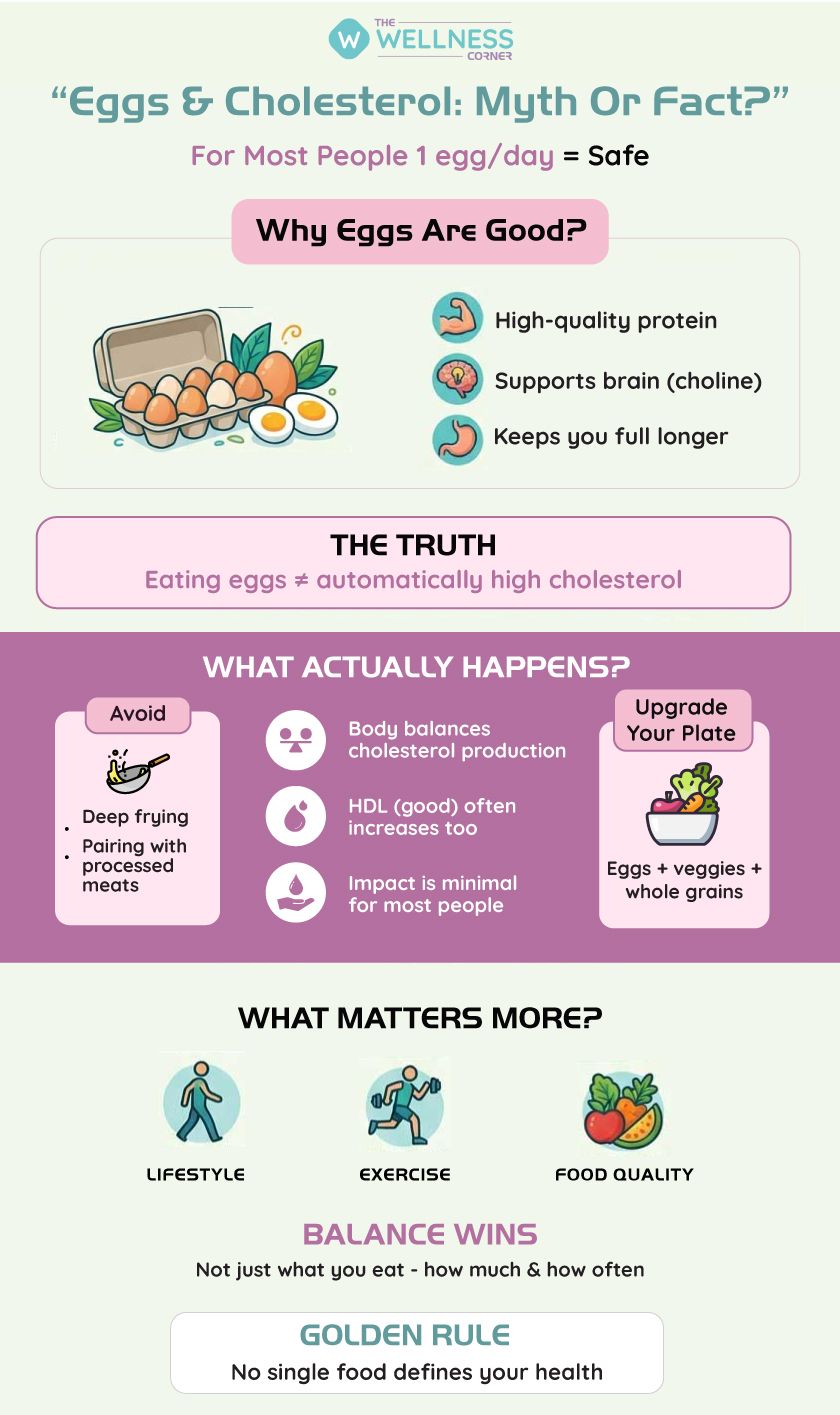
Your liver naturally produces cholesterol. When you consume cholesterol through food, your body often compensates by producing less. This balance helps maintain stable levels in many people.
In some cases, eggs may slightly increase both LDL and HDL cholesterol. However, the increase in HDL, the protective type, often offsets potential risks.
Also Read: Sticky Cholesterol And Its Impact On Heart Health
Looking At The Whole Picture: It’s More Than Just Eggs
Focusing only on eggs can be misleading.
The overall quality of your diet plays a much bigger role in determining cholesterol levels. Diets high in saturated fats, trans fats, and ultra-processed foods have a far greater impact on raising harmful cholesterol than eggs alone.
For example, pairing eggs with processed meats, fried foods, and refined carbs may contribute more to cholesterol concerns than the eggs themselves.
On the other hand, combining eggs with vegetables, whole grains, and healthy fats creates a balanced, heart-friendly meal.
Who Should Be More Careful?
While eggs are generally safe for most people, certain individuals may need to monitor their intake more closely.
People With Existing Heart Conditions
If you have high cholesterol, heart disease, or a history of cardiovascular issues, it’s best to consult a healthcare professional about your egg consumption.
Also Read: Heart Healthy Tips
Individuals With Diabetes
Some research suggests that people with diabetes may need to be cautious with high cholesterol intake, including eggs, depending on their overall diet.
Hyper-Responders
A small group of individuals tends to respond more strongly to cholesterol from foods. In these cases, eating eggs may lead to a noticeable increase in blood cholesterol levels.
The key is personalization. What works for one person may not be ideal for another.

Advantages Of Adding Eggs To Your Everyday Diet
Eggs offer several health benefits that go beyond their cholesterol content.
High-Quality Protein
Eggs provide all essential amino acids, making them an excellent source of complete protein.
Supports Brain Health
They contain choline, a nutrient important for brain function and development.
Promotes Satiety
Eggs can help you feel full for longer, which may reduce overall calorie intake and support weight management.
Rich In Nutrients
From vitamins to antioxidants, eggs are a compact source of multiple essential nutrients.
What Is The Safe Daily Intake Of Eggs?
For most healthy adults, eating one egg per day is considered safe and can be part of a balanced diet.
Some studies even suggest that up to two eggs per day may not pose significant risks for healthy individuals. However, moderation and variety are important.
Instead of focusing solely on numbers, consider your overall dietary pattern, lifestyle, and health goals.

Smart Ways To Include Eggs In Your Diet
How you prepare eggs matters just as much as how often you eat them.
Choose healthier cooking methods like boiling, poaching, or scrambling with minimal oil
Combine eggs with vegetables such as spinach, tomatoes, or mushrooms for a more balanced meal.
Avoid combining them frequently with processed meats like sausages or bacon
Use whole eggs, but balance with other protein sources like legumes and dairy
Small changes in preparation can make a big difference in overall health impact.
Common Myths About Eggs And Cholesterol
Myth 1: Eggs Are Harmful To Heart health
Reality: For most people, eggs can be part of a heart-healthy diet when consumed in moderation.
Myth 2: Egg Whites Are Healthy, But Yolks Are Harmful
Reality: The yolk contains most of the nutrients. Removing it means missing out on key vitamins and healthy fats.
Myth 3: You Should Avoid Eggs If You Have High Cholesterol
Reality: It depends on your overall diet and health condition. Professional guidance is important.
The Bottom Line: Balance Over Fear
Eggs are not the enemy they were once made out to be.
For most individuals, eating eggs daily does not automatically lead to high cholesterol or poor heart health. What matters more is your overall lifestyle, including diet quality, physical activity, stress levels, and sleep.
Instead of eliminating eggs out of fear, focus on balance, moderation, and informed choices.
Make Smarter Food Choices With The Wellness Corner
Not sure which foods to include in your diet and which ones to limit? You’re not alone.
At The Wellness Corner, you get access to expert nutrition advice, personalized diet plans, and tools that help you understand your body better. Whether your goal is managing cholesterol, improving heart health, or building sustainable eating habits, the right support can make all the difference.
Frequently Asked Questions (FAQs)
1. Can eating eggs daily increase cholesterol?
For the majority of healthy people, having eggs every day does not greatly affect cholesterol levels in the bloodstream.
2. What is the recommended number of eggs to consume daily?
One egg per day is generally safe for most people, though individual needs may vary.
3. Are egg yolks unhealthy?
No, egg yolks contain essential nutrients and healthy fats that are beneficial when consumed in moderation.
4. Should people with high cholesterol avoid eggs?
Not necessarily. It’s advisable to seek guidance from a healthcare professional for recommendations tailored to your needs.
5. What is the healthiest way to eat eggs?
Boiled, poached, or lightly cooked eggs paired with vegetables are among the healthiest options.
Leave a Comment

Sign-Up Now & Unlock
₹100 Cashback
Recently Published
Related Articles




Health Checks @ Home
Service
Explore



Follow us on:


© 2026 Truworth Health Technologies Pvt. Ltd.