Is The 8-Hour Sleep Rule A Myth? What Science Really Says?
1 day ago
5 minute read.

For years, we have heard the same advice repeated everywhere:
“Make sure you get 8 hours of sleep.”
It sounds simple, universal, and easy to remember. But in reality, sleep is far more complex than a one-size-fits-all rule.
Some people wake up refreshed after seven hours, while others still feel exhausted after eight or nine. Meanwhile, certain individuals seem to function well on slightly less sleep, at least temporarily.
So, is the famous 8-hour sleep rule actually a myth?
Not entirely.
Science does support the importance of adequate sleep. However, experts also agree that sleep needs can vary depending on age, lifestyle, health, stress levels, and individual biology.
The real goal is not obsessing over one specific number. It is understanding what quality sleep looks like for your body.
Also Read: This Is What Happens To The Body When You Are Sleep Deprived For A Long Time
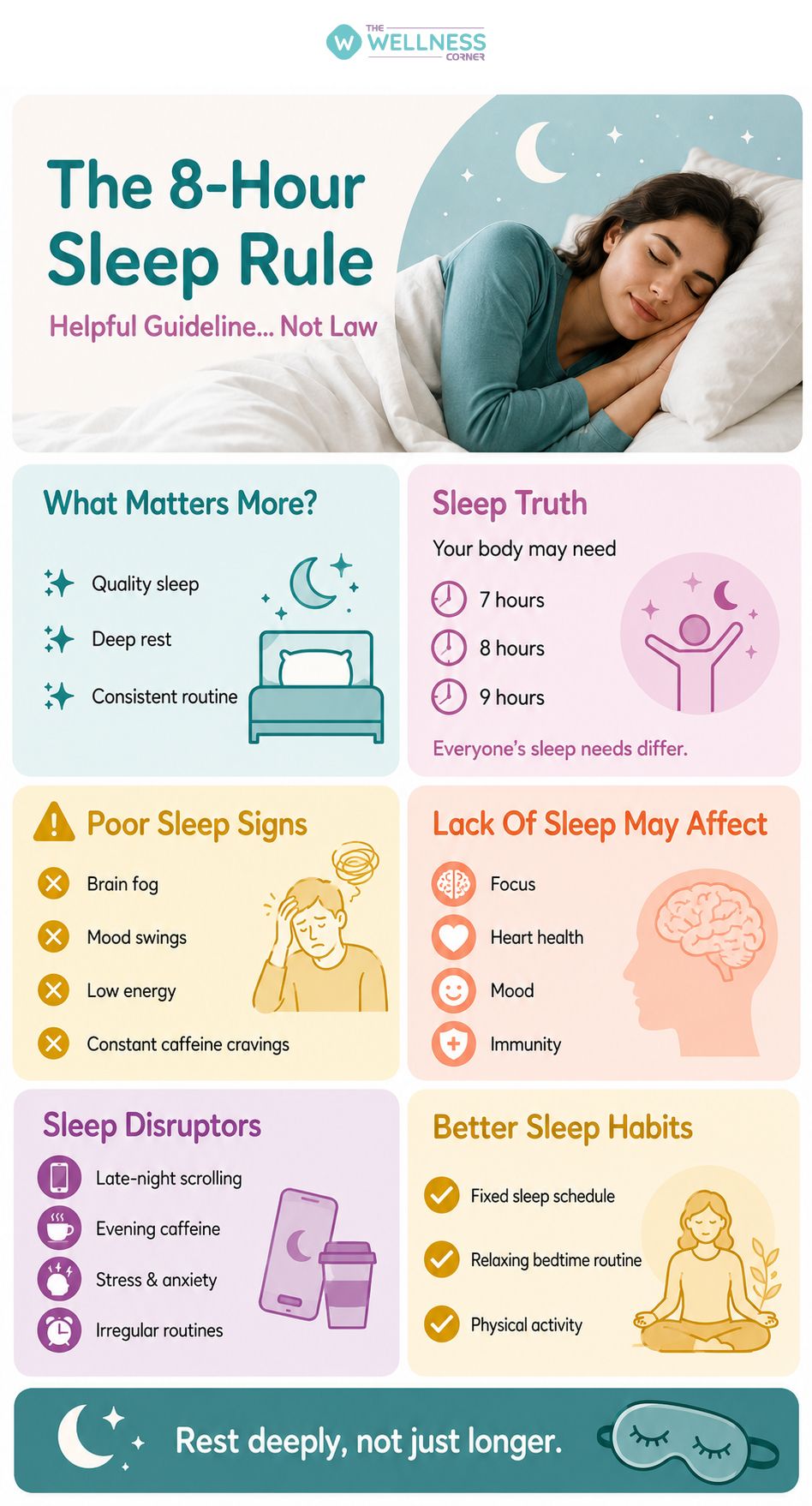
How Did The “8-Hour Sleep” Recommendation Become So Popular?
The idea likely became popular because many sleep experts recommend adults aim for approximately seven to nine hours of sleep per night.
Over time, “8 hours” became the simplified standard people remembered most.
It is not a random number.
For many adults, around eight hours falls comfortably within a healthy range.
But that does not mean everyone requires exactly the same amount every night.
Also Read: Should You Be Sleepmaxxing To Boost Health & Happiness?
Sleep Needs Are Not Identical For Everyone
Human bodies are different.
Factors that influence sleep needs include:
- Age
- Stress levels
- Physical activity
- Genetics
- Mental health
- Lifestyle habits
For instance, teenagers often need more rest than adults, whereas older individuals may experience lighter or interrupted sleep more frequently.
Someone recovering from illness, emotional stress, or physical exhaustion may also need extra rest temporarily.

Quality Matters Just As Much As Quantity
Getting eight hours of poor-quality sleep is not the same as getting restful sleep.
You may technically spend enough time in bed, but still wake up tired if your sleep is repeatedly interrupted.
Sleep quality can be affected by:
- Stress and anxiety
- Late-night screen use
- Irregular schedules
- Noise or light disturbances
- Caffeine or alcohol intake
This is why focusing only on the number of hours can sometimes be misleading.
Also Read - Overdosing On Caffeine: How Much Is Enough?
What Are The Effects Of Regularly Getting Too Little Sleep?
Lack of sleep impacts much more than just how energetic you feel.
Over time, insufficient sleep may impact:
- Concentration
- Memory
- Mood
- Immunity
- Hormonal balance
- Heart health
Chronic sleep loss can also increase irritability, stress sensitivity, and daytime fatigue.
Even small sleep deficits accumulated over time may affect overall well-being.
Can You Function On Less Than 8 Hours?
Some individuals naturally require slightly less sleep than others.
However, many people who believe they function “perfectly fine” on very little sleep may actually adapt to feeling tired without realizing how much it affects their focus, mood, or performance.
The body can temporarily compensate for sleep deprivation, but that does not mean it is functioning optimally.
Also Read: Five Warning Signs That Your Lack Of Sleep Means It’s Time To Seek Help
Oversleeping Can Also Be A Sign
Interestingly, consistently sleeping far beyond normal ranges may also indicate underlying issues in some cases.
Excessive sleep can sometimes be linked to:
- Poor sleep quality
- Stress or burnout
- Mental health struggles
- Underlying medical conditions
This does not mean sleeping longer occasionally is harmful. Recovery sleep after exhaustion is completely normal.
The key is paying attention to overall patterns and how you feel during the day.

Signs Your Body May Not Be Getting Sufficient Rest
Instead of focusing only on the clock, ask yourself:
- Do you wake up feeling refreshed?
- Do you rely heavily on caffeine to function?
- Do you struggle to stay alert during the day?
- Do you feel mentally foggy or irritable often?
Your body’s signals can reveal more than a fixed sleep number.
Also Read: Is Anxiety Brain Fog Real? - Everything You Need To Know
Why Modern Life Makes Sleep Harder?
Today’s lifestyle often works against healthy sleep habits.
Many people deal with:
- Late-night scrolling
- Work stress
- Irregular schedules
- Constant notifications
- Reduced physical activity
The brain rarely gets a chance to fully unwind.
As a result, even when people spend enough time in bed, their sleep quality may suffer.
How To Improve Sleep Naturally?
Healthy sleep habits often matter more than chasing an exact number.
1.Maintain A Consistent Sleep Schedule
Going to bed and waking up around the same time supports the body’s internal clock.
2. Reduce Screen Exposure Before Bed
Blue light from screens may interfere with melatonin production.
3. Create A Relaxing Night Routine
Reading, stretching, meditation, or calming music may help the mind unwind.
4. Limit Heavy Meals And Caffeine Late At Night
Certain foods and stimulants can disrupt sleep quality.
5. Stay Physically Active
Regular movement during the day often supports better sleep at night.
The Bigger Picture: Sleep Is About Restoration
Sleep is not simply “time spent unconscious.”
It is one of the body’s most important recovery processes.
During sleep, the body repairs tissues, regulates hormones, supports brain function, and restores energy.
The healthiest approach is not becoming anxious about reaching exactly eight hours every night.
Instead, focus on building sustainable habits that help you feel rested, alert, and mentally balanced.

Support Better Sleep And Wellness With The Wellness Corner
Good sleep is deeply connected to both physical and emotional well-being.
The Wellness Corner offers expert-backed support for stress management, lifestyle balance, mindfulness, nutrition, and overall wellness to help individuals build healthier daily routines and improve sleep quality naturally.
Because better sleep often begins with better habits.

Frequently Asked Questions (FAQs)
1. Do all adults need exactly 8 hours of sleep?
No, sleep needs vary from person to person, though most adults benefit from around seven to nine hours.
2. Is sleeping less than 8 hours unhealthy?
Not always. Some individuals naturally need slightly less sleep, but chronic sleep deprivation can affect health.
3. Can oversleeping be harmful?
Occasional extra sleep is normal, but consistently excessive sleep may sometimes indicate underlying issues.
4. Why do I still feel tired after sleeping 8 hours?
Poor sleep quality, stress, interrupted sleep, or health conditions may affect how rested you feel.
5. What improves sleep quality naturally?
Consistent sleep routines, reduced screen time, physical activity, and stress management can help improve sleep quality.
Leave a Comment

Sign-Up Now & Unlock
₹100 Cashback
Recently Published
Related Articles



Health Checks @ Home
Service
Explore



Follow us on:


© 2026 Truworth Health Technologies Pvt. Ltd.