Reasons Your Laser Treatment May Not Be Delivering Results
1 month ago
4 minute read.

Laser treatments have become one of the most widely discussed solutions for addressing skin and hair concerns. Whether it’s laser hair reduction, pigmentation correction, acne scars, or skin rejuvenation, the promise often sounds simple: smoother skin, fewer imperfections, long-lasting results.
But what happens when you’ve gone through multiple sessions and still don’t see the results you were hoping for?
It can leave you feeling frustrated, puzzled, and sometimes disheartened. You might start questioning the treatment, the clinic, or even your own skin.
The truth is, laser treatments are effective for many people, but they are not magic. Several factors influence their effectiveness, and understanding these can help you make more informed decisions moving forward.
Also Read: Do Hair, Skin, And Nails Supplement Really Work?
Different Skin And Hair Types React Differently
One of the biggest reasons laser treatments may not deliver expected results lies in biology.
Laser technology works by targeting pigment. This means it is generally more effective when there is a strong contrast between the skin tone and the hair or pigmentation being treated.
For example:
- Hair that is darker against lighter skin usually shows better results.
- Darker hair paired with lighter skin often responds more effectively.
- Certain skin tones require specific laser types for safety and effectiveness
If the treatment is not suited to your skin or hair type, results can be slower or less noticeable.
The Kind Of Laser Used Plays A Bigger Role Than You Realize
Not all lasers are created equal.
Different devices are designed for different concerns. Some are better suited for hair removal, while others target pigmentation or skin texture.
Using the wrong type of laser for your concern can lead to minimal improvement.
In some cases, clinics may use older technology that is less effective compared to newer, more advanced systems. This can significantly impact your results.
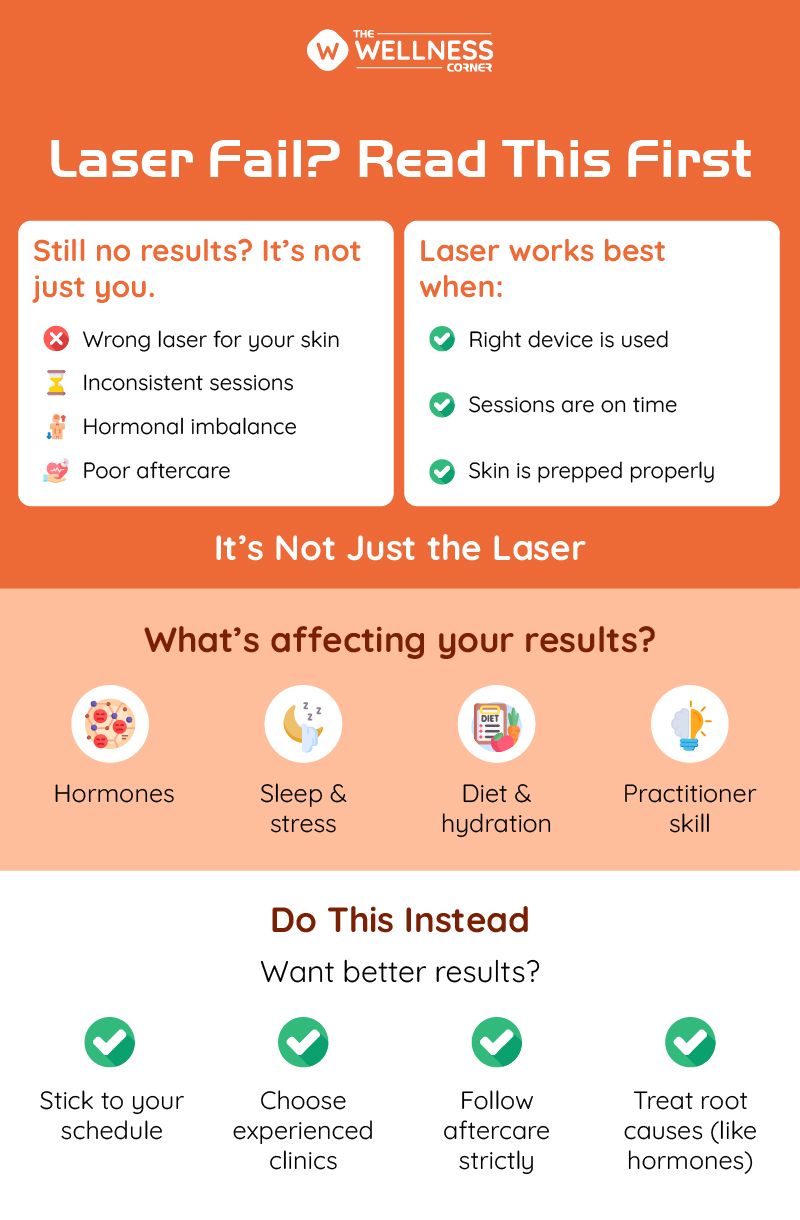
Inconsistent Sessions Can Delay Progress
Laser treatments are not one-time solutions. They require multiple sessions spaced at specific intervals to target hair or skin concerns effectively.
If sessions are delayed, skipped, or not timed correctly, the treatment may not work as intended.
For example, in laser hair reduction, hair grows in cycles. Missing the right growth phase can reduce the effectiveness of each session.
Staying consistent is essential for seeing noticeable results.
Hormonal Factors Can Interfere
Your hormones have a strong influence on hair growth and skin behavior.
Conditions like hormonal imbalance, thyroid issues, or PCOS can lead to persistent hair growth or recurring skin concerns.
Even with regular laser sessions, new hair growth may continue if the underlying hormonal issue is not addressed.
In such cases, laser treatment alone may not be enough. A combined approach involving medical guidance is often more effective.
Also Read: 9 Common Symptoms Of Hormonal Imbalances Among Women (And What To Do?)
Skincare Routine Before And After Treatment Matters
What you do outside the clinic is just as important as the treatment itself.
Certain habits can reduce the effectiveness of laser treatments, such as:
- Sun exposure before or after sessions
- Using harsh skincare products
- Skipping post-treatment care
- Not following professional advice
Proper pre-care and aftercare help your skin heal better and improve overall results.
Expectations May Not Be Realistic
One common misconception is that laser treatments offer permanent and instant results.
In reality:
- Laser hair removal reduces hair growth; it does not always eliminate it completely
- Pigmentation treatments take time and may require maintenance
- Skin rejuvenation results build gradually over multiple sessions
If expectations are not aligned with reality, even good results can feel disappointing.
The Expertise Of The Practitioner Matters
Laser treatments require precision, experience, and an understanding of skin science.
An untrained or inexperienced practitioner may:
- Use incorrect settings
- Apply uneven treatment
- Overlook important skin conditions
This can lead to poor results or even side effects.
Choosing a qualified and experienced professional is one of the most important steps in ensuring success.
Your Lifestyle Plays A Bigger Role Than You Realize
Your daily habits can directly affect how your skin responds to treatments.
Factors like:
- Poor diet
- Lack of sleep
- High stress levels
- Dehydration
Also Read: Why Immunity Is Struggling In 2025: Pollution, Stress & Urban Lifestyles
Can slow down your skin’s ability to repair and respond to treatments.
Healthy skin starts from within, and no treatment can fully compensate for an unhealthy lifestyle.
When It’s Time To Reevaluate Your Approach?
If you’ve completed multiple sessions without seeing progress, it may be time to reassess.
Ask yourself:
- Am I consistent with my sessions
- Is the technology being used suitable for me
- Have I addressed underlying health concerns
- Am I following proper skincare practices
At times, even minor changes can make a noticeable difference.
What You Can Do To Improve Results?
Here are a few practical steps to get better outcomes:
- Consult a dermatologist before continuing treatment
- Choose clinics with advanced and appropriate technology
- Stick to the recommended treatment schedule
- Follow pre-care and post-care instructions carefully
- Address hormonal or medical concerns if present
- Maintain a healthy lifestyle
Taking a more holistic approach often leads to better and longer-lasting results.
The Bottom Line: It’s Not Just The Treatment, It’s The Approach
Laser treatments can be highly effective, but they are not standalone solutions.
Results depend on a combination of factors, including your skin type, consistency, professional expertise, and overall health.
If something isn’t working, it doesn’t necessarily mean the treatment has failed. It may simply mean the approach needs to be adjusted.
Take The Smarter Route With The Wellness Corner
If you’re unsure why your laser treatment isn’t delivering results, expert guidance can make all the difference.
The Wellness Corner connects you with qualified dermatologists and wellness professionals who can assess your concerns and guide you toward the right solutions.
From personalized skincare plans to holistic health support, everything is designed to help you achieve results that actually last.
Frequently Asked Questions (FAQs)
1. Why am I not seeing results after multiple laser sessions?
This could be due to factors like skin type, hormonal issues, incorrect laser technology, or inconsistent sessions.
2. Is laser hair removal permanent?
It greatly slows down hair regrowth, though occasional maintenance sessions might still be needed.
3. Can hormones affect laser treatment results?
Yes, hormonal imbalances can lead to continued hair growth or recurring skin issues.
4. How many sessions are usually needed?
Most treatments require multiple sessions, typically 6 to 8 or more, depending on the concern.
5. Should I consult a dermatologist if results are slow?
Yes, a professional can identify underlying issues and recommend a more effective approach.
Leave a Comment

Sign-Up Now & Unlock
₹100 Cashback
Recently Published
Related Articles


Health Checks @ Home
Service
Explore



Follow us on:


© 2026 Truworth Health Technologies Pvt. Ltd.