Your Skin Remembers: Understanding What It Means And How To Reset It?
1 month ago
5 minute read.

Have you ever wondered why your skin reacts a certain way even when you change products or routines? Why does pigmentation come back? Why does sensitivity linger? Why do some habits seem to leave a lasting imprint?
It often feels like your skin “remembers” everything you’ve put it through.
And in many ways, it actually does.
Your skin carries a history of exposure, habits, and internal changes. From sun damage and stress to skincare choices and lifestyle patterns, what you see today is often the result of what happened weeks, months, or even years ago.
The good news is this. While your skin may hold onto the past, it is not stuck there. With the right approach, you can gradually guide it toward healthier patterns.
Let’s understand what skin memory really means and how you can work with it instead of against it.
Also Read: 5 Ingredients Your Skin Barrier Will Love
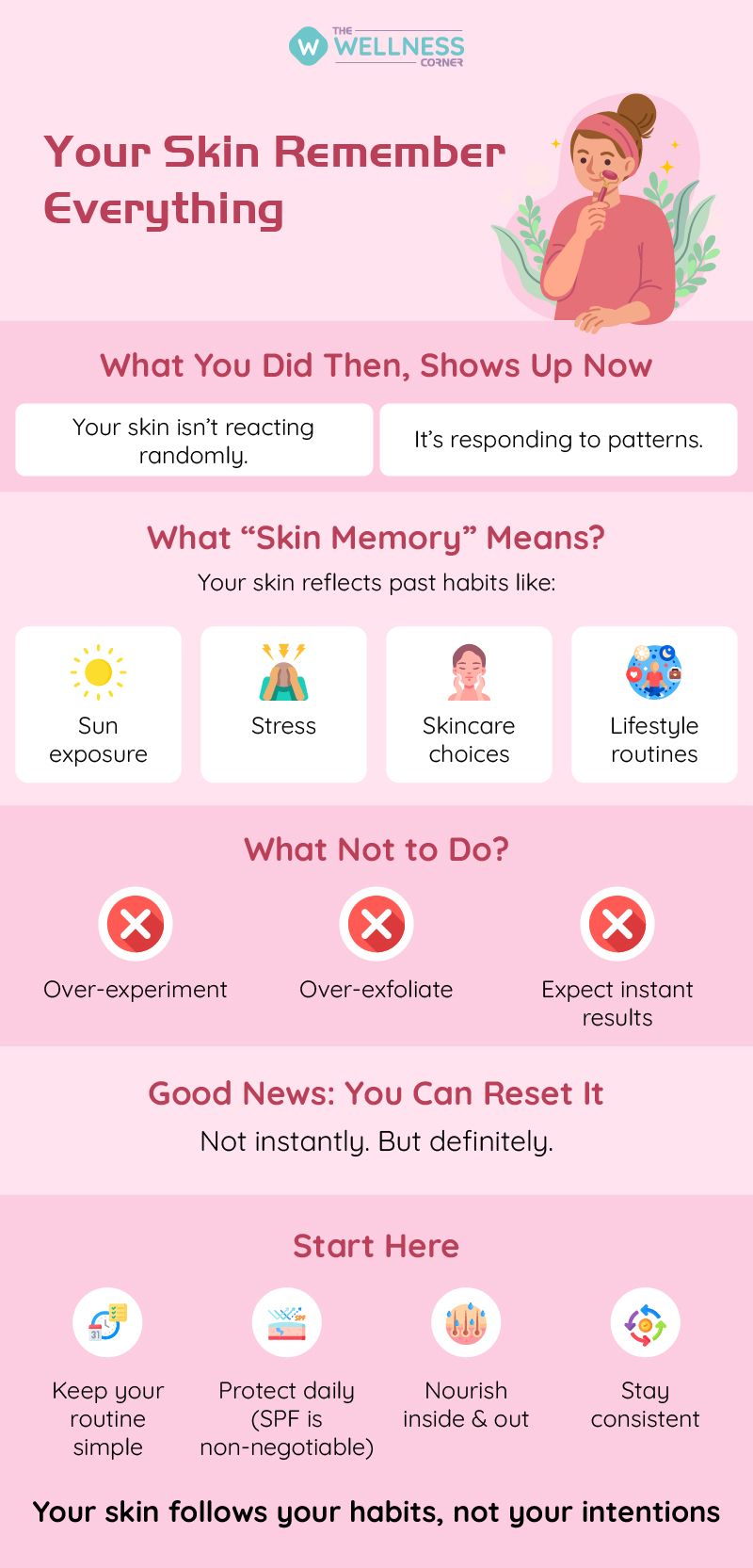
What Does “Skin Memory” Really Mean?
“Skin memory” is not a literal memory, like the one stored in the brain. It refers to the way your skin retains the effects of past damage and habits over time.
Your skin is constantly renewing itself, but certain factors can leave deeper, longer-lasting imprints.
These include:
- Exposure to the sun can cause dark spots and accelerate early signs of aging.
- Repeated irritation weakens the skin barrier
- Chronic stress affects oil production and inflammation
- Lifestyle habits influencing hydration and repair
Your skin doesn’t forget these influences quickly. Instead, it reflects them gradually.

The Science Behind It: Your Skin Is Always Adapting
Your skin is a dynamic organ. It responds to its environment, adjusts to stress, and adapts to routines.
For example:
- Frequent sun exposure can trigger long-term pigmentation changes
- Overuse of harsh products can make your skin more sensitive over time
- Consistent hydration and care can strengthen your skin barrier
This adaptability is what gives rise to the concept of “memory.” Your skin becomes conditioned by repeated patterns.
The key takeaway is simple. Your daily habits have a greater impact than actions you take once in a while.
Also Read: Why Your Skin Breakouts Every Rainy Season? (It’s Not Just Oil)
How Everyday Habits Shape Your Skin Over Time?
1. Sun Exposure Leaves A Lasting Impact
Even small, repeated exposure to the sun can accumulate over time.
You may not see immediate damage, but years later it can show up as dark spots, uneven tone, or fine lines.
This is one of the strongest examples of how skin retains past experiences.
2. Skincare Choices Build Patterns
Your skincare routine can either support or weaken your skin over time.
Using gentle, consistent products helps maintain balance. On the other hand, frequent switching or over-exfoliation can disrupt your skin barrier, making it more reactive.
Your skin adapts to what you repeatedly expose it to.
Also Read: Skincare Advice Gone Wrong: Know What To Avoid
3. Stress Shows Up On Your Skin
Emotional stress is not just mental. It can influence your skin as well.
Increased stress levels can trigger inflammation, breakouts, or dullness. Over time, these patterns may become more frequent if the root cause is not addressed.
4. Lifestyle Habits Leave Visible Traces
Sleep, hydration, diet, and physical activity all play a role in how your skin behaves.
Poor sleep or dehydration may not show immediate results, but consistent neglect can lead to dryness, uneven texture, and slower repair.

Signs Your Skin Is Holding Onto the Past
You might notice:
- Recurring pigmentation
- Persistent sensitivity
- Frequent breakouts in the same areas
- Uneven texture or dullness
These patterns often indicate that your skin is responding to long-term habits rather than short-term changes.
Can You Actually “Rewrite” Your Skin’s Memory?
The answer is yes, but it takes time and consistency.
Your skin renews itself approximately every few weeks, but bigger changes require longer commitment.
Rewriting your skin’s patterns is about creating new, healthier habits that your skin can adapt to.
Think of it as retraining rather than fixing.
Practical Ways To Reset Your Skin
1. Commit To Consistency Over Experimentation
Instead of constantly trying new products, stick to a simple and effective routine.
Gentle cleansing, hydration, and sun protection go a long way.
2. Protect Your Skin From Sun Damage
Applying sunscreen every day is one of the most effective ways to protect your skin from additional damage and support its recovery.
This single habit can significantly influence your skin’s long-term health.
3. Focus On Barrier Repair
A healthy skin barrier is key to maintaining strength and resilience.
Use products that support hydration and repair rather than stripping your skin.
4. Be Patient With Active Treatments
Treatments for pigmentation, acne, or aging take time.
Avoid expecting instant results. Gradual improvement is more sustainable and healthier for your skin.
5. Support Your Skin From Within
Your skin reflects your internal health.
Balanced nutrition, proper hydration, quality sleep, and stress management all contribute to better skin outcomes.
What Not To Do When Trying To “Fix” Your Skin?
Try not to overwhelm your routine by using too many active ingredients at once.
- Do not switch products too frequently
- Avoid harsh treatments without professional guidance
- Do not ignore underlying health or lifestyle factors
Quick fixes may offer temporary results, but they rarely address the root cause.
The Role Of Professional Guidance
Sometimes, persistent skin concerns require expert evaluation.
A dermatologist or skincare professional can help identify underlying causes and recommend treatments that are suited to your skin type.
This ensures that you are not just guessing, but making informed decisions.
The Bigger Picture: Your Skin Is Always Listening
Your skin is constantly responding to what you do, how you live, and what you expose it to.
It may take time, but every positive change you make adds up.
Instead of trying to erase the past overnight, focus on building better habits today.
Your skin will follow.
Start Your Skin Reset Journey With The Wellness Corner
If you’re unsure where to begin or feel stuck with recurring skin concerns, expert guidance can make a real difference.
The Wellness Corner connects you with qualified professionals who can help you understand your skin, build effective routines, and create lasting improvements.
From skincare advice to holistic wellness support, everything is designed to help you move forward with confidence.
Frequently Asked Questions (FAQs)
1. What does it mean that skin has a memory?
It refers to how your skin reflects past habits, damage, and routines over time.
2. Can skin damage be reversed?
Some damage can be improved with consistent care, but it may take time.
3. How long does it take to see changes in skin?
Visible improvements may take a few weeks, while deeper changes require longer consistency.
4. Is it okay to try new skincare products frequently?
Frequent changes can irritate your skin. Consistency is more effective.
5. Should I consult a professional for persistent issues?
Yes, expert guidance can help address the root cause and improve results.
Leave a Comment

Sign-Up Now & Unlock
₹100 Cashback
Recently Published
Related Articles


Health Checks @ Home
Service
Explore



Follow us on:


© 2026 Truworth Health Technologies Pvt. Ltd.