Late Pregnancy Risks: What’s the Ideal Age To Become A Mother? What Changes After 35?
2 days ago
5 minute read.

The Changing Timeline Of Motherhood
Over the past decade, the timeline of motherhood has shifted significantly. More women today are choosing to focus on education, careers, financial stability, and personal growth before starting a family. As a result, pregnancy after 30 and even after 35 has become increasingly common.
While this shift reflects empowerment and choice, it also brings important health considerations that are often overlooked or misunderstood. Many women find themselves asking, “Is there really an ideal age to have a baby?” or “What risks should I be aware of after 35?”
The answers are not black and white. Every woman’s body, health, and circumstances are unique. However, understanding how age impacts fertility and pregnancy can help you make informed, confident decisions.
Let’s explore what science says, what risks exist, and how you can support a healthy pregnancy at any age.
Also Read - Pregnancy Health: Identifying Common Infections Early
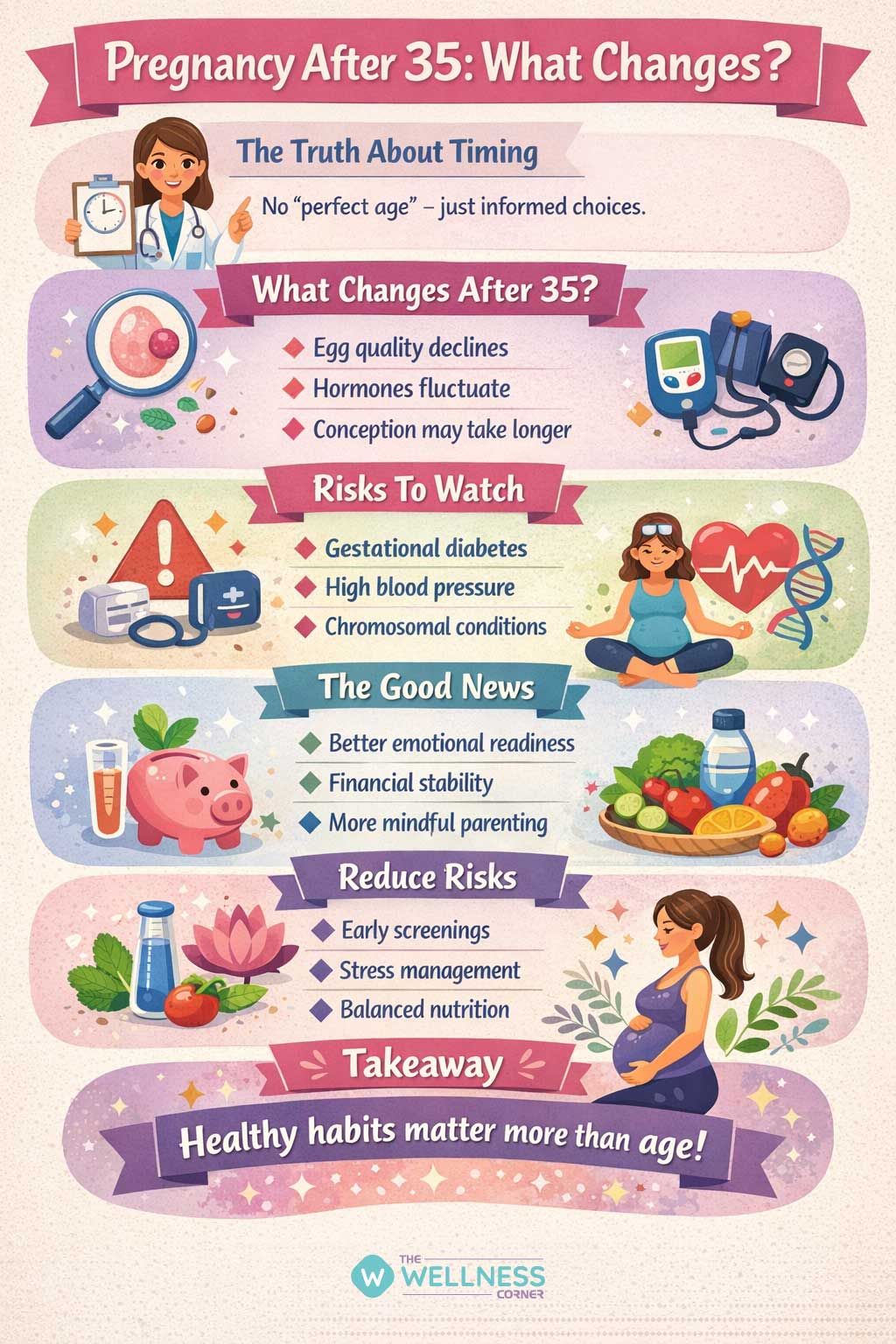
Is There Really An “Ideal” Age For Pregnancy?
Biologically speaking, fertility tends to be highest in a woman’s 20s and early 30s. During this time, egg quality and quantity are generally at their peak, and the body is better equipped to support pregnancy with fewer complications.
However, calling any age “ideal” can be misleading.
Emotional readiness, financial stability, relationship support, and mental well-being all play a crucial role in motherhood. For some women, their late 20s may feel right. For others, their mid-30s may be the perfect time.
Instead of focusing on a fixed “ideal age,” it is more helpful to understand how fertility changes over time and what you can do to manage potential risks.

What Changes After The Age Of 35?
Pregnancy after 35 is medically referred to as “advanced maternal age.” While this term may sound alarming, it is primarily used to indicate that certain risks require closer monitoring.
Here are the key biological changes that occur:
Decline In Egg Quantity And Quality
Women are born with a limited supply of eggs that gradually decreases over time. As age increases, both the number and quality of these eggs decline. This can make conception take longer and may increase the chances of chromosomal abnormalities.
Hormonal Shifts
Hormonal balance can fluctuate more noticeably after 35, which may impact ovulation cycles and fertility patterns.
Also Read: Ovulation Calculator-Know The Right Time For You!
Slower Recovery And Increased Sensitivity
The body may take longer to recover from pregnancy and may be more sensitive to physical stress, fatigue, and nutritional demands.
Common Challenges With Conception After 35
Many women conceive naturally after 35, but some may face additional challenges.
Longer Time To Conceive
It may take more time for fertilization to occur due to reduced egg quality and ovulation irregularities.
Increased Risk Of Miscarriage
The likelihood of miscarriage increases with age, often due to chromosomal changes in the embryo.
Also Read: Coping With A Miscarriage!
Need For Medical Assistance
Some women may require fertility support such as ovulation tracking, medications, or assisted reproductive techniques.
It is important to note that these are possibilities, not certainties. A significant number of women experience safe and healthy pregnancies even in their late 30s and early 40s.
Health Risks During Late Pregnancy
While many pregnancies after 35 are healthy, certain risks are statistically higher and should be monitored carefully.
Gestational Diabetes
The body may have a harder time regulating blood sugar during pregnancy, increasing the risk of gestational diabetes.
High Blood Pressure
Conditions like pregnancy-induced hypertension or preeclampsia are more common with increasing age.
Preterm Birth Or Low Birth Weight
There may be a slightly higher chance of premature delivery or lower birth weight.
Chromosomal Conditions
The risk of conditions such as Down syndrome increases with maternal age, which is why prenatal screening is often recommended.
Regular check-ups and early screening play a critical role in managing these risks effectively.
Emotional And Mental Health Considerations
Late pregnancies are not just about physical health. Emotional well-being is equally important.
Women in their 30s often juggle multiple responsibilities, including demanding careers, family expectations, and personal goals. This can lead to increased stress or anxiety during pregnancy.
At the same time, many women report feeling more emotionally prepared, stable, and confident in their 30s compared to their younger years.
Balancing emotional health through mindfulness, support systems, and open communication is essential.
The Positive Side Of Pregnancy After 35
While risks are often highlighted, there are also many advantages.
Greater Emotional Readiness
Many women feel more self-aware and mentally prepared for motherhood.
Financial Stability
A more established career can provide better financial security and access to healthcare.
Conscious Parenting
Older parents often make more informed, intentional decisions regarding parenting and lifestyle.
Age brings experience, and that can be a powerful asset in raising a child.
Ways To Maintain A Healthy Pregnancy After 35
If you are planning a pregnancy or are already expecting after 35, there are several ways to support your health:
Prioritize Nutrition
Aim for a well-balanced diet that includes essential nutrients like folic acid, iron, calcium, and protein.
Stay Physically Active
Moderate exercise supports circulation, energy levels, and overall well-being.
Manage Stress
Practices like deep breathing, meditation, and prenatal yoga can help maintain emotional balance.

Get Regular Health Check-Ups
Routine screenings, ultrasounds, and consultations help detect and manage any potential concerns early.
Avoid Self-Medication
Always consult a healthcare professional before taking supplements or medications.
Breaking The Myths Around Late Motherhood
There is a common misconception that pregnancy after 35 is unsafe or abnormal.
The reality is far more balanced.
Medical advancements, better awareness, and improved prenatal care have made it possible for many women to have safe and healthy pregnancies later in life.
The focus should not be on fear, but on awareness and preparation.
Every Journey Is Personal
Choosing when to become a mother is one of the most personal decisions a woman can make.
There is no perfect timeline that fits everyone.
Whether you decide to have a child in your 20s, 30s, or beyond, what matters most is being informed, prepared, and supported.
Your journey does not need to match anyone else’s.
Take The Next Step With Confidence
If you are planning a pregnancy or navigating concerns around fertility and age, having the right guidance can make all the difference.
At The Wellness Corner, you can connect with experienced healthcare professionals, nutritionists, and wellness experts who help you make informed decisions tailored to your body and lifestyle.
From preconception planning to pregnancy care and emotional well-being, expert support ensures that you feel confident every step of the way.

Frequently Asked Questions (FAQs)
1. Is it safe to get pregnant after 35?
Yes, many women have healthy pregnancies after 35. However, it may require closer medical monitoring to manage potential risks.
2. Does fertility drop immediately after 35?
Fertility declines gradually over time. While it becomes more noticeable after 35, many women can still conceive naturally.
3. Should I consider fertility testing?
If you’ve been trying to conceive for several months without success, consulting a doctor for evaluation can be helpful.
4. Are there higher risks for the baby?
There is a slightly increased risk of chromosomal conditions, but prenatal screening can help assess and manage these risks.
5. Can lifestyle changes improve the chances of conception?
Yes, a balanced diet, regular exercise, stress management, and proper sleep can positively impact fertility and pregnancy health.
Leave a Comment

Sign-Up Now & Unlock
₹100 Cashback
Recently Published
Related Articles


Health Checks @ Home
Service
Explore



Follow us on:


© 2026 Truworth Health Technologies Pvt. Ltd.