Can Mangoes Fit Into A Diabetic Diet? Absolutely - Here’s How
1 day ago
5 minute read.

Mango season brings excitement for many people.
Its rich flavor, natural sweetness, and cultural popularity make mango one of the most loved fruits worldwide. But for individuals living with diabetes, mangoes often come with hesitation and guilt.
Many people immediately assume:
- “Mangoes are too sweet.”
- “Diabetics should completely avoid mangoes.”
- “They will instantly spike blood sugar.”
As a result, some people stop eating mangoes entirely, even though they enjoy them deeply.
But is avoiding mangoes completely really necessary?
Not always.
The reality is more balanced than many social media myths or diet trends suggest.
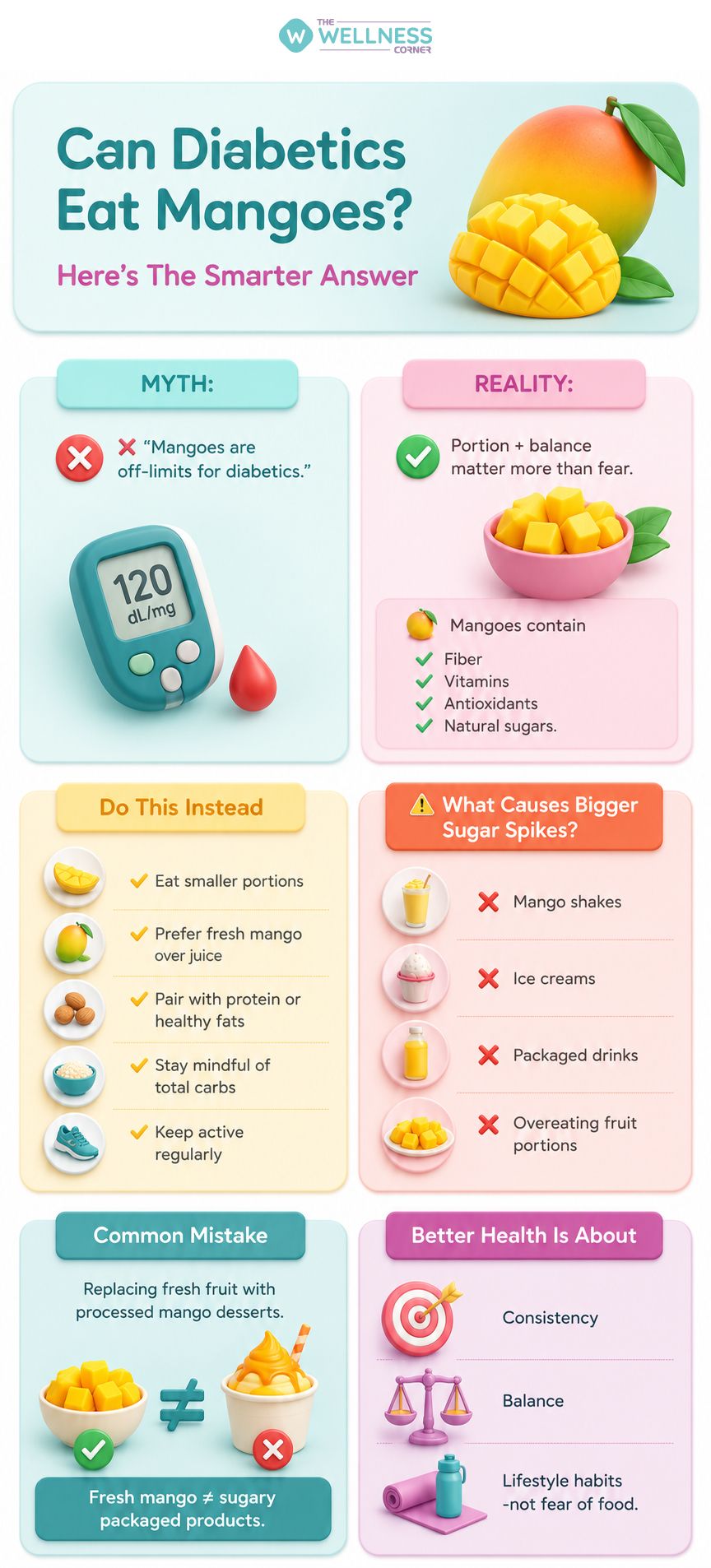
People with diabetes can often include mangoes in their diet mindfully when portion sizes, meal balance, timing, and overall lifestyle are considered carefully.
Healthy eating with diabetes is rarely about completely banning foods forever.
It is usually about understanding moderation, balance, and smarter food choices.
Also Read: Buying Mangoes? Identify Artificially Ripened Fruits Quickly With These Simple Checks
Why Mangoes Often Get A “Bad Reputation”?
Mangoes naturally contain sugar and carbohydrates.
Since managing diabetes requires keeping blood sugar levels stable, sweet fruits are often approached with caution.
However, not all carbohydrates affect the body in exactly the same way.
Mangoes also contain:
- Fiber
- Vitamin C
- Vitamin A
- Antioxidants
- Plant compounds
The nutritional picture is more complex than simply labeling mangoes as “good” or “bad.”
Understanding Blood Sugar And Fruit
When carbohydrates are consumed, the body converts them into glucose for energy.
This naturally raises blood sugar levels.
However, the way it affects the body can vary based on factors such as:
- Portion size
- Fiber content
- Meal composition
- Overall diet
- Physical activity
- Individual metabolism
Even healthy foods can affect blood sugar when eaten excessively.
The key is balance rather than fear.
Also Read: Get Your Food Portions Under Control

Can People With Diabetes Eat Mangoes?
For many individuals with diabetes, the answer is yes.
When eaten in reasonable portions, mangoes can usually be included as part of a well-balanced diet.
The goal is not unlimited intake.
The goal is mindful intake.
Many healthcare professionals focus on overall carbohydrate management rather than banning specific fruits completely.
1. Portion Size Matters Most
One of the biggest mistakes people make is eating very large portions at once.
A few mango slices affect the body differently than eating multiple large servings in one sitting.
Smaller portions may help people enjoy the fruit while managing blood sugar more effectively.
Mindful eating often matters more than complete restriction.

2. Whole Mango Is Better Than Mango Juice
Whole fruit contains fiber, which slows digestion and may help reduce rapid blood sugar spikes.
Mango juice, on the other hand, often contains concentrated sugar with much less fiber.
This may lead to faster glucose absorption.
Fresh mango slices are generally a better option than:
- Packaged mango drinks
- Sweetened mango shakes
- Processed mango desserts
Also Read: How Many Mangoes Should You Eat In A Day?
3. Pair Mangoes With Protein Or Healthy Fats
Combining carbohydrates with protein or healthy fats may help support steadier blood sugar responses.
For example, mango may be paired with:
- Nuts
- Seeds
- Greek yogurt
- Paneer
Balanced meals often support better glucose management compared to eating sugary foods alone.
4. Timing Can Influence Blood Sugar Response
Eating large portions of fruit late at night or alongside high-sugar meals may affect blood sugar differently than eating moderate portions earlier in the day.
Meal timing and overall eating patterns matter.
Also Read: How To Deal With Blood Sugar Spike After Eating? Here’s The Correct Food Order

5. Physical Activity Also Plays A Role
Physical activity helps the body use glucose more effectively for energy.
People with active lifestyles may respond differently to carbohydrates compared to highly sedentary individuals.
This is one reason diabetes management is highly individualized.
Why Completely Restricting Favorite Foods Can Backfire?
Extremely restrictive diets are difficult to maintain long-term.
When people label foods as completely forbidden, they may experience:
- Cravings
- Frustration
- Emotional eating
- Binge eating patterns
Sustainable nutrition often involves flexibility and moderation rather than fear-based restriction.
Learning how to include favorite foods responsibly may support healthier long-term habits.
Mangoes Also Offer Nutritional Benefits
While mangoes are sweet, they also provide beneficial nutrients.
These include:
- Vitamin C
- Vitamin A
- Fiber
- Antioxidants
The focus should remain on overall dietary balance instead of viewing foods in isolation.
Important Considerations For People With Diabetes
Every individual responds differently to food.
Blood sugar responses may vary depending on:
- Medication
- Insulin sensitivity
- Activity levels
- Sleep quality
- Stress
- Overall meal patterns
This is why individualized guidance from a healthcare professional is still essential.
Monitoring blood sugar patterns may help individuals understand how specific foods affect them personally.
What About Dried Mango Or Mango Desserts?
Processed mango products are often very different from fresh fruit.
Many packaged foods contain:
- Added sugars
- Syrups
- Refined carbohydrates
- Artificial ingredients
Examples include:
- Candied mango
- Mango ice cream
- Sweetened mango drinks
- Packaged desserts
Compared to moderate portions of fresh mango, these processed products may lead to a sharper rise in blood sugar levels.
The Bigger Picture: Diabetes Management Is About Overall Lifestyle
Diabetes care involves much more than avoiding sugar alone.
Long-term blood sugar management also depends on:
- Sleep
- Stress management
- Exercise
- Medication adherence
- Balanced nutrition
- Weight management
- Consistent routines
No single food determines health outcomes entirely.
Sometimes the healthiest approach involves moving away from fear and toward informed balance.
Healthy Eating Should Still Feel Enjoyable
People living with diabetes often feel emotionally exhausted by constant food restrictions.
Healthy eating should still include enjoyment, cultural connection, flexibility, and a sense of satisfaction.
For many individuals, enjoying seasonal fruits mindfully may be far more sustainable than complete avoidance.
Food should support health without creating unnecessary fear around every meal.
Make Smarter Nutrition Choices With The Wellness Corner
Understanding nutrition can feel overwhelming, especially with so much conflicting health advice online.
The Wellness Corner offers expert-backed support for nutrition, fitness, emotional wellness, preventive health, and healthier lifestyle management to help individuals make informed and sustainable health choices.
Because long-term wellness is shaped by practical everyday habits rather than strict or extreme diet rules.
Frequently Asked Questions (FAQs)
1. Can people with diabetes eat mangoes?
Yes, many people with diabetes can enjoy mangoes in moderation as part of a balanced diet.
2. Is mango juice healthier than whole mango?
Whole mango is generally preferred because it contains more fiber and less concentrated sugar.
3. Does mango immediately spike blood sugar?
Blood sugar response depends on portion size, meal balance, activity levels, and individual metabolism.
4. Should diabetics completely avoid sweet fruits?
Not always. Many fruits can fit into diabetes-friendly meal plans when consumed mindfully.
5. What is the best way to eat mangoes with diabetes?
Moderate portions paired with balanced meals containing protein or healthy fats may help support steadier blood sugar levels.
Leave a Comment

Sign-Up Now & Unlock
₹100 Cashback
Recently Published
Related Articles


Health Checks @ Home
Service
Explore



Follow us on:


© 2026 Truworth Health Technologies Pvt. Ltd.