Signs Your Body Is Carrying More Tension Than You Realise, Can Spa Therapy Fix It?
2 days ago
7 minute read.
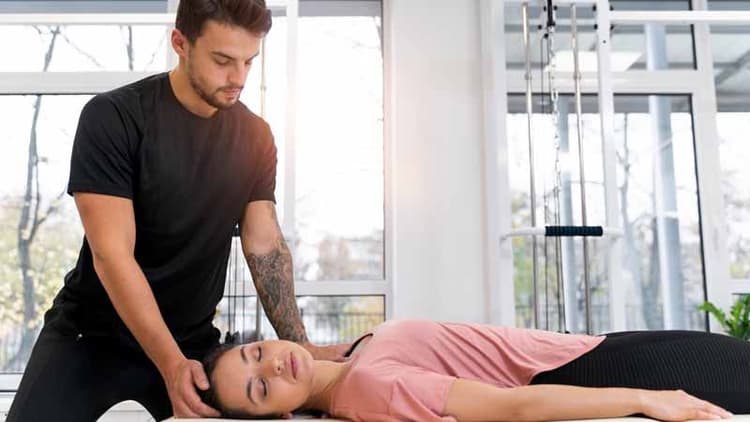
Most of us go through our days without ever stopping to ask a simple question: Is my body actually okay right now?
We wake up tired, reach for coffee, push through back-to-back commitments, skip proper meals, scroll through our phones at night, and then wonder why our shoulders feel like they're made of concrete. Tension has a way of settling into the body so gradually that it starts to feel completely normal. And that's exactly the problem.
Let's discuss what's really going on, how to identify it, and whether spa therapy can genuinely make a difference.
Also Read: Can Massage Give A Boost To Your Fitness Journey?
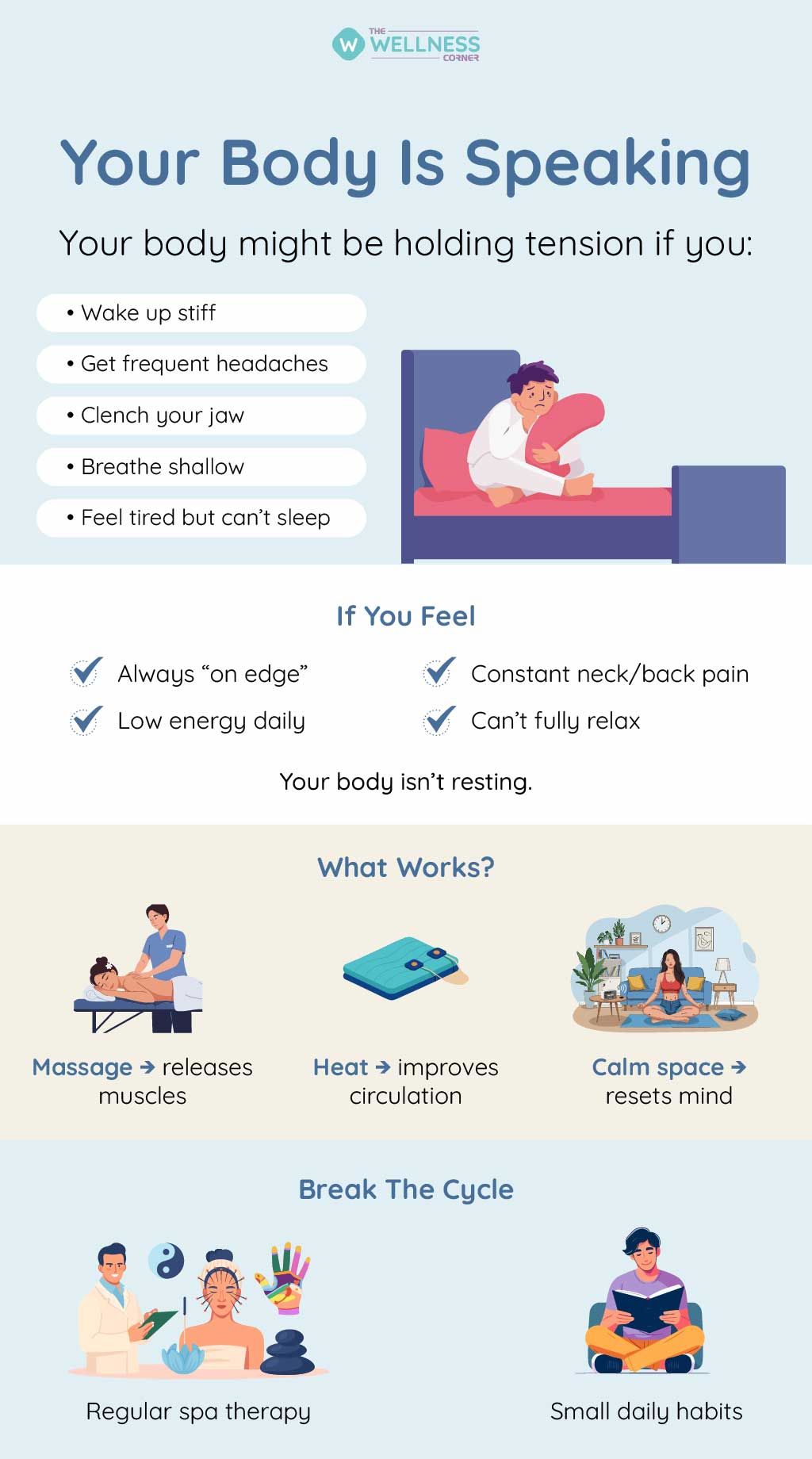
What Does "Carrying Tension" Actually Mean?
Physical tension happens when your muscles stay partially contracted longer than they should. It's your nervous system doing what it was designed to do, bracing your body in response to stress. The trouble is, modern life triggers that response constantly, and most of us never fully recover.
Over time, that chronic low-level tension becomes your new normal. Your body genuinely forgets what relaxed feels like. You stop noticing it not because it's gone, but because you've adapted to it.
Signs You're Holding More Tension Than You Think
You don't need to be in obvious pain to be carrying significant tension in your body. These are important signs that shouldn’t be ignored.
In your body:
- Waking up with a stiff neck or a tight jaw most mornings
- Headaches that seem to live at the base of your skull or across your temples
- Shoulders that have slowly crept up toward your ears without you noticing
- Lower back ache that hangs around without any clear reason
- Clenching your jaw during the day, or waking up to a sore face from grinding at night
- Shallow breathing, or catching yourself holding your breath during everyday tasks
In your mood and behaviour:
- Irritability that catches you off guard, snapping at people you care about
- Falling into bed exhausted, but lying awake for an hour before sleep arrives
- A foggy, unfocused mind that makes simple tasks feel harder than they should
- Feeling perpetually rushed even on days when your schedule is actually manageable
Also Read - Brain Fog: Headaches, Anxiety Incoherence and, Confusion after COVID-19
The signs people most commonly miss:
- Digestive discomfort with no obvious dietary cause, because the gut and nervous system are deeply connected
- Hands and feet that always feel cold, often a sign that chronic muscle tension is affecting circulation
- That particular kind of tired where rest doesn't seem to restore you
If several of these feel familiar, your body has been trying to get your attention for quite some time.

Why We Ignore It? (And Why That Eventually Catches Up With Us)
The insidious thing about chronic tension is that it doesn't arrive all at once. It accumulates quietly over months and years until "this is just how I am" becomes the story we tell ourselves.
I've always been a tense person. I've never been a good sleeper. Most of my tension seems to build up in my shoulders. These feel like personality traits, but they're not. They're patterns. And unlike personality, patterns can genuinely be changed.
When tension is left unaddressed over a long stretch of time, it creates a ripple effect through the whole body. Cortisol stays elevated. Sleep quality deteriorates. Immune function takes a hit. Concentration becomes harder to sustain. The body keeps a record of everything it absorbs, and eventually that record becomes impossible to ignore.
So Can Spa Therapy Actually Help?
Yes, and not only in a temporary “feel-good for a few hours” sense. There's genuine physiology behind why therapeutic spa treatments work.
When you receive a proper massage, your parasympathetic nervous system, the part responsible for rest and recovery, gets directly stimulated. Cortisol drops. Serotonin and dopamine levels rise. Blood flow improves. Muscles that have been holding a contracted state for weeks or months begin to physically release. Even a single well-executed session produces measurable changes in both tension and mood.
Heat-based therapies like hydrotherapy pools, steam rooms, and warm body wraps dilate blood vessels, encourage the lymphatic system to clear out what it's been holding onto, and give chronically tight muscles the warmth they need to let go.
Aromatherapy works through a more direct route than most people realise. Scent has a straight pathway to the limbic brain, the part that governs your emotional state and stress response. This is why stepping into the right environment can cause your nervous system to begin settling almost before a treatment has even started.
It's also worth mentioning that good spa therapy is never one size fits all. Treatments can and should be tailored to where you are in life. Thoughtfully designed specialized spa experiencesare created to support a wide range of wellness needs, offering restorative care for everyone, including expectant mothers who are navigating a uniquely demanding blend of physical and emotional changes. Each experience is carefully tailored to provide comfort, relaxation, and balance, ensuring that every individual can find a treatment that aligns with their body, lifestyle, and stage of life.

How Frequently Do You Really Need to Go?
One session is a wonderful start, but it's not going to undo months of accumulated tension on its own. The honest analogy is exercise. One good workout leaves you feeling better, but consistent effort is what creates lasting change.
A practical starting point that many therapists suggest:
- If your tension levels are high, fortnightly sessions for the first couple of months make a noticeable difference
- Once you've worked through the backlog, monthly sessions keep the nervous system regulated
- For people in a generally good baseline, a seasonal visit combined with daily stress habits works well as maintenance
Between sessions, the small things genuinely matter. Slow breathing, gentle movement each morning, reducing screen exposure before bed, drinking enough water, and spending time outdoors all support the work that spa therapy begins.
Also Read: Mindful Breathing
What Separates A Genuinely Therapeutic Spa From A Nice Afternoon Out?
Not every spa experience delivers therapeutic outcomes, and it's worth knowing the difference before you book.
Look for therapists who are properly qualified and experienced, not just trained in relaxation techniques. A good intake process matters too because your therapist should know your health history, current areas of concern, and what outcome you're hoping for before the treatment begins. Treatments that are customised to your body will always outperform a rigid menu applied the same way to everyone.
The environment itself plays a bigger role than people expect. A space that's calm, low-stimulus, and genuinely designed around rest gives your nervous system permission to settle in a way that a busy, clinical setting simply cannot replicate.
Frequently Asked Questions
Q1. Can spa therapy replace medical treatment for chronic tension or pain?
Spa therapy is a genuinely powerful support for the body, but it works best alongside medical care rather than in place of it. If you have persistent pain or a diagnosed condition, always loop in your healthcare provider.
Q2. How soon will I notice a difference after my first session?
Most people feel a meaningful reduction in muscle tension and a shift in mood within the same day. Greater improvements to sleep quality and stress resilience tend to build with regular sessions over several weeks.
Q3. Is it common to experience mild soreness after a massage?
Mild soreness after deeper therapeutic work is completely normal and usually resolves within a day or two. Drinking plenty of water afterwards helps your body process the change more comfortably.
Q4. Can psychological stress cause physical muscle tension even without physical strain?
Absolutely, and this is one of the most important things to understand about how the body works. Emotional and psychological stress is one of the primary drivers of chronic physical tension. The mind and body are one system, not two separate things running alongside each other.
Q5. Are pregnancy spa packages safe throughout the whole pregnancy?
Well-designed pregnancy spa packages from qualified therapists are generally safe and genuinely beneficial, but it is always worth checking with your obstetrician before booking, particularly during the first trimester.
Q6. How is therapeutic spa treatment different from a beauty treatment?
The intention and technique are quite different. Therapeutic spa work is focused on physiological outcomes, things like nervous system regulation, circulation, muscle recovery, and stress reduction. Beauty treatments are focused on aesthetic results. Some treatments overlap, but what distinguishes them is the depth of training, the approach, and the goal.
Q7. Can regular spa therapy improve sleep?
Yes, consistently and meaningfully. Massage and relaxation therapies lower cortisol, support the body's natural wind-down process, and, over time, help retrain a nervous system that has been stuck in a heightened state back toward genuine rest.
Your Body Has Been Asking For This
Tension doesn't always look like an injury. Often, it looks like tiredness that a full night of sleep doesn't fix, a short fuse that keeps catching you off guard, or a body that simply cannot settle ultimately, regardless of what you choose to do.
Noticing those signs is already meaningful. Deciding to do something about them is where real change begins.
You don't need to reach a point of crisis before you deserve care. Your body does an enormous amount for you every single day. Sometimes the most restorative thing you can give it is the space to finally, fully exhale.
Leave a Comment

Sign-Up Now & Unlock
₹100 Cashback
Recently Published
Related Articles


Health Checks @ Home
Service
Explore



Follow us on:


© 2026 Truworth Health Technologies Pvt. Ltd.