Health Myths Going Viral On Reels And What Science Actually Says?
3 days ago
5 minute read.

Scroll through any social media platform today, and you will find health advice everywhere. Short videos promise quick fixes, miracle foods, and instant transformations. The problem is not the intent, but rather the accuracy.
Many of these trending “wellness hacks” are built on half-truths, outdated ideas, or completely misleading claims. When repeated often enough, they start to feel like facts.
The result: people try everything, yet feel more confused, frustrated, and disconnected from their own health.
This blog breaks down some of the most common health myths trending on reels today, and replaces them with science-backed clarity you can actually trust.
Also Read: How Social Media Is Shaping Youth Health And Wellness?
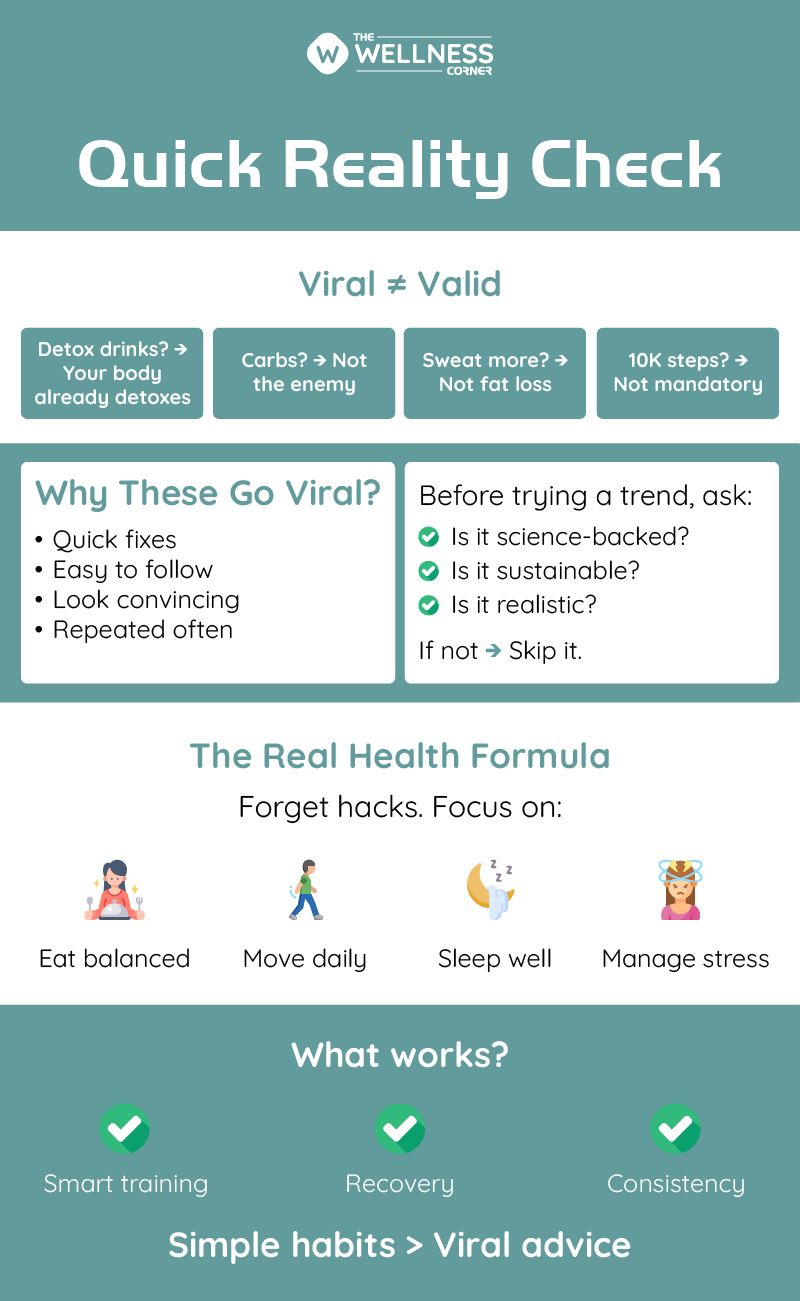
Myth 1: “Detox Drinks Cleanse Your Body.”
Bright green juices, lemon water routines, and “7-day detox plans” are everywhere.
What people believe?
You need detox drinks to flush out toxins.
What science says?
Your body already has a built-in detox system: the liver, kidneys, lungs, and skin. These organs are constantly active in filtering out waste and eliminating toxins from the body.
There is no scientific evidence that detox drinks “cleanse” your body in the way social media suggests.
What actually works?
Consistent hydration, balanced nutrition, quality sleep, and limiting processed foods support your body’s natural detox systems far better than any short-term cleanse.

Myth 2: “Carbs Make You Gain Weight.”
Carbs are often labeled as the villain in weight loss journeys.
What people believe?
Eating carbs leads directly to weight gain.
What science says?
Weight gain happens when total calorie intake exceeds what your body uses, not because of one nutrient group.
In fact, whole carbohydrates like fruits, vegetables, and whole grains are essential for energy, digestion, and brain function.
What actually works?
Prioritize choosing high-quality carbohydrates instead of cutting them out completely. Refined sugars and ultra-processed foods are the real concern, not carbohydrates as a whole.
Also Read: 10 Carbs You Should Avoid For Weight Loss & 10 You Can Still Eat

Myth 3: “Higher Sweat Levels Mean Greater Fat Loss.”
From sauna suits to extreme workouts, sweating is often equated with effectiveness.
What people believe?
Sweating more does not necessarily mean you’re burning more fat.
What science says?
Sweat is your body’s cooling mechanism, not a direct indicator of fat loss. You may lose water weight temporarily, but it returns once you rehydrate.
What actually works?
Fat loss depends on consistent movement, strength training, and overall calorie balance, not how drenched you are after a workout.
Myth 4: “You Must Achieve 10,000 Steps Daily To Stay Healthy.”
The 10,000-step goal has become a universal benchmark.
What people believe?
Anything less than 10,000 steps is not enough for good health.
What science says?
The 10,000-step rule actually originated from a marketing campaign, not medical research. Studies show health benefits begin much earlier, even around 6,000 to 8,000 steps per day, depending on age and lifestyle.
What actually works?
Movement matters more than a fixed number. Consistency is more important than hitting an arbitrary target.
Also Read: This Japanese Walking Technique Is Better Than 10,000 Steps — Doctor Explains Why?
Myth 5: “Skipping Meals Helps You Lose Weight Faster.”
Meal skipping is often promoted as a quick weight-loss hack.
What people believe?
Eating less frequently leads to faster weight loss.
What science says?
Missing meals can lower your metabolic rate, trigger stronger cravings, and often result in overeating later. It can also impact energy levels, focus, and mood.
What actually works?
Structured, balanced meals support stable energy, better metabolism, and sustainable weight management.

Myth 6: “Anything Marketed As Natural Or Herbal Is Completely Safe.”
“Natural” products are trending heavily, from supplements to skincare.
What people believe?
Being natural does not automatically make something safe to use.
What science says?
Natural does not always mean safe. Many herbs and supplements can interact with medications or cause side effects if misused.
What actually works?
Always evaluate dosage, quality, and relevance. Evidence-based use matters more than labels.
Myth 7: “Good Health Isn’t Possible Without Supplements.”
Protein shakes, multivitamins, and gummy supplements are all over wellness content today.
What people believe?
Supplements are essential for everyone.
What science says?
Most nutrients should ideally come from a balanced diet. Supplements are helpful only when there is a deficiency or a specific need.
What actually works?
Food first. Supplements should support, not replace, nutrition.
Also Read: Do Hair, Skin, And Nails Supplement Really Work?
Myth 8: “Spot Reduction Works.”
Ab workouts to lose belly fat or arm exercises to tone specific areas are highly popular.
What people believe?
You can lose fat from one specific body part.
What science says?
Fat loss happens across the entire body, based on genetics and overall fat percentage. You cannot control where your body loses fat first.
What actually works?
Full-body workouts combined with sustainable nutrition habits.
Myth 9: “More Exercise Is Always Better.”
Overtraining is often glorified as discipline.
What people believe?
The harder and longer you train, the better the results.
What science says?
Excessive exercise without recovery increases the risk of injury, burnout, hormonal imbalance, and fatigue.
What actually works?
Balance between activity and recovery is key to long-term progress.
Myth 10: “Healthy Food Alone Guarantees Good Health.”
Many reels focus only on diet as the solution.
What people believe?
If you eat healthy, everything else does not matter.
What science says?
Health is multi-dimensional. Sleep, stress, emotional well-being, and social connection all play critical roles.
What actually works?
An overall approach that considers mental, emotional, and physical health.
Why These Myths Go Viral?
These myths spread quickly because they are:
- Simple and easy to follow
- Promising quick results
- Visually appealing
- Repeated by influencers without scientific backing
But real health does not come from shortcuts. It comes from consistency, awareness, and informed decisions.
How To Filter What You See Online?
Before following any trending health advice, ask yourself:
- Is this backed by credible research?
- Does it sound too good to be true?
- Is it sustainable in real life?
- Is it being promoted by a qualified expert?
If the answer is unclear, pause before you adopt it.
The Bottom Line
Not everything that trends is true. And not everything that works is trending.
Your health does not need viral hacks. It needs clarity, consistency, and credible guidance.
Instead of chasing every new reel, focus on what has always worked: balanced nutrition, regular movement, quality sleep, and mental well-being.
Explore What Actually Works
Make science-backed wellness a part of your everyday life, not just something you try occasionally.
Explore expert-verified resources on The Wellness Corner, understand what your body truly needs, and connect with professionals who can guide you with clarity.
Because your health deserves more than trends. It deserves the truth.
Leave a Comment

Sign-Up Now & Unlock
₹100 Cashback
Recently Published
Related Articles


Health Checks @ Home
Service
Explore



Follow us on:


© 2026 Truworth Health Technologies Pvt. Ltd.