Can You Really Turn Fat Into Muscle? A Physical Therapist Explains What Builds Strength
3 days ago
4 minute read.

If you have ever started a fitness journey, you have probably heard this phrase:
“I want to turn my fat into muscle.”
It sounds logical. After all, both fat and muscle are part of your body. So converting one into the other should be possible, right?
Not quite.
This idea is one of the most common misconceptions in the fitness industry. While it is possible to lose fat and gain muscle, they are two completely different types of tissue. One does not transform into the other.
Understanding this difference is the first step toward building a stronger, healthier body.
Also Read: This Mistake Can Cost 40% Of Your Muscle Growth In The Gym
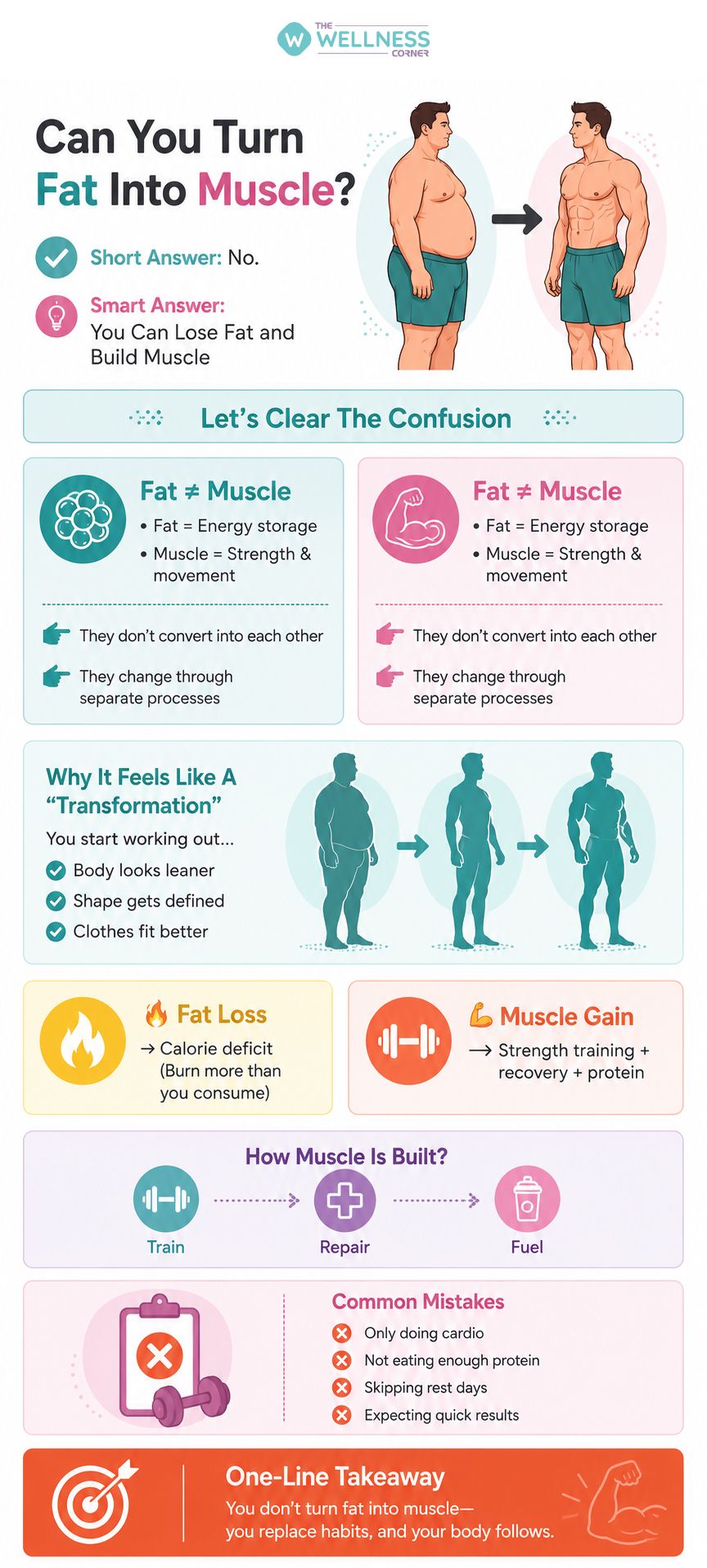
Fat Vs Muscle: What’s The Real Difference?
Fat and muscle serve very different purposes.
Body fat stores energy. It acts as a reserve that your body can use when needed.
Muscle, on the other hand, is responsible for movement, strength, and stability.
From a biological perspective, these tissues are not interchangeable.
You cannot convert fat into muscle the way you might convert one form of matter into another. Instead, your body follows two separate processes:
Fat loss through calorie balance
Muscle gain through strength training and recovery
When these events occur simultaneously, it may seem as though one is merging with the other, but they are actually happening independently.
Why The Confusion Exists?
The confusion often comes from visible changes in the body.
You may notice that as you exercise and eat better:
- Your body becomes leaner
- Your shape becomes more defined
- Your clothes fit differently
This creates the impression that fat has been replaced by muscle.
In reality, you are losing fat while building muscle underneath. The result is a more toned appearance, which can feel like a transformation.
Also Read: Guide To Body Composition, Lean Body Mass, & Body Fat

How Muscle Is Actually Built?
Building muscle is a structured process.
It happens when your body repairs and strengthens muscle fibers after they are stressed during exercise.
1. Resistance Training Creates The Stimulus
Activities like weight lifting, bodyweight exercises, or resistance bands create small micro-tears in muscle fibers.
This is a normal and necessary part of muscle growth.
2. Recovery Builds Strength
After exercise, your body repairs these fibers, making them stronger and thicker than before.
This process requires rest and proper nutrition.
Also Read - Strength Training: How Much Weight Should I Be Lifting?
3. Protein Supports Repair
Protein supplies the essential components your body uses to rebuild and strengthen muscle tissue.
Including adequate protein in your diet is essential for progress.

The Role Of Fat Loss
Fat loss occurs when your body taps into its stored energy reserves. This typically occurs when you create a calorie deficit, meaning you burn more energy than you consume.
However, extreme dieting is not the solution.
Gradual, sustainable changes are more effective and support long-term health.
Also Read: Is Fat Loss Possible Without Exercising?
Can You Lose Fat And Gain Muscle At The Same Time?
Yes, especially if you are:
- New to exercise
- Returning after a break
- Improving your nutrition
This process is often referred to as body recomposition.
It requires a balanced approach that includes:
- Strength training
- Adequate protein intake
- Proper rest
- Consistent habits
While it may take time, the results are more sustainable.

Common Mistakes That Slow Progress
Many people unknowingly limit their results.
Skipping Strength Training
Cardio by itself doesn’t effectively promote muscle growth.
Strength-based exercises are essential.
Not Eating Enough Protein
Without sufficient protein, your body cannot effectively repair muscle tissue.
Overtraining Without Rest
Muscle growth happens during recovery, not just during workouts.
Expecting Quick Results
Building muscle and losing fat both take time.
Consistency matters more than speed.
Insights From A Physical Therapist You Should Know
From a clinical perspective, building muscle is not just about appearance.
It supports:
- Joint stability
- Injury prevention
- Better posture
- Improved mobility
Focusing on strength rather than just weight loss creates a more balanced and functional body.
Also Read: Effects Of Bad Posture
A Smarter Approach To Fitness
Instead of trying to “turn fat into muscle,” shift your mindset.
Focus on:
- Losing excess fat through sustainable habits
- Building muscle through structured training
- Supporting your body with proper nutrition and rest
This approach not only improves how you look but also how you feel and function.

The Bigger Picture: Strength Over Shortcuts
Fitness is not about quick fixes.
It is about understanding how your body works and supporting it in the right way.
When you let go of myths and focus on evidence-based practices, your progress becomes more meaningful and lasting.
Build Strength The Right Way With The Wellness Corner
Reaching your fitness goals becomes more manageable with the right support and direction.
The Wellness Corner offers expert support in fitness, nutrition, and overall well-being to help you build muscle, improve strength, and create sustainable habits.
With personalized insights and professional guidance, you can move beyond myths and focus on what truly works.
Frequently Asked Questions (FAQs)
1. Can fat really turn into muscle?
No, fat and muscle are different tissues. Fat loss and muscle gain can occur as separate processes.
2. What is the typical timeframe for building muscle?
It varies, but noticeable changes usually take a few weeks to months with consistent effort.
3. Do I need to lift heavy weights to build muscle?
Not necessarily. Progressive resistance, even with lighter weights, can be effective.
4. Is cardio important for fat loss?
Yes, but it should be combined with strength training for the best results.
5. What is the most important factor in muscle growth?
Consistency in training, proper nutrition, and adequate recovery.
Leave a Comment

Sign-Up Now & Unlock
₹100 Cashback
Recently Published
Related Articles


Health Checks @ Home
Service
Explore



Follow us on:


© 2026 Truworth Health Technologies Pvt. Ltd.