Mind-Blowing Benefits Of Shunya Mudra And How To Practice It Correctly?
1 day ago
5 minute read.

In recent years, more people have started exploring traditional wellness practices that support mental calmness, emotional balance, and mindfulness naturally.
Among these practices, mudras have gained increasing attention.
Mudras are symbolic hand gestures commonly associated with yoga, meditation, and Ayurvedic traditions. While they may appear simple, these hand positions are believed to influence the body’s internal energy flow and support overall well-being.
One such practice that often sparks curiosity is Shunya Mudra.
The word “Shunya” is commonly translated as “emptiness” or “space” in Sanskrit. In yogic philosophy, this mudra is associated with balancing the space element within the body.
Many people practice Shunya Mudra to support relaxation, inner balance, concentration, and overall wellness.
While scientific research on mudras is still evolving, many individuals find these practices calming and grounding as part of their mindfulness routines.
So, what exactly is Shunya Mudra, and why are so many wellness enthusiasts talking about it?
Let us explore.
Also Read: Yoga Mudras For Better Sleep
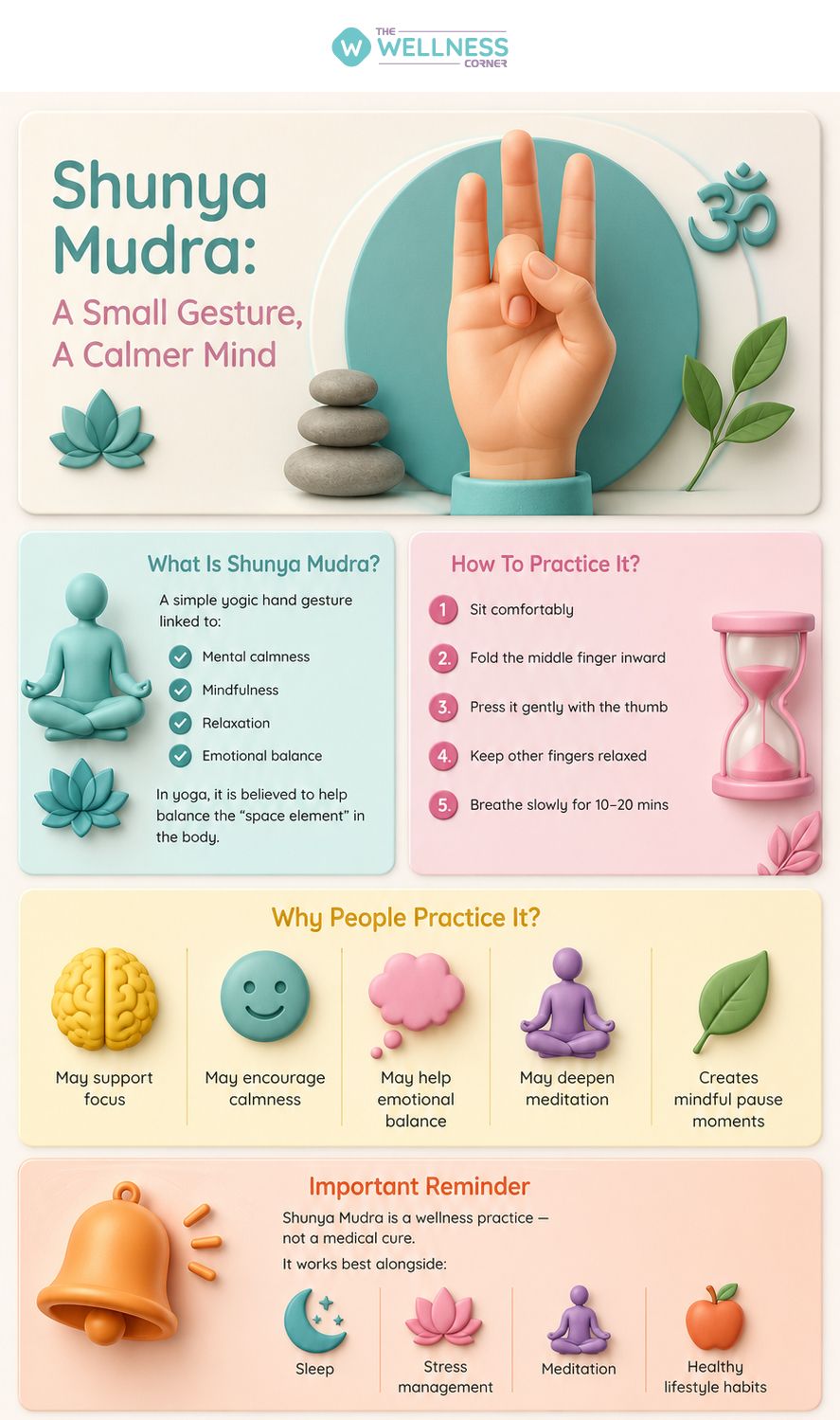
What Is Shunya Mudra?
Shunya Mudra is a traditional yogic hand gesture practiced during meditation or relaxation exercises.
It involves gently positioning the fingers in a specific way that is believed to influence energy pathways within the body.
In yoga and Ayurveda, each finger is thought to represent one of the five natural elements.
The middle finger is associated with the space element.
Shunya Mudra is traditionally believed to help balance this element when practiced regularly.

How To Do Shunya Mudra?
One reason mudras are becoming popular is their simplicity.
They do not require expensive equipment or advanced fitness levels.
Follow These Steps:
1. Sit comfortably in a relaxed position.
2. Keep your spine straight but relaxed.
3. Fold the middle finger inward toward the palm.
4. Gently press the middle finger with the thumb.
5. Keep the other fingers comfortably extended.
6. Rest your hands on your knees or lap.
7. Breathe slowly and naturally.
Many people practice this mudra during meditation, deep breathing, or quiet relaxation.
Also Read: 5 Yoga Mudras For Weight Loss You Must Try!
How Long Should You Practice Shunya Mudra?
There is no universally fixed duration.
However, many yoga practitioners recommend practicing for:
10 to 20 minutes daily
Consistency is usually considered more important than intensity.
Short regular practice sessions may feel more sustainable than long occasional sessions.

Potential Benefits Of Shunya Mudra
It is important to approach wellness practices with realistic expectations.
Mudras are not miracle cures or replacements for medical treatment.
However, many people report positive experiences when combining mudras with mindfulness, relaxation, and healthy lifestyle habits.
Also Read: Own Your Present! Practice Mindfulness Habits Every Day
1. May Help Promote Mental Calmness
Modern lifestyles expose people to constant stimulation, stress, and information overload.
Many individuals use Shunya Mudra during meditation because it may help create a sense of stillness and mental quietness.
The act of sitting calmly, breathing slowly, and focusing attention may naturally encourage relaxation.
2. May Support Better Focus And Mindfulness
Mindfulness practices often involve bringing awareness to the present moment.
Mudras may act as physical anchors that help maintain concentration during meditation or breathing exercises.
For some individuals, using hand gestures during relaxation exercises may make it easier to stay mentally focused.

3. May Encourage Emotional Balance
Stress often affects both the mind and body simultaneously.
Gentle practices like meditation, controlled breathing, and mudras may help individuals feel emotionally more centered and grounded.
While experiences vary, some practitioners describe feeling calmer after regular practice.
Also Read: The Morning Habit That’s Secretly Spiking Your Stress Hormones
4. May Support Relaxation During Meditation
Many people struggle to sit still during meditation because the mind remains highly active.
Simple physical practices like mudras may help create a stronger sense of intentional relaxation.
The combination of posture, breathing, and stillness may support a more peaceful meditative experience.
5. May Help Create A Sense of Inner Awareness
One reason ancient mindfulness practices remain popular is because they encourage people to slow down.
Shunya Mudra may help individuals become more aware of:
- Breathing patterns
- Mental tension
- Emotional stress
- Physical stillness
In fast-paced modern lifestyles, this pause itself can feel beneficial.
Why Simplicity Often Matters In Wellness?
One reason practices like mudras continue surviving across generations is their accessibility.
People often assume wellness must involve complicated routines, expensive products, or extreme lifestyle changes.
But sometimes simple habits practiced consistently may contribute to emotional and mental well-being more sustainably.
Even a few minutes of intentional stillness daily can feel meaningful in stressful environments.
Can Shunya Mudra Cure Medical Problems?
It is important to maintain realistic expectations.
There is limited large-scale scientific evidence proving mudras directly cure diseases.
Shunya Mudra should not replace:
- Medical diagnosis
- Professional treatment
- Medication
- Mental health support
Also Read - Mental Health First Aid: Why It Should Be As Common As CPR?
However, many people choose to include mindfulness-based practices alongside medical care as part of holistic wellness routines.
Wellness practices can support relaxation without replacing evidence-based healthcare.
Best Time To Practice Shunya Mudra
Many individuals prefer practicing mudras:
- Early in the morning
- During meditation
- After yoga sessions
- Before sleep
- During stressful moments
The best time is often the time you can practice consistently.
Combining Shunya Mudra With Other Wellness Habits
Mudras may feel more effective when combined with healthy lifestyle practices such as:
- Regular sleep
- Mindful breathing
- Meditation
- Balanced nutrition
- Hydration
- Physical activity
- Stress management
No single wellness habit works completely in isolation.
Long-term health is usually shaped by multiple small routines working together.
Why Mind-Body Practices Are Becoming More Popular?
Modern life often leaves people mentally overstimulated yet emotionally disconnected.
As stress levels rise globally, more people are exploring practices that encourage:
- Stillness
- Breath awareness
- Mental slowing
- Emotional grounding
- Digital detox moments
Practices like Shunya Mudra may offer people a simple opportunity to pause and reconnect with themselves during busy days.
The Bigger Picture: Wellness Is Not Always About Intensity
Many people chase dramatic health transformations while overlooking gentle sustainable habits.
True wellness is often built through consistency rather than extremes.
Simple daily rituals that support calmness, mindfulness, and emotional balance may contribute meaningfully to overall well-being over time.
The goal is not perfection.
The goal is creating healthier rhythms that feel realistic and sustainable.
Support Your Wellness Journey With The Wellness Corner
Mental and emotional well-being are essential parts of overall health.
The Wellness Corner offers expert-backed guidance on mindfulness, emotional wellness, stress management, fitness, preventive care, nutrition, and healthier lifestyle habits to help individuals build balanced and sustainable wellness routines.
Because small mindful habits can create meaningful long-term change.
Frequently Asked Questions (FAQs)
1. What is Shunya Mudra?
Shunya Mudra is a traditional yogic hand gesture associated with meditation and mindfulness practices.
2. How long should I practice Shunya Mudra daily?
Many practitioners recommend around 10 to 20 minutes daily.
3. Can Shunya Mudra reduce stress?
Some individuals find it calming when combined with meditation and deep breathing practices.
4. Is Shunya Mudra scientifically proven?
Scientific research on mudras is still limited, though many people practice them for relaxation and mindfulness.
5. Can Shunya Mudra replace medical treatment?
No, mudras should not replace professional medical advice or treatment.
Leave a Comment

Sign-Up Now & Unlock
₹100 Cashback
Recently Published
Related Articles


Health Checks @ Home
Service
Explore



Follow us on:


© 2026 Truworth Health Technologies Pvt. Ltd.