Why Do I Shake Or Vibrate When I Work Out? 6 Likely Causes And Tips For Prevention
3 days ago
5 minute read.

You are in the middle of a workout when suddenly your legs start trembling during squats, your arms shake while holding a plank, or your muscles feel like they are vibrating during exercise.
It can feel strange, uncomfortable, and sometimes even alarming.
Many people immediately wonder:
- “Am I pushing too hard?”
- “Is something wrong with my body?”
- “Should I stop exercising?”
The good news is that shaking during workouts is often completely normal, especially during challenging movements or periods of muscle fatigue.
In many cases, trembling is simply your body’s response to physical stress, muscle activation, or exhaustion. However, certain factors like dehydration, low blood sugar, overtraining, or poor recovery may also contribute.
Understanding why this happens can help you exercise more safely and confidently.
Also Read: 20 Ways To Work Out On A Budget
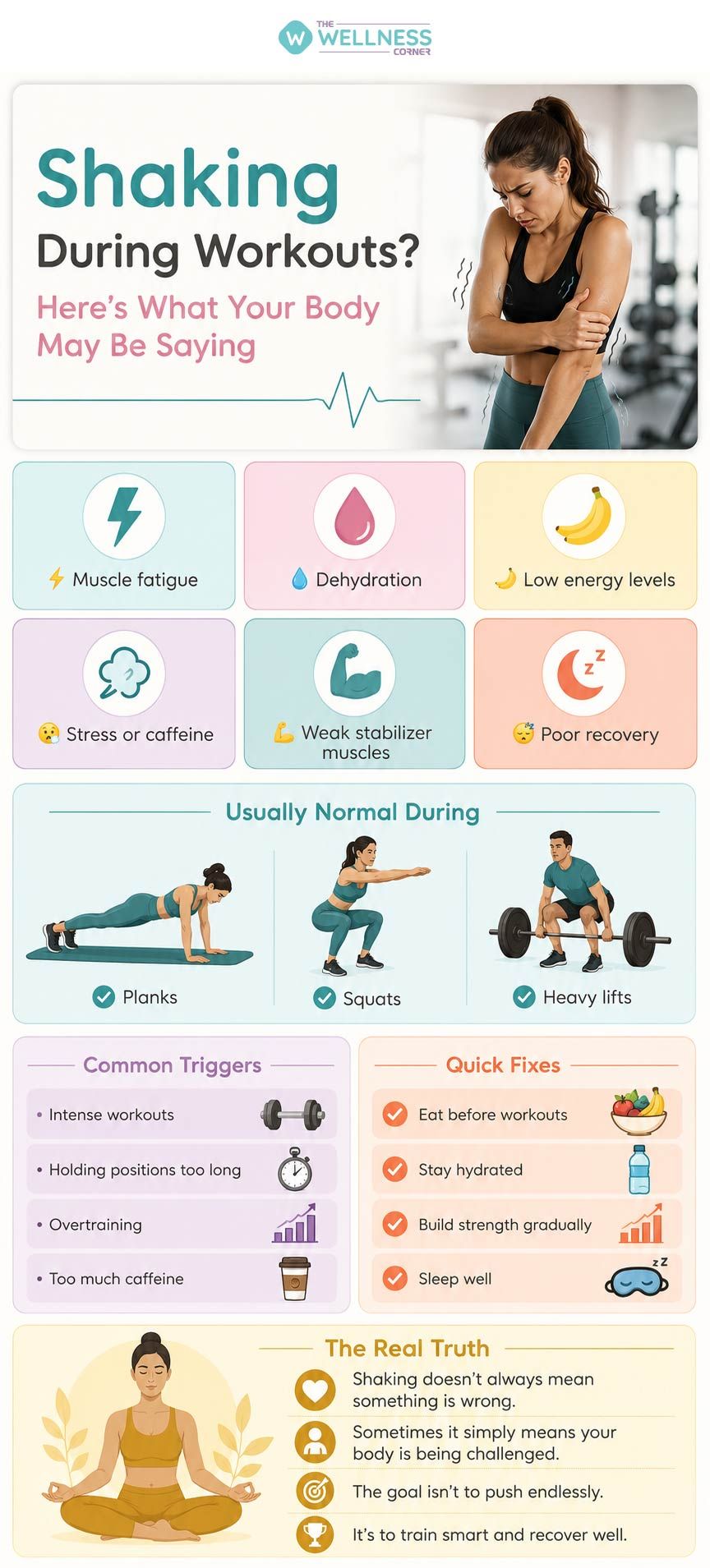
Why The Body Shakes During Exercise?
Muscles work by contracting and relaxing rapidly.
When exercise becomes intense, your nervous system and muscles must coordinate continuously to maintain stability and movement.
As muscles fatigue or struggle to maintain force, shaking can occur.
This trembling is often temporary and improves with rest, conditioning, and proper recovery habits.
1. Muscle Fatigue
One of the most common causes of shaking during workouts is simple muscle fatigue.
When muscles become tired, they struggle to maintain smooth contractions.
This is especially common during:
- Planks
- Squats
- Push-ups
- Heavy lifting
- Long workout sessions
Your muscles are essentially working near their limit.
Small muscle fibers begin firing unevenly, leading to visible trembling.
Is It Dangerous?
Usually not.
Mild shaking from fatigue is often a sign that muscles are being challenged.
However, pushing beyond exhaustion repeatedly may increase injury risk.

2. Weak Stabilizing Muscles
Sometimes the main muscles are strong enough for an exercise, but the smaller stabilizing muscles are not yet fully conditioned.
For example:
- Your legs may shake during lunges
- Your arms may tremble during yoga poses
- Your core may vibrate during planks
This happens because stabilizing muscles help control balance and posture during movement.
As strength and coordination improve over time, shaking often decreases.
Also Read: Yoga Practices To Clean Your Aura And Restore Inner Balance
3. Low Blood Sugar
Working out without eating enough beforehand may sometimes lead to shakiness.
Exercise increases energy demand, and low blood sugar can affect muscle and nervous system function.
Signs may include:
- Dizziness
- Sweating
- Weakness
- Trembling
- Lightheadedness
This is more common during intense workouts or long exercise sessions without proper fueling.
4. Dehydration Or Electrolyte Imbalance
Sweating causes fluid and electrolyte loss.
Electrolytes like sodium, potassium, and magnesium play important roles in muscle contraction and nerve signaling.
If hydration drops too low, the body may respond with:
- Muscle shaking
- Cramps
- Weakness
- Fatigue
Proper hydration becomes especially important during hot weather or prolonged exercise.
Also Read: Surprising Causes Of Dehydration!
5. Overtraining And Poor Recovery
Exercise stresses the body intentionally.
But without proper recovery, the nervous system and muscles may remain fatigued for longer periods.
Overtraining can contribute to:
- Persistent shakiness
- Exhaustion
- Reduced performance
- Poor concentration
- Muscle soreness
Rest is not a sign of weakness. It is part of the fitness process.
6. Stress And Adrenaline
Not all workout shaking is purely physical.
Stress, anxiety, excitement, or excess caffeine can stimulate adrenaline release, making the body feel jittery during exercise.
This may happen before:
- Intense gym sessions
- Competitions
- Heavy lifting attempts
- High-pressure workouts
The nervous system becomes more activated, which can increase trembling temporarily.
Also Read: The Morning Habit That’s Secretly Spiking Your Stress Hormones

When Is Workout Shaking Usually Normal?
Mild trembling is often considered normal when:
- You are trying a challenging exercise
- Your muscles are fatigued
- You are new to training
- You are holding static positions
- You recently increased workout intensity
In these cases, shaking typically improves with conditioning and recovery.
When Should You Be Concerned?
While occasional shaking is common, certain symptoms should not be ignored.
Seek medical advice if shaking is accompanied by:
- Chest pain
- Severe dizziness
- Loss of balance
- Fainting
- Persistent weakness
- Difficulty breathing
Ongoing or unexplained tremors outside exercise should also be evaluated.

Tips To Prevent Excessive Shaking During Workouts
Simple adjustments can often reduce workout-related trembling.
1.Eat Balanced Meals Before Exercise
Fueling the body properly supports energy and muscle performance.
2. Stay Hydrated
Drink enough fluids before, during, and after workouts.
3. Build Strength Gradually
Avoid increasing workout intensity too quickly.
Progressive training helps muscles adapt safely.
4. Focus On Proper Form
Poor technique may place extra stress on muscles and stabilizers.
5. Prioritize Recovery
Sleep, rest days, and nutrition all support muscle repair and nervous system recovery.
6. Manage Stress Levels
Deep breathing, stretching, and mindful movement may help calm the nervous system before workouts.
Also Read - Muscle Soreness After The Gym: Tips For Faster Recovery
The Bigger Picture: Your Body Is Communicating With You
Shaking during exercise is often the body’s way of signaling effort, fatigue, or adaptation.
In many cases, it simply means your muscles are being challenged.
The goal is not to fear every tremble.
The goal is learning to recognize the difference between normal exertion and signs that your body may need rest, fuel, hydration, or medical attention.
Fitness is not about pushing endlessly.
It is about training intelligently and supporting recovery equally.
Support Your Fitness And Wellness Goals With The Wellness Corner
Understanding your body’s signals can help you build healthier and more sustainable fitness habits.
The Wellness Corner offers expert-backed support for fitness, nutrition, stress management, mental wellness, and preventive health to help individuals improve overall well-being with balanced lifestyle choices.
Because true wellness is about listening to your body, not ignoring it.
Frequently Asked Questions (FAQs)
1. Is it normal for muscles to shake during exercise?
Yes, mild shaking during intense or challenging workouts is often normal and linked to muscle fatigue.
2. Can dehydration cause shaking during workouts?
Yes, fluid and electrolyte loss may contribute to trembling or muscle weakness.
3. Should I stop exercising if my muscles shake?
Mild shaking is often harmless, but severe pain, dizziness, or weakness should not be ignored.
4. Does shaking mean muscles are getting stronger?
Shaking may indicate muscles are being challenged, especially stabilizing muscles.
5. How can I reduce shaking during workouts?
Proper hydration, balanced nutrition, gradual training, and sufficient recovery can help reduce excessive trembling.
Leave a Comment

Sign-Up Now & Unlock
₹100 Cashback
Recently Published
Related Articles


Health Checks @ Home
Service
Explore



Follow us on:


© 2026 Truworth Health Technologies Pvt. Ltd.