Post-Meeting Exhaustion: Why 30 Minutes Feels Like A Mental Marathon?
21 days ago
7 minute read.

Ever finished a meeting - just 30 minutes long - and felt completely wiped out? You sit back in your chair, eyes heavy, brain foggy, and all you want to do is...nothing. Not check emails, not jump on another call, not even think. It almost feels like you've run a marathon, except you haven’t moved an inch.
You're not imagining it. That strange mental exhaustion after a short meeting is real. And in today’s workplace - whether you're in-office, remote, or hybrid-it’s becoming more common than ever.
Let’s unpack why even a 30-minute meeting can feel so exhausting, what’s really happening behind the scenes in your brain and body, and what you can do to protect your energy.
Also Read: Is Anxiety Brain Fog Real? | Everything You Need To Know
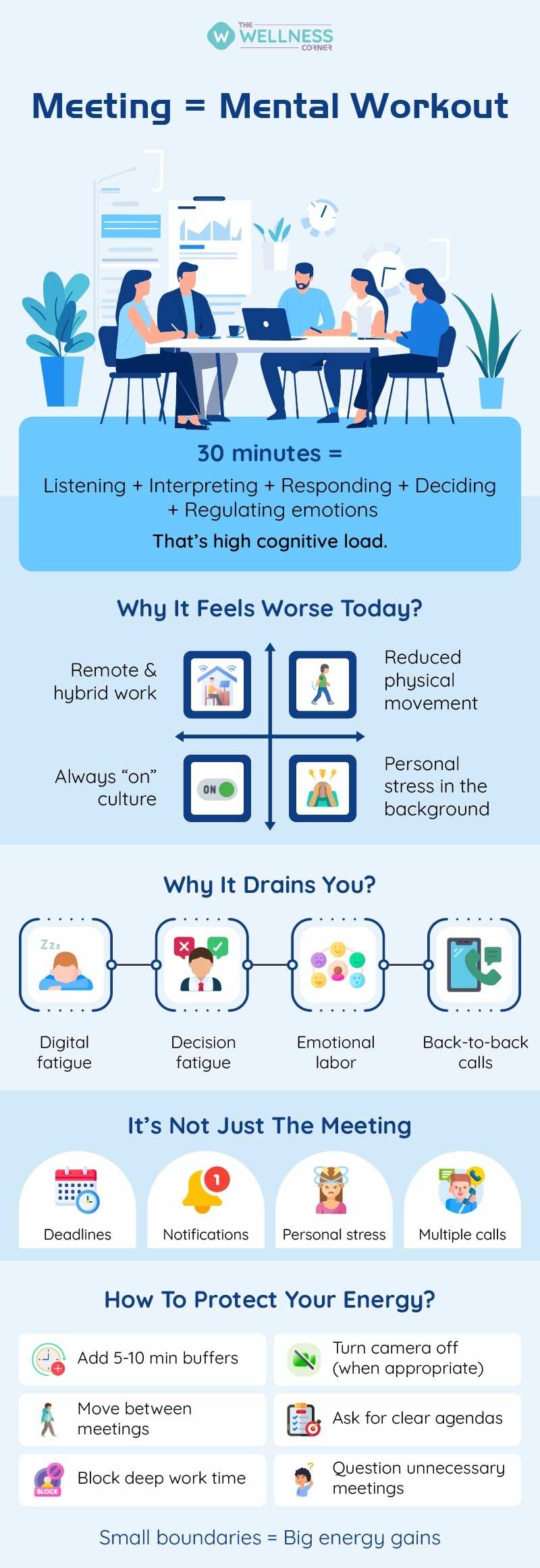
1. You’re Doing More Than Just “Listening”
We tend to underestimate what our brain is actually doing during a meeting. It’s not just sitting there and absorbing information. It’s:
- Processing spoken words
- Attempting to interpret someone’s tone, gestures, or facial cues
- Thinking about what to say next
- Wondering if your opinion is valid
- Checking if you're being understood
- Taking notes, watching slides, monitoring the time
- Stressing if you’re on mute or accidentally talking over someone
That’s a lot of cognitive juggling, even in a 30-minute slot.
Now imagine doing this multiple times a day. No wonder we feel fried by lunchtime.

2. Video Calls Add A Hidden Layer Of Stress
Virtual meetings might seem more convenient (no commute, yay!), but they come with their own mental load. Psychologists call it Zoom Fatigue. Here’s why:
- You’re constantly aware of how you look on screen
- There's pressure to appear “engaged” even when you're tired
- You don’t get the usual cues-like body shifts, eye contact, or small side-chats
- You might be talking over others due to audio delays
- You’re often sitting still, with minimal movement
All of this makes video calls unnaturally intense, draining your energy faster than an in-person meeting ever would.
3. Decision Fatigue Hits Harder Than You Think
Even quick meetings involve a surprising number of decisions:
- Should I say something or stay quiet?
- Is it okay if I share a concern at this point?
- Do I agree with this approach, or should I push back?
- What will my manager think of my opinion?
Every tiny choice burns up a bit of your mental fuel. And if you’ve already made a dozen work decisions before this meeting, your mental tank might be running on empty.

4. Lack Of Clear Purpose = Mental Chaos
We’ve all experienced it-a meeting without a plan, no clear purpose, and no idea why you were even included. You end up spending half the time trying to figure out what’s going on, and the other half wondering if you should speak up or just zone out.
This mental tug-of-war, trying to make sense of vague conversations-is more tiring than participating in a well-structured discussion.
The brain craves clarity. When it doesn’t get it, it works overtime trying to fill in the gaps.
Also Read: Struggling To Make A Big Decision? Here’s Why—And How To Find Clarity?
5. You're Holding Back Emotions
Work meetings aren’t just about tasks, they’re filled with people dynamics. Sometimes you’re:
- Holding in irritation
- Masking disagreement
- Trying to sound confident even when you're unsure
- Soothing someone else's ego
- Avoiding conflict
- Managing passive-aggressive behavior
That’s called emotional labor, and it’s draining. Even if no one raises their voice or says anything “bad,” the mental tightrope you walk during certain meetings can be exhausting.

6. There’s No Room To Breathe Between Meetings
In many workplaces, especially remote ones, meetings are back-to-back. No time to stretch, sip water, or even think about what just happened. You're just hopping from one call to the next.
Without pauses to process or decompress, your brain never gets a reset. You carry the stress of one meeting into the next, until the weight of the whole day starts to feel unbearable.
Also Read: Small Pauses, Big Results: The Life Hack Your Day Needs
7. No Physical Movement = Low Energy Flow
Pre-pandemic, at least you'd walk down the hallway to a meeting room. That small action refreshed both your body and mind.
Today, a “meeting” just means clicking a new link. You stay slouched in the same chair, barely blinking, with stiff shoulders and shallow breathing. And let’s face it-when your body feels stuck, your energy feels stuck too.

8. Introverts And Empaths Feel It More
If you're naturally introverted, highly sensitive, or empathic, meetings can be extra taxing. You may:
- Process things deeply
- Pick up on others’ moods
- Get overwhelmed by group dynamics
- Need alone time to recharge
Even if you're not actively speaking, just being in that virtual room, absorbing energy, can leave you feeling depleted. And yet, most meeting schedules don’t account for individual energy styles.
Also Read: How Introverts Can Gain Visibility In The Workplace?
9. You’re Juggling Personal Stuff Too
Let’s be real: most of us aren’t entering meetings with a blank slate. We’re carrying the stress of deadlines, family issues, money worries, poor sleep, health concerns-you name it.
So even a “light” meeting might feel heavy when your brain is already juggling a dozen invisible weights. That 30-minute call isn’t just a meeting; it’s another thing your tired mind has to make space for.
10. We Rarely Recharge After A Meeting
Do you ever take 5-10 minutes after a meeting to process what was said, breathe, or just rest your mind? Probably not. Most people just:
- Jump straight into emails
- Pick up another task
- Join another call
But that’s like running a race and then sprinting again without water. Eventually, your system crashes-not dramatically, but quietly, through irritability, forgetfulness, or just that dull feeling of “I can’t do this anymore.”
Also Read: Deep Breathing & Techniques To Relieve Anxiety: Learn How To Do It Right!

So, What Can You Do About It?
Here are a few realistic ways to reduce meeting exhaustion and reclaim your energy:
Add Buffers Between Meetings
Even 10 minutes of no-screen time helps reset your brain.
Block Off Focus Time
Don’t let meetings eat your whole day. Protect chunks of time for deep, uninterrupted work.
Move Your Body
Stretch, take a walk, do a breathing exercise. Your brain thrives when your body moves.
Use The “Camera Off” Option When Appropriate
Give your eyes and your nerves a break, especially if you’re just listening.
Ask For Agendas
A clear meeting structure helps everyone stay on point and prevents confusion.
Reflect After The Meeting
Jot down takeaways or next steps before diving into something else. This helps your brain “close the loop.”
Set Boundaries
Not every meeting needs your presence. Speak up when something could be an email or a recorded update.
Final Thoughts
Feeling tired after a 30-minute meeting doesn’t mean you’re unproductive, lazy, or weak. It means you're human. Meetings - especially the modern kind, demand a lot from us mentally and emotionally. The goal isn’t to avoid them completely, but to understand their impact and build in small strategies to protect your energy.
So the next time you find yourself zoning out after a short meeting, don’t beat yourself up. Give yourself a break. You just ran a mental marathon, and you deserve time to recover.
Frequently Asked Questions (FAQ)
1. Is it normal to feel exhausted after just one short meeting?
Yes. Even a 30-minute meeting can demand intense focus, decision-making, and emotional regulation. Mental fatigue doesn’t always match the clock, it reflects cognitive load.
2. Is meeting fatigue the same as burnout?
Not exactly. Meeting fatigue is usually short-term mental exhaustion after intense focus. Burnout is a longer-term state of chronic stress, emotional depletion, and reduced motivation.
3. Why do virtual meetings feel more tiring than in-person ones?
Video calls require sustained eye contact, limited movement, constant self-awareness, and fewer natural social cues. This increases cognitive strain, often referred to as “Zoom fatigue.”
4. Who is more likely to experience post-meeting exhaustion?
Introverts, highly sensitive individuals, empaths, and people juggling high workloads or personal stress may feel it more intensely due to deeper processing and emotional labor.
5. How can I recover quickly after a draining meeting?
Take 5-10 minutes away from your screen, stretch or walk, hydrate, and write down key takeaways to mentally “close” the meeting before moving to your next task.
6. Can meetings be made less exhausting?
Absolutely. Clear agendas, defined outcomes, shorter durations, built-in breaks, and fewer unnecessary attendees can significantly reduce mental strain.
Leave a Comment

Sign-Up Now & Unlock
₹100 Cashback
Recently Published
Related Articles



Health Checks @ Home
Service
Explore



Follow us on:


© 2026 Truworth Health Technologies Pvt. Ltd.