Silent Treatment & Guilt Trips: Workplace And Home Red Flags
10 days ago
6 minute read.

Emotional manipulation may not always manifest as shouting, insults, or complete control. It can occasionally be more subdued, quieter, and much more difficult to spot. Two of the most common but often overlooked red flags in both personal and professional relationships are the silent treatment and guilt trips.
These behaviors might seem minor at first glance, but their emotional impact is anything but small. They can chip away at your confidence, peace of mind, and sense of self-worth.
In this blog, we’ll explore what these behaviors look like, how they show up in workplaces and at home, and what you can do about them.
Also Read: Is Your Brain Wired For Guilt? How To Break Free From Over-Apologizing?
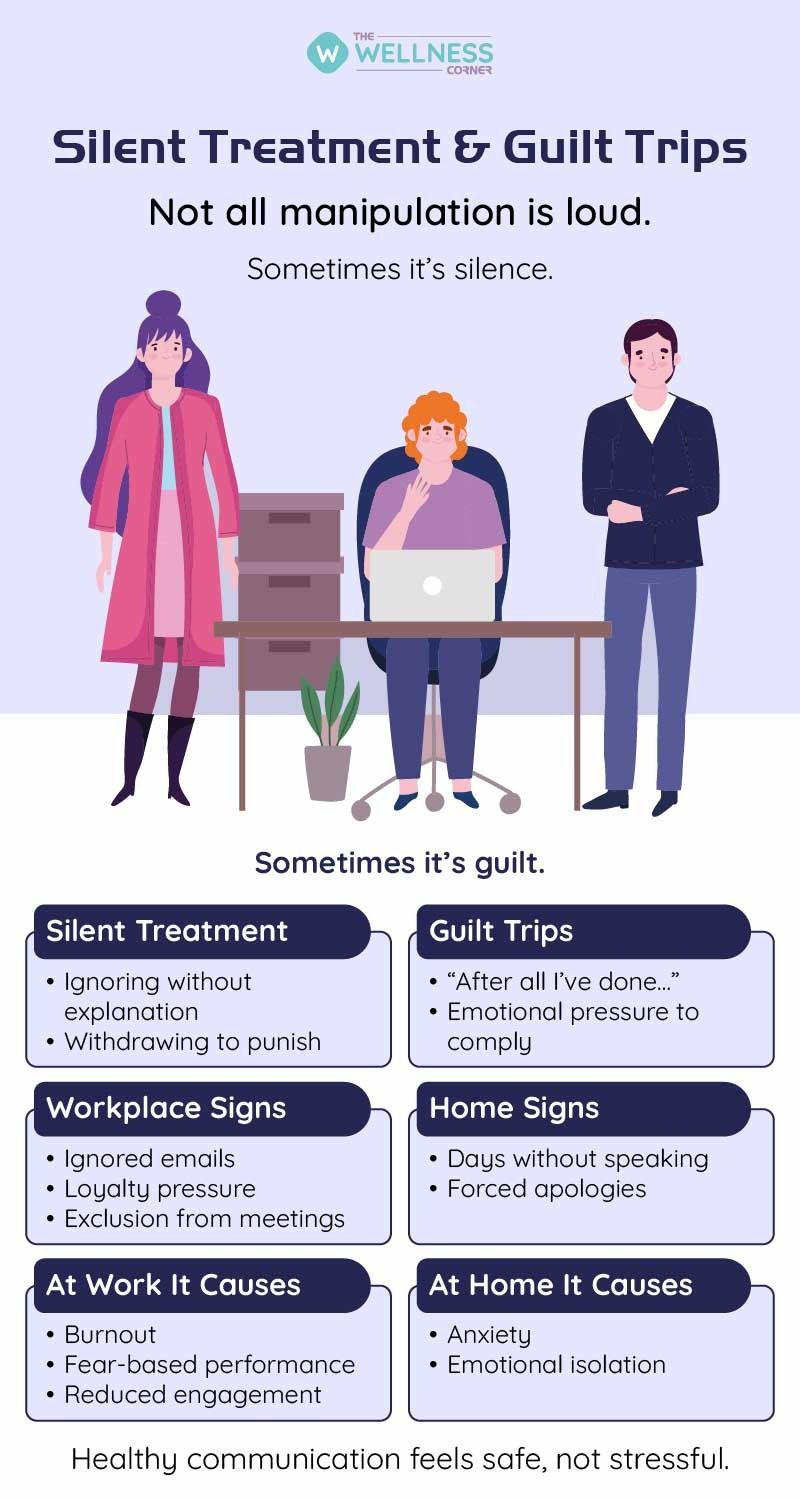
What Is the Silent Treatment?
The silent treatment is a form of emotional withholding where a person refuses to communicate or acknowledge you. It may seem like they're just taking space, but it becomes manipulative when it’s used to control or punish without explanation.
Key Characteristics:
- Passive-aggressive behavior
- Intentional withdrawal of attention or communication
- Meant to make the other person feel guilty, anxious, or unsure
This behavior forces the victim to chase validation or reconciliation, even when they’re not at fault. It can occur between romantic partners, friends, parents, colleagues, and even managers.
What Is A Guilt Trip?
A guilt trip is when someone tries to influence your behavior by making you feel guilty. It’s a subtle form of coercion masked as emotional appeal.
Common Phrases:
- “After all I’ve done for you…”
- “I thought you cared…”
Rather than discussing issues openly, the person uses emotional manipulation to gain control or to avoid responsibility. The guilted individual often ends up doing things out of obligation, not choice.
Also Read: Psychology Hacks You Should Know To Control Any Situation

Why These Behaviors Are Toxic?
Silent treatment and guilt-tripping aren’t just immature, they are emotional manipulation tactics that can cause deep psychological harm over time.
Emotional Confusion
You’re left wondering what you did wrong. You might replay conversations repeatedly trying to guess the problem, affecting your mental peace.
Power Imbalance
The manipulator holds control while the other person is expected to make amends, even when it’s not their fault.
Low Self-Esteem
When you're constantly blamed or ignored, you may begin to question your worth and your ability to maintain healthy relationships.
Also Read: Developing Self-Esteem For A Happier You
Breakdown Of Communication
Healthy conflict requires communication. Silent treatment shuts the door on resolution, while guilt trips derail honest dialogue.

How Silent Treatment Looks At Work?
You might think emotional games are limited to personal relationships, but they often appear in offices too. And they can be just as harmful.
Red Flags in the Workplace:
- Being Deliberately Ignored: A manager or coworker stops responding to emails or avoids eye contact after a disagreement.
- Withholding Information: Important updates or meeting invites are not shared with you intentionally.
- Social Exclusion: You’re left out of group chats or team discussions.
- Non-Verbal Punishment: Cold stares, sighs, or walking away without explanation.
These behaviors foster a toxic work environment, leaving you demotivated and anxious.
How Guilt Trips Show Up At Work?
Guilt-tripping in professional spaces often disguises itself as loyalty, dedication, or “team spirit,” but the pressure can be manipulative.
Common Workplace Guilt Tactics:
- Pressure to Work Overtime: “Everyone else stayed late—why can’t you?”
- Manipulating with Past Favors: “Remember when I covered for you last month?”
- Gaslighting Your Boundaries: “You used to be more committed. What changed?”
Over time, this emotional burden affects performance, job satisfaction, and even physical health due to burnout.

Silent Treatment In Personal Relationships
The silent treatment at home can be incredibly painful-especially when it comes from someone close like a spouse, parent, or partner.
Also Read: Are You Begging For Attention From Your Partner? Signs And What To Do
Signs to Watch:
- Refusing to Speak for Hours or Days: You’re ignored without any clear explanation.
- Acting Cold or Distant Intentionally: This behavior is used to punish, not resolve conflict.
- Making You Apologize Just to End the Silence: Even when you don’t know what you did wrong.
This emotional withdrawal often leaves people feeling anxious, guilty, and emotionally isolated.
Guilt Trips At Home: The Subtle Manipulation
Guilt trips in families and close relationships often go unnoticed because they’re disguised as love or concern.
Tactics You Might Hear:
- "If you were truly concerned about me, you'd do this."
- "I suppose that you no longer value me."
- “Other people’s kids always support their parents.”
These statements may sound like emotional expressions, but when used consistently, they become tools to manipulate decisions and create emotional debt.

The Long-Term Impact
Silent treatment and guilt trips are not just short-term frustrations-they can lead to long-term emotional and psychological harm.
Emotional Consequences:
- Anxiety, especially in conflict situations
- Fear of setting boundaries
- Chronic stress and low mood
- Inability to express one’s feelings
- Dependency on external validation
These patterns can even bleed into future relationships, making it difficult to trust others or advocate for your needs.
Also Read: How Chronic Stress Affects Brain Health?

How To Respond?
Recognizing manipulation is the first step. Responding to it takes clarity and boundaries.
At Home:
- Calmly say: “I’m open to talking when you’re ready, but silence doesn’t help either of us.”
- Set limits: “I can’t continue this conversation if guilt is being used instead of honesty.”
- Don’t over-apologize to avoid discomfort. Seek resolution, not submission.
At Work:
- Use assertive communication: “I’d appreciate clarity so we can work through this professionally.”
- Document patterns if they repeat. Speak to HR if needed.
- Don’t allow guilt to override your rights. Boundaries protect productivity.
For Yourself:
- Reflect: Are you being respected or manipulated?
- Seek support: Talking to a mental health professional can help untangle these patterns.
- Practice self-compassion: You are not responsible for someone else's inability to communicate.

Final Thoughts: Silence And Guilt Aren’t Love Or Leadership
Whether it's a partner, parent, coworker, or boss-if someone consistently uses silence or guilt to control you, it’s a red flag. These aren't signs of care, maturity, or strength-they are signs of poor emotional regulation and control tactics.
The foundation of any healthy relationship, whether personal or professional, is open communication, empathy, and respect for one another.
Frequently Asked Questions
1. Is the silent treatment ever healthy?
Yes, but context matters. Taking space to cool down during a conflict can be healthy if it is communicated clearly. For example, saying, “I need some time to process this, let’s talk later,” is very different from withdrawing without explanation to punish or control.
2. How do I know if it’s manipulation or just poor communication?
If the behavior is repeated, intentional, and leaves you feeling anxious, guilty, or powerless, it may be manipulation. Occasional miscommunication happens in all relationships, but consistent emotional control is a red flag.
3. Can guilt trips be unintentional?
Sometimes people use guilt-based language because it is how they learned to communicate. However, even if unintentional, repeated guilt-tripping can still be emotionally harmful and should be addressed with boundaries.
4. What should I do if my manager uses these tactics?
Start by documenting incidents and addressing the issue calmly and professionally. If the behavior continues, escalate the concern to HR or a higher authority within the organization.
5. When should I seek professional help?
If these patterns are affecting your mental health, self-esteem, or daily functioning, speaking to a mental health professional can help you develop coping strategies and rebuild confidence.
Leave a Comment

Sign-Up Now & Unlock
₹100 Cashback
Recently Published
Related Articles



Health Checks @ Home
Service
Explore



Follow us on:


© 2026 Truworth Health Technologies Pvt. Ltd.