The Anxiety Of Typing… And Deleting: Overthinking Your Messages
1 day ago
6 minute read.

You open the chat. You start typing.
“Hey! Just wanted to check in…”
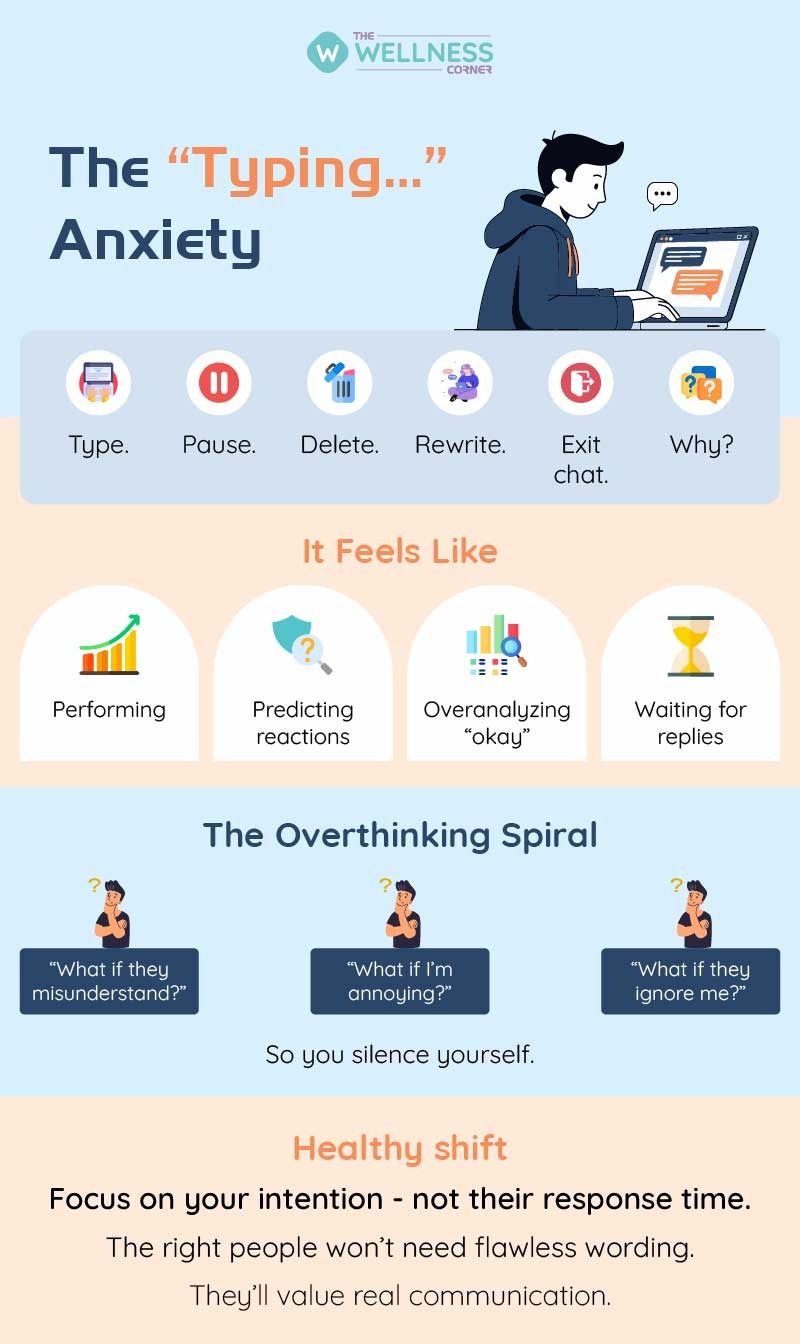
Pause. Backspace. Delete.
You rewrite it:
“Hey, hope I’m not bothering you, but…”
Delete again.
Five minutes go by. Your message is still unsent.
You exit the chat, pretending the conversation never existed-while mentally replaying the imaginary reply you could’ve gotten.
If this feels familiar, you’re not weird. You’re not “too sensitive.”
You’re human. And yes, the anxiety of messaging is very real.
Also Read: Japanese Techniques To Stop Overthinking
Modern Conversations, Digital Pressure
Messaging today should be easy-instant communication, emojis, GIFs, and voice notes. But the truth is, many of us feel more socially anxious than ever. That tiny blinking cursor on our phone screen can trigger a flood of self-doubt.
Why?
Because messaging is no longer just a conversation, it’s a performance.
We want to sound witty, clever, compassionate, and chill-but not overly eager. And not clingy. So we write, delete, rephrase, reword… until the message no longer feels like us. Or worse, we never send it at all.

The Overthinking Spiral: What’s Going On?
Let’s break it down.
When you keep typing and deleting messages, what you're often dealing with isn’t laziness or indecisiveness. A deeper collection of worries and insecurities:
1. “What If They Misunderstand Me?”
Without tone or facial expressions, even a simple “okay” can be read as annoyed. We try to overcorrect, using emojis, punctuation, even disclaimers like “I’m not mad, just tired.” But instead of feeling safe, we end up feeling more exposed.
2. “Am I Being Too Much?”
We fear that checking in or starting a conversation will be seen as clingy or desperate. This especially shows up in friendships, situationships, or early relationships-where the social dynamics are still unspoken.
Also Read: 5 Things To Avoid To Stop Feeling Used In A Relationship
3. “Do I Sound Weird?”
There’s pressure to be funny, casual, and articulate-all at once. We want to sound like someone cool and emotionally intelligent, not awkward or overbearing.
4. “What If They Don’t Reply?”
Sometimes, the anxiety isn’t about sending the message. It’s about not getting a response. Or getting a short one. Or a dry one. Or a “seen” with no reply. The fear of silence can stop us from speaking at all.
Emotional Labor… In A Chat App
Overthinking texts isn’t just about wording, it’s about emotional labor.
You’re not just texting. You’re:
- Anticipating reactions
- Managing tone
- Editing yourself to be palatable
- Bracing for silence
- Trying not to “overshare” or “overstep”
All this happens while the other person is simply… living their life. Meanwhile, you’re mentally drained by a conversation that never even started.
The “Typing… Deleting…” Loop
You type a sentence.
You pause.
You delete it.
You try again.
Still doesn’t feel right.
You close the app.
This loop creates internal tension. You feel stuck-wanting to express yourself, but unable to find the “perfect” way to do it.
And here’s the truth: there is no perfect message. There’s just honest communication. The more we aim for flawlessness, the less authentic we become
Also Read: Meditations To Enhance Your Communication Skills
What Fuels This Messaging Anxiety?
Besides individual personality traits (like people-pleasing or perfectionism), there are also external influences:
Ghosting Culture
In today’s world, people disappearing mid-conversation or not replying for days has become painfully common. It makes us hesitant to initiate.
Social Media Polishing
We’re used to curating our photos, captions, and stories. That same need to “edit before posting” spills into our private conversations too.
Lack Of Closure
A lot of friendships, relationships, and even work dynamics end without clarity. So we carry the fear of saying the “wrong thing” into every new message we write.
Also Read: Are You Addicted To Closure? Emotional Habits That Drain You

How To Break The Cycle?
If you constantly find yourself caught in the type-delete spiral, try these gentle reminders and steps:
1. Catch The Thought Spiral
The next time you hesitate to hit send, pause and ask:
- What am I afraid of?
- Is this fear based on fact or assumption?
- Would I say this in person?
You’ll often realize you’re trying to predict a reaction that hasn’t even happened.
2. Text Like You Talk
If you wouldn’t agonize over every word while speaking to this person in real life, don’t do it while texting. Write how you naturally speak. It feels better, and sounds more authentic.
3. Remember: You Are Not A Burden
Just because you fear you’re annoying someone doesn’t mean you are. Reaching out is not a crime. Asking questions is not a weakness. Caring deeply is not clingy.
4. Don’t Obsess Over Replies
Some people reply quickly. Others don’t. Don’t measure your message’s value by how fast someone responds. Their reaction time is about them, not you.
5. Create Message Templates For Tough Moments
Example:
• “Not sure if this is weird, but I felt like saying hi. Hope that’s okay.”
Having go-to lines can ease the pressure of how to start, so you can focus on why you want to connect.
6. Practice Self-Compassion
If you wind up deleting a message you intended to send, be kind to yourself. You’re doing your best. This isn't a weakness, it's emotional sensitivity. And that's something to honor, not shame.

The Hidden Strength In Vulnerability
Yes, messaging can feel like a minefield.
Yes, it can make you question yourself.
Yes, it can leave you overanalyzing a “seen at 9:42 PM.”
But it also shows something beautiful: you care.
You want to communicate well.
You want to be thoughtful.
You want to maintain meaningful connections.
And that kind of emotional depth? It’s rare. It’s powerful.
Don’t let anxiety silence your voice.
Final Thought: Just Send It
If it’s kind, respectful, and true to how you feel-just send it.
Your words don’t have to be perfect. They need to be honest. You’re allowed to reach out. You’re allowed to express yourself. You’re allowed to connect.
And if someone doesn’t appreciate that? That’s not a reflection of your worth. That’s a reflection of their capacity.
So, to the one who keeps typing and deleting…
Take a breath.
Trust your heart.
And press send.
You never know who might be waiting on the other side, wondering if they should text you first.

Frequently Asked Questions
1. Is it normal to feel anxious about sending messages?
Yes, it’s more common than you think. Digital communication removes tone and facial cues, which can increase uncertainty and trigger overthinking, especially for emotionally sensitive or self-aware individuals.
2. Why do I overanalyze simple replies like “okay” or “seen”?
Short replies leave room for interpretation. When we lack context, our minds often fill the gaps with assumptions. This says more about anxiety patterns than the actual message.
3. How can I stop obsessing over whether someone will reply?
Shift focus from their response to your intention. If your message was honest and respectful, you’ve done your part. Their timing or reaction is outside your control.
4. Does messaging anxiety mean I have low confidence?
Not necessarily. It often reflects a desire to be thoughtful, avoid conflict, or maintain connection. However, building self-trust can reduce the intensity of this anxiety over time.
5. When should I seek professional support?
If messaging anxiety starts interfering with your daily functioning, relationships, or self-esteem, speaking to a mental health professional can help you unpack deeper patterns and build healthier communication confidence.
Leave a Comment

Sign-Up Now & Unlock
₹100 Cashback
Recently Published
Related Articles



Health Checks @ Home
Service
Explore



Follow us on:


© 2026 Truworth Health Technologies Pvt. Ltd.