“Therapy Is Not For Me”-And Why You’re Not Alone In Feeling That Way
18 hours ago
5 minute read.

We’ve come a long way in how we talk about mental health. Social media is full of therapists sharing tips. Workplaces are offering more emotional support than ever. And the stigma around therapy? It’s starting to fade.
But even in 2026, not everyone feels comfortable with the idea of going to therapy.
If you’re someone who thinks, “I support it, but it’s just not for me,” you're far from alone. You might not even dislike the idea, you might just feel like it doesn’t fit you right now. And that’s okay.
Let’s take a closer look at why so many people feel this way, and what to do if you’re one of them.
Also Read: 10 Anxiety Hacks Therapists Swear By
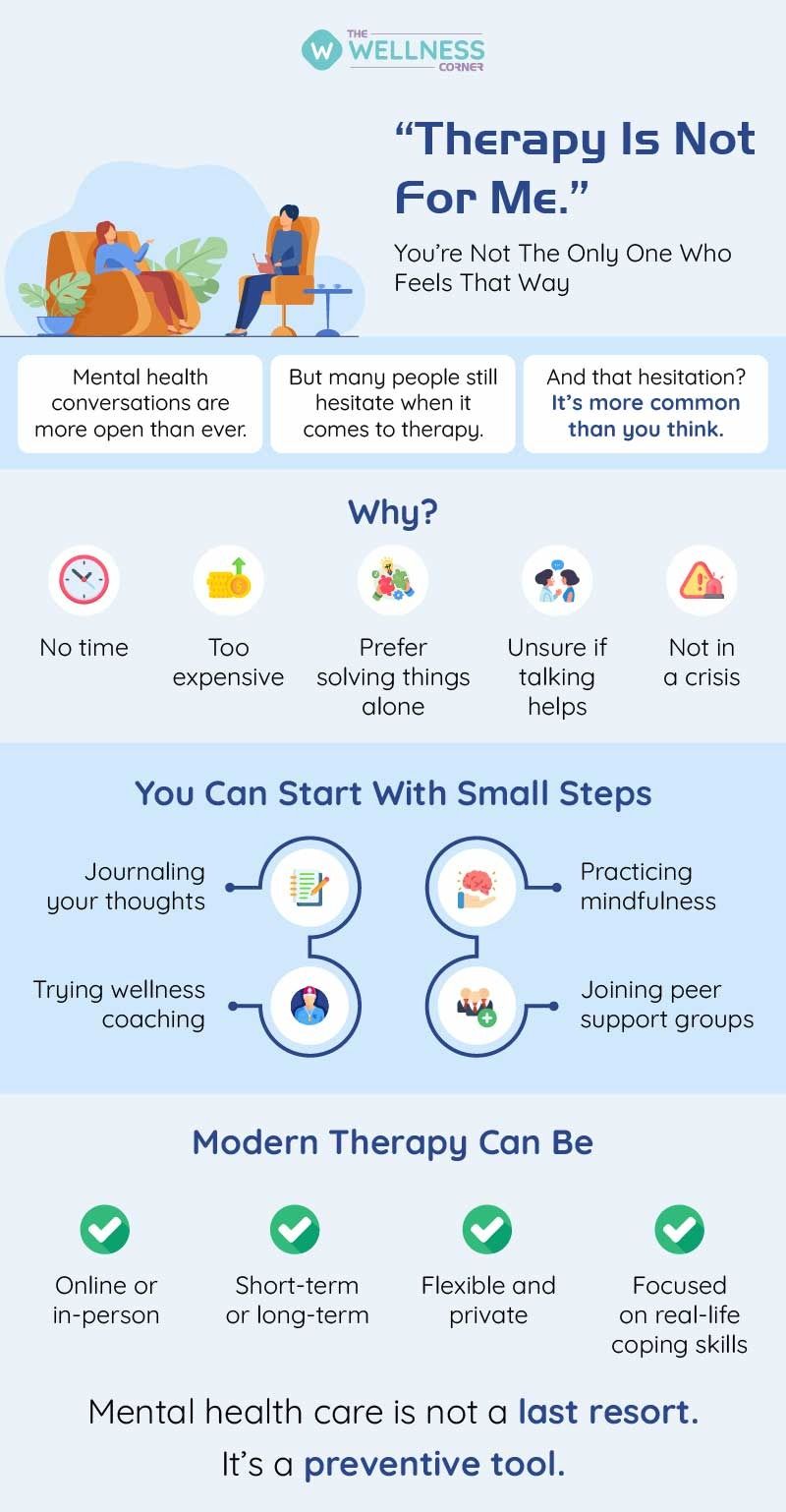
Common Reasons People Avoid Therapy
There are many reasons someone might avoid therapy, and most of them are completely valid. Here are a few that come up often:
1. “I don’t have The time.”
Life feels full. Between work, family, and everything in between, the thought of setting aside 45 minutes a week might feel impossible.
But here’s the thing-how much time do you already spend overthinking, worrying, or feeling stuck in your head?
Therapy doesn’t add more pressure to your life. It can ease the tension that’s already built up.
2. “I should Be Able To Handle This On My Own.”
You’re independent. You’ve gotten through tough times before. Maybe you feel like asking for help would mean you’re not strong enough.
But needing support doesn’t make you weak. It makes you human. We all need help sometimes-just like we’d call a plumber for a leak, or a doctor for pain.
3. “It’s Too Expensive.”
Therapy can be costly, and financial concerns are real. But today, there are more affordable options than ever:
- Online platforms with sliding scale fees
- Free or subsidized therapy through employee wellness programs
- Mental health support apps with guided sessions
- Short-term therapy focused on one issue
If money is a concern, start by asking your workplace HR or exploring wellness platforms that offer subsidized support.
Also Read: The Role Of Virtual Therapy Sessions In Improving Mental Health
4. “Talking Won’t Change Anything.”
This is a common belief, especially if you’ve tried opening up before and didn’t feel heard. But therapy is not the same as venting to a friend.
Therapists are trained to help you find patterns, understand behaviors, and build better coping strategies. Even a single session can offer a whole new outlook.
5. “I’m Not In A Crisis.”
You don’t need to hit rock bottom to start therapy. It’s not only for those in deep distress.
You might be functioning well, holding a job, socializing-but still feel tired, numb, anxious, or stuck. Therapy is for those moments too.
Mental health support isn’t just about crisis management. It’s also about growth, clarity, and self-awareness.
Also Read: Struggling To Make A Big Decision? Here’s Why—And How To Find Clarity?
What Therapy Actually Looks Like Today?
Forget the outdated image of lying on a couch while someone silently takes notes.
Therapy today is flexible and modern. Here’s what many people don’t realize:
- You can choose someone who gets your background-culturally, professionally, emotionally.
- You can do it online, from your couch or car.
- You don’t have to talk about your past if you don’t want to.
- You can go for just a few sessions and still benefit.
- You don’t have to shed tears or show intense emotions for it to be effective.
It’s not one-size-fits-all. It’s about finding what fits you.
If Therapy Still Feels Like Too Much, That’s Okay
Not everyone wants to jump into therapy, and that’s valid. If you're not ready, here are some gentle, helpful alternatives that support emotional well-being:
Journaling
Writing down your thoughts helps untangle them. You don’t have to be a writer. Just 5-10 minutes of writing a day can give you clarity you didn’t expect.
Group Sessions Or Peer Support
Sometimes it’s easier to relate to others going through similar struggles. Group circles or support meetings-whether through your workplace, NGOs, or online-can feel less intense than one-on-one therapy.
Mindfulness & Meditation
Even a few minutes of guided breathing or body scanning each day can reduce stress, calm your mind, and help you feel more in control.
Also Read: Own Your Present! Practice Mindfulness Habits Every Day
Wellness Coaching
Coaches help you set emotional and lifestyle goals without diving deep into therapy. It provides an important foundation for a lot of people.
The Workplace Shift: Therapy Is Not A Weakness
In high-pressure work environments, admitting you need support can feel risky. But thankfully, that’s changing.
Many companies now view mental health care as part of performance management, not a personal issue. At Truworth Wellness, emotional support is becoming as normal as a fitness challenge or a team-building session.
Through platforms like The Wellness Corner, employees can access:
- Online and offline therapy sessions
- Anonymous self-assessments for stress, anxiety, and burnout
- Mindfulness tools and curated emotional wellness content
- 24x7 helpline and wellness coaching
- Webinars, mood trackers, and self-care challenges
You don’t have to wait for burnout to reach out. You can start before it gets that far.
Not Ready Yet? That’s Okay Too
You don’t have to rush. You don’t have to force yourself. But if something inside you is even a little bit curious-about feeling better, understanding yourself more, or being heard-it might be worth exploring.
You don’t have to be fully convinced about therapy to give it a shot.
You don’t need to commit forever.
You just need to give yourself a chance to be listened to.
That alone can start the shift.
Final Words: There’s No One Right Way To Heal
Healing isn’t a straight road. It’s messy, non-linear, and deeply personal. Some days you’ll feel strong. Others, not so much. And that’s part of being human.
Therapy is one tool-not the only one. Whether you find healing through journaling, coaching, mindfulness, art, or conversation, what matters most is that you don’t ignore what you feel.
Therapy may not feel right today, but that could change with time.
You deserve support that fits you, not someone else’s version of healing.
Some Questions You May Have
1. Do I need to be in a crisis to go to therapy?
No. Therapy is not only for severe emotional distress. Many people choose therapy to gain clarity, improve relationships, manage stress, or understand themselves better.
2. What if I feel uncomfortable talking to a therapist?
It’s natural to feel unsure in the beginning, and developing comfort with a therapist often takes time.You can also try different therapists or formats, such as online sessions, until you find what feels right for you.
3. Is therapy confidential?
Yes. Professional therapists follow strict confidentiality guidelines. Your conversations are private, except in rare situations where safety concerns require intervention.
4. Are there alternatives if I’m not ready for therapy yet?
Yes. Practices like journaling, mindfulness, wellness coaching, or joining peer support groups can help support emotional well-being until you feel ready for therapy.
5. Can workplace wellness programs help with mental health support?
Many organizations now offer mental health resources through wellness platforms, including counseling sessions, stress assessments, and guided mindfulness tools to support employees’ emotional well-being.
Leave a Comment

Sign-Up Now & Unlock
₹100 Cashback
Recently Published
Related Articles


Health Checks @ Home
Service
Explore



Follow us on:


© 2026 Truworth Health Technologies Pvt. Ltd.