Why Are Young Girls Starting Their Periods So Early?
17 hours ago
5 minute read.

In recent years, many parents, educators, and healthcare professionals have noticed a striking shift: girls are beginning puberty and getting their first periods earlier than previous generations. What was once considered “early” is now becoming increasingly common, raising questions and concerns across households and boardrooms alike.
But is this trend real? And if so, what’s driving it?
Let’s break it down in a way that’s simple, insightful, and grounded in science.
Also Read: Period Facts You Probably Didn’t Know! These Will Blow Your Mind!
A Noticeable Shift In Puberty Timing
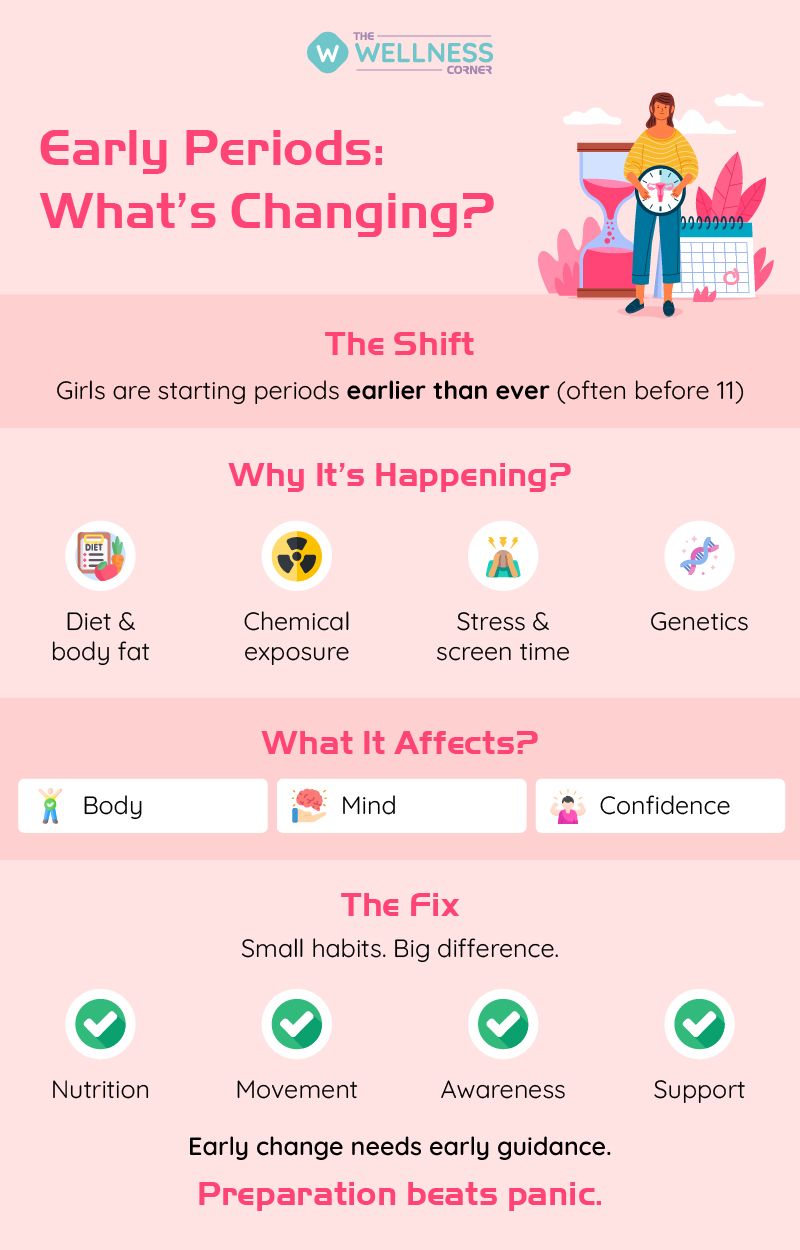
Not long ago, the average age for a girl’s first period, known as menarche, was around 12-13 years. Today, studies show that this age is gradually declining, with an increasing number of girls experiencing their first period even before the age of 11.
In fact, research comparing generations suggests that girls born in the 2000s are significantly more likely to experience very early menstruation than those born decades earlier.
This isn’t just a random occurrence. It reflects broader biological, environmental, and lifestyle changes shaping modern childhood.

The Role Of Body Weight And Nutrition
One of the most well-established factors behind early puberty is body weight.
Higher levels of body fat can influence hormone production, particularly estrogen, which plays a key role in triggering puberty. Fat tissue is not just passive storage; it actively releases hormones that can accelerate the body’s developmental clock.
Additionally, modern diets rich in processed foods, sugars, and sugary beverages may contribute to the onset of puberty at an earlier age. Some studies suggest that high sugar intake can affect insulin levels, which in turn influence sex hormones.
In simple terms, what children eat today may be nudging their bodies to mature faster.
Also Read: Are All Processed Foods Unhealthy?
Environmental Factors You Can’t Ignore
Beyond diet, environmental exposure is emerging as a significant contributor.
Certain chemicals, often called endocrine disruptors, are found in plastics, personal care products, and even household items. These substances can interfere with the body’s hormonal system and potentially trigger early puberty.
Research increasingly points toward these environmental exposures as part of the puzzle, though scientists are still working to fully understand their long-term impact.
Stress And Lifestyle Pressures
Modern childhood is very different from what it used to be.
Academic pressure, reduced outdoor play, increased screen time, and emotional stress may all influence hormonal changes. While the evidence is still evolving, some studies suggest that early-life stress and adverse experiences could contribute to earlier puberty.
It’s not just about physical health anymore. Emotional and psychological environments matter too.
Also Read - Stress And Your Periods: Understanding The Connection

Genetics And Socioeconomic Influences
Not all factors are within our control.
Genetics plays a role in determining when puberty begins. If a mother experienced early menstruation, her daughter might too.
Socioeconomic conditions also have an impact. Research shows that girls from disadvantaged backgrounds or certain ethnic groups may experience earlier puberty, potentially due to a combination of nutrition, stress, and environmental exposures.
Why Early Menstruation Has A Bigger Impact Than It Appears?
At first glance, early menstruation might seem like just a biological variation. But it carries deeper implications.
Physical Health Risks
Girls who experience early menarche may have a higher risk of certain long-term health conditions, including cardiovascular issues and breast cancer.
Emotional And Psychological Impact
Early-developing girls often feel out of sync with their peers, which can lead to anxiety, low self-esteem, and social challenges.
Behavioral Outcomes
Studies have linked early puberty with a higher likelihood of engaging in risky behaviors at a younger age.
This makes early awareness and support crucial for both parents and caregivers.
What Can Parents And Organizations Do?
While not all factors are controllable, there are practical steps that can make a meaningful difference.
Encourage Balanced Nutrition
Focus on whole foods, reduce processed sugar intake, and promote healthy eating habits early on.

Promote Physical Activity
Regular exercise helps regulate body weight and supports overall hormonal balance.
Limit Exposure To Harmful Chemicals
Opt for safer, non-toxic household and personal care products wherever possible.
Also Read - Why Immunity Is Struggling In 2025: Pollution, Stress & Urban Lifestyles
Foster Open Conversations
Create a safe space for girls to talk about their bodies without fear or embarrassment.
Prioritize Emotional Well-being
Stress management, quality sleep, and emotional support are just as important as physical health.
The Bigger Picture: It’s Not Just Biology
Early puberty is not caused by a single factor. It’s the result of a complex interaction between biology, environment, lifestyle, and society.
Understanding this helps us shift the conversation from panic to proactive care.
Because ultimately, the goal isn’t to “control” puberty, it’s to ensure that every girl is physically, emotionally, and mentally prepared for it.

FAQs: Quick Answers To Common Questions
1. What age is considered “early” for periods?
Typically, menstruation before age 12 is considered early, though it varies across individuals.
2. Is early puberty harmful?
Not always, but it can increase risks related to physical health and emotional well-being if not managed properly.
3. Can diet really affect puberty timing?
Yes, especially diets high in sugar and processed foods, which can influence hormone levels.
4. Should parents be concerned?
Concern isn’t the goal, awareness is. If periods begin very early (before age 8), consulting a doctor is recommended.
5. Can early puberty be prevented?
Not entirely, but healthy lifestyle choices can help reduce risk factors.
Final Thoughts: Supporting Girls Through Change
Early puberty is a growing reality, but it doesn’t have to be a confusing or overwhelming one.
With the right knowledge, supportive environments, and proactive care, we can help young girls navigate these changes with confidence and clarity.
Take The Next Step With The Wellness Corner
If you’re looking to build a healthier, more informed environment for your family or workplace, The Wellness Corner offers expert-backed guidance on nutrition, mental well-being, and preventive care.
Empower your people with the right tools to thrive, because wellness isn’t just personal, it’s organizational.
Leave a Comment

Sign-Up Now & Unlock
₹100 Cashback
Recently Published
Related Articles



Health Checks @ Home
Service
Explore



Follow us on:


© 2026 Truworth Health Technologies Pvt. Ltd.