Lack Of Love Can Shape How Someone Behaves, No Matter How Kindly They Are Treated.
3 days ago
5 minute read.

Not all wounds are visible. Some people carry emotional scars so subtle that even they struggle to recognize them. When someone grows up without consistent love, validation, or emotional support, it quietly shapes how they think, feel, and respond to others.
Psychologists refer to this as emotional neglect, where a person’s emotional needs are ignored or minimized during formative years. Over time, this can affect relationships, self-worth, and even how someone reacts to kindness.
If you’ve ever wondered why someone reacts that way despite your kindness, the reason might not be rooted in the present. It often lies in their past.
Let’s explore seven common behaviors people show when they’ve been deprived of love, even when you treat them well.
Also Read: Understanding Emotional Triggers And Healing Responses
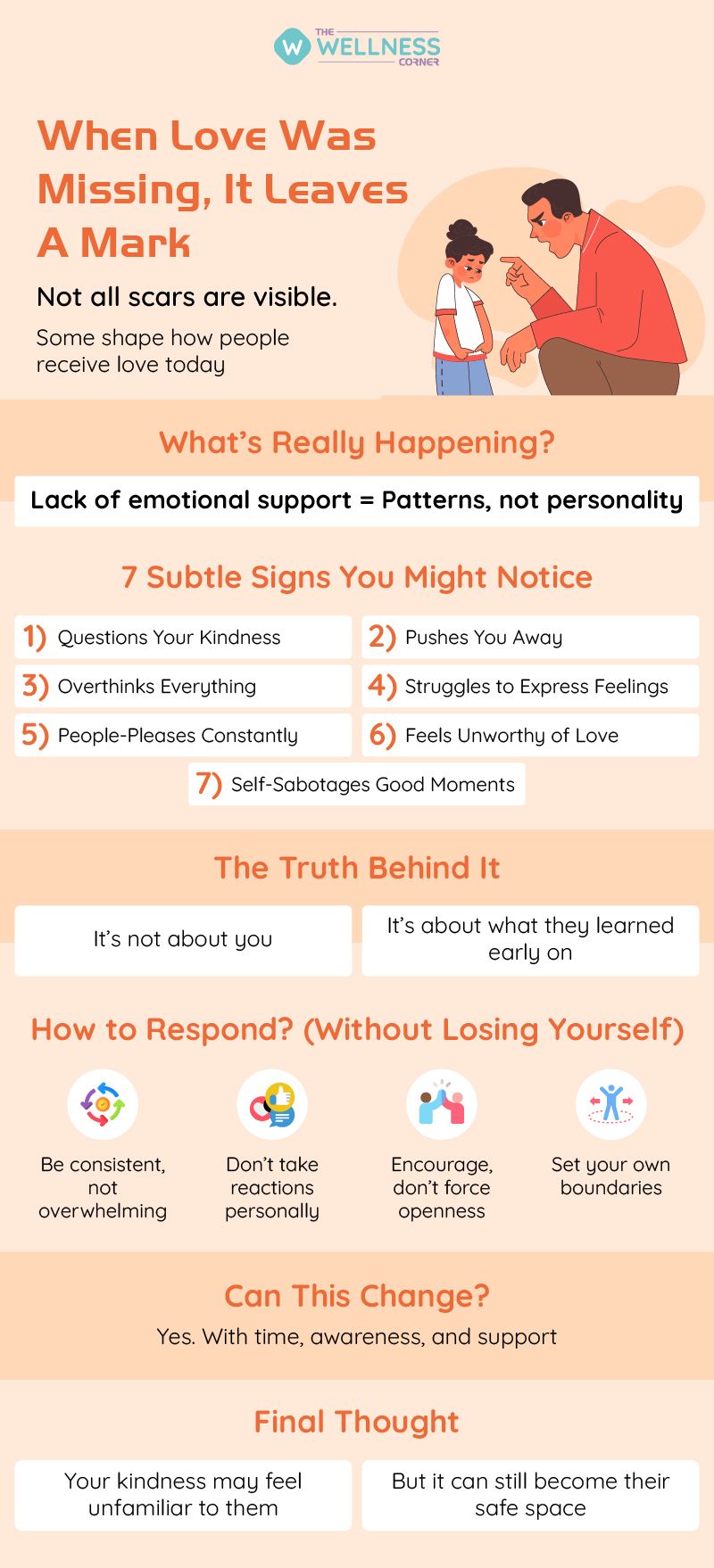
1. They Struggle To Trust Your Kindness
“What’s the catch?”
For someone who didn’t grow up feeling safe or valued, kindness can feel suspicious. Instead of accepting it, they may question your intentions.
This happens because emotional neglect often teaches people that support isn’t reliable. As adults, they may build emotional walls to protect themselves.
What It Looks Like?
- Doubting your motives
- Keeping emotional distance
- Expecting disappointment
Even genuine care can feel unfamiliar, and unfamiliar often feels unsafe.
2. They Push You Away Without Meaning To
“I want to feel close, yet it scares me at the same time.”
People deprived of love often crave closeness, but at the same time, they fear it. This creates a confusing push-pull dynamic.
They might withdraw, become cold, or create distance right when things start getting meaningful.
Why? Because deep down, they expect abandonment or rejection.
What It Looks Like?
- Ghosting or distancing suddenly
- Ending things prematurely
- Avoiding emotional conversations
It’s not that they don’t care. It’s that caring feels risky.
3. They Overthink Everything You Say
“Did I do something wrong?”
When someone hasn’t received consistent emotional validation, they often become hyper-aware of others’ behavior.
They analyze tone, words, and even silence.
Also Read: Japanese Techniques To Stop Overthinking
What It Looks Like?
- Reading too much into simple comments
- Assuming negative intent
- Constant reassurance seeking
This stems from low self-esteem and a deep fear of being “not enough.”

4. They Struggle To Express Their Feelings
“I don’t even know what I feel”
Emotional neglect doesn’t just suppress emotions, it disconnects people from them.
If someone was taught, directly or indirectly, that their feelings don’t matter, they may grow up unable to identify or express them.
What It Looks Like?
- Saying “I’m fine” when they’re not
- Avoiding emotional conversations
- Difficulty opening up
You might feel like you’re guessing what’s going on inside their mind.
5. They Put Everyone Else First
“If I’m useful, I’ll be loved”
People who lacked love often learn to earn it by pleasing others.
They may go out of their way to make you happy while ignoring their own needs.
What It Looks like?
- Saying yes to everything
- Avoiding conflict at all costs
- Neglecting self-care
This “people-pleasing” behavior can feel like kindness, but it often comes from a place of emotional survival.
Also Read - Yoga: An Act Of Self-Care

6. They Feel Unworthy Of Love
“Why would anyone truly care about me?”
One of the deepest effects of emotional neglect is low self-worth.
Even when you treat them with kindness, they may struggle to believe they deserve it.
What It Looks Like?
- Deflecting compliments
- Downplaying achievements
- Feeling like a burden
Many people in this situation carry a persistent belief that something is “wrong” with them, even if they can’t explain why.
7. They Self-Sabotage Good Relationships
“It’s safer if it ends now”
When love feels unfamiliar, it can also feel uncomfortable.
So when things are going well, they might unconsciously create problems or withdraw.
Also Read: 10 Signs You Are Not Ready For A Relationship
What It Looks Like?
- Picking unnecessary fights
- Creating distance during good moments
- Ending relationships before getting hurt
This is a protective mechanism. If they end things first, they avoid the pain they expect will come anyway.

Why Understanding This Holds Greater Importance Than You Think?
Recognizing these patterns can completely change how you approach relationships.
Instead of seeing someone as “difficult” or “confusing,” you begin to see the deeper story behind their behavior.
Emotional neglect is often described as an “invisible wound” because it’s about what didn’t happen, not what did.
And the good news?
These patterns are not permanent. With awareness, patience, and the right support, people can learn to trust, connect, and experience love in healthier ways.
How You Can Respond? (Without Losing Yourself)
If you’re dealing with someone like this, here are a few grounded ways to respond:
- Be consistent rather than intense
- Avoid taking their reactions personally
- Encourage open communication gently
- Set healthy boundaries for yourself
Remember, you can support someone, but you can’t heal them for them.
Final Thoughts: Kindness Is Still Powerful
Even if it doesn’t feel like it, your kindness matters.
For someone who’s been deprived of love, it may take time for them to accept it, trust it, and believe in it.
But sometimes, your patience and understanding can become the safe space they never had.
FAQs
1. Can someone heal from emotional neglect?
Yes. Healing is absolutely possible through self-awareness, therapy, and supportive relationships. It takes time, but change is achievable.
2. Why do people reject love even when they need it?
Because love feels unfamiliar and risky. Their past experiences may have taught them that emotional closeness leads to pain.
3. Is it my responsibility to fix them?
No. You can support and understand them, but healing is their personal journey.
4. How do I know if someone has been emotionally neglected?
Look for patterns like difficulty expressing emotions, fear of intimacy, low self-worth, and trust issues.
Take The First Step Toward Emotional Well-being
Understanding emotional patterns is powerful, but transforming them is life-changing.
If you or someone you care about resonates with this, it might be time to explore professional support and guided self-growth.
Discover expert-backed resources, mental wellness tools, and personalized support to help you build healthier relationships and a stronger emotional foundation.
Because everyone deserves to feel seen, valued, and loved.
Leave a Comment

Sign-Up Now & Unlock
₹100 Cashback
Recently Published
Related Articles



Health Checks @ Home
Service
Explore



Follow us on:


© 2026 Truworth Health Technologies Pvt. Ltd.