The Mental Load Of Leadership Nobody Prepares You For
14 hours ago
4 minute read.

Leadership is often seen as a position of authority, influence, and success. From the outside, it appears to be control, clarity, and confidence. What is rarely talked about is the invisible weight that comes with it. The mental load of leadership is real, constant, and often underestimated.
No one truly prepares you for the silent pressure of being the person everyone looks to for answers, direction, and stability.
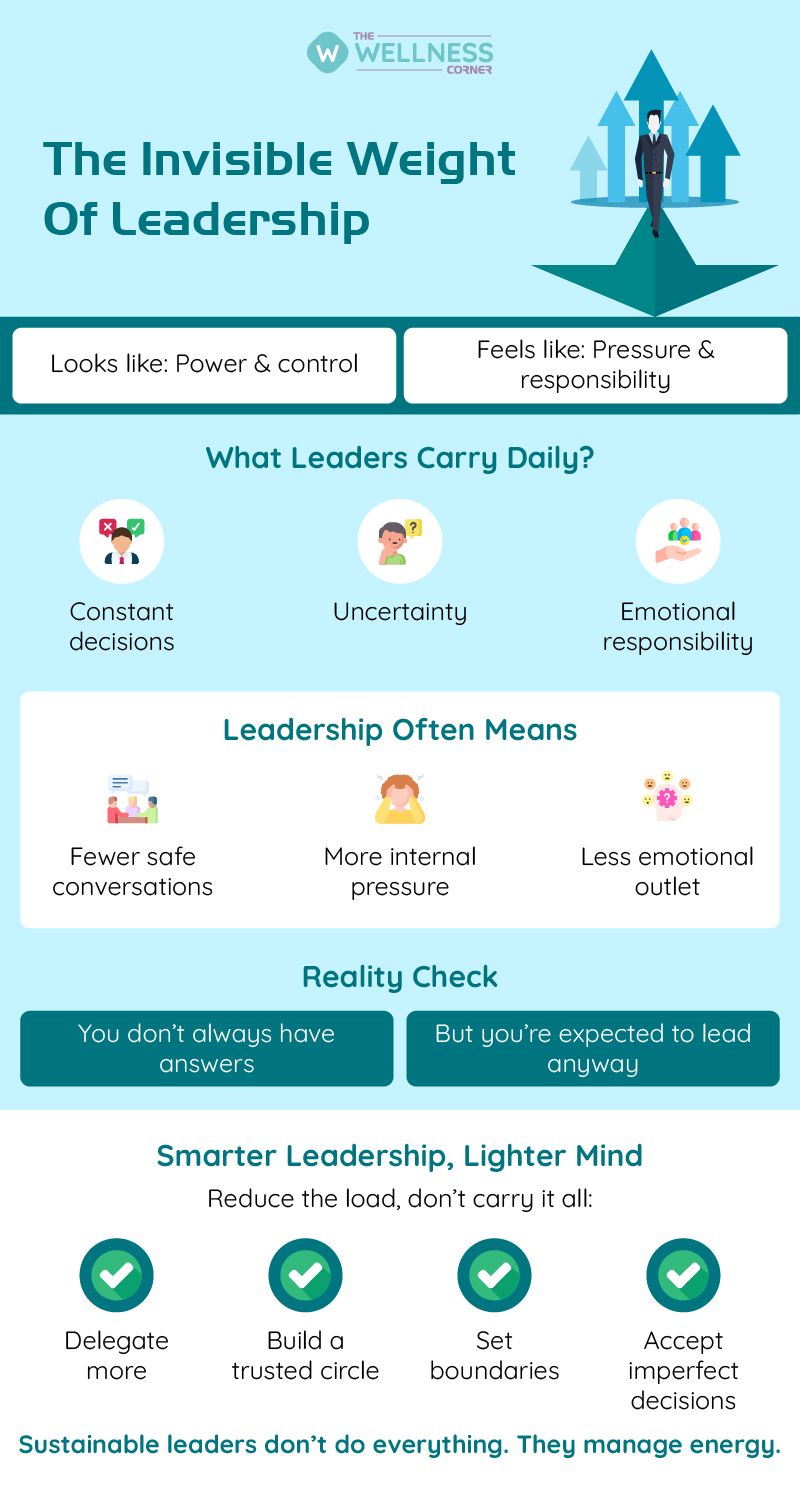
The Hidden Side Of Leadership
When people step into leadership roles, they expect to take on responsibility. What they don’t anticipate is the mental strain that follows.
Leadership is not just about making decisions. It is about carrying uncertainty, managing expectations, and staying composed even when things are falling apart behind the scenes.
You are expected to:
- Stay calm during crises.
- Make decisions with incomplete information.
- Balance business goals with human emotions
- Absorb pressure from all directions without passing it on.
This constant mental juggling creates a load that is rarely visible but always present.
Decision Fatigue Is Real
One of the biggest contributors to the mental load is decision fatigue.
Leaders make hundreds of decisions every week. Some are small, but many carry long-term consequences. Over time, this constant decision-making drains mental energy.
Even simple choices start to feel exhausting. The pressure to “get it right” adds another layer of stress, especially when outcomes affect teams, clients, or the future of the organisation.
In reality, leadership is about choosing the most practical and informed option, rather than waiting for a flawless solution.
The Loneliness At The Top
Leadership can be isolating.
As you move higher, the number of people you can openly talk to becomes smaller. You cannot always share your doubts with your team, and peers may be competitors rather than confidants.
This creates a sense of emotional distance. You are surrounded by people, yet often feel alone with your thoughts.
The mental load increases when you have to process stress internally while still showing confidence externally.

The Pressure To Always Have Answers
Leaders are expected to have clarity, even when situations are unclear.
Team members look for direction. Clients expect reassurance. Stakeholders demand confidence. In reality, leaders are often figuring things out in real time.
This gap between expectation and reality creates pressure. You may not have all the answers, but you are still expected to lead as if you do.
Over time, this can lead to self-doubt, even in highly capable individuals.
Emotional Responsibility For Others
Leadership is not just about strategy. It is deeply human.
You are responsible for people’s careers, growth, and sometimes even their livelihoods. Their motivation, morale, and mental well-being are influenced by your decisions and behaviour.
This emotional responsibility adds weight to every action:
- Delivering tough feedback
- Handling conflicts
- Supporting struggling team members
- Making decisions that impact jobs
It is not just about outcomes. It is about how those outcomes affect people.
Must Check: Emotional Intelligence In Leadership - Why Is It Important?
The Constant Need To Perform
There is an unspoken expectation that leaders must always be “on.”
You are expected to:
- Show up with energy
- Stay focused
- Remain composed under pressure.
Even on difficult days, you cannot fully step back. The role demands consistency, regardless of personal challenges.
This constant performance can be mentally draining, especially when there is little space to pause and reset.
Fear Of Making The Wrong Call
Every leader carries the fear of making a decision that could go wrong.
This fear is not always visible, but it influences thinking and behavior. It can slow down decisions or create internal stress, especially in high-stakes situations.
The mental load comes from knowing that:
- Not deciding is also a decision.
- Every choice has consequences.
- You will be accountable for the outcome.
Learning to live with this uncertainty is one of the hardest parts of leadership.
Why No One Talks About It?
The mental load of leadership is rarely discussed openly.
Many leaders feel they need to maintain a strong image. Admitting stress or uncertainty can feel like weakness, especially in competitive environments.
As a result, the challenges stay unspoken, and new leaders walk into roles unprepared for the psychological demands.
Also Read: 10 Anxiety Hacks Therapists Swear By
Managing The Mental Load Of Leadership
While the pressure cannot be eliminated, it can be managed.
- Build A Trusted Circle: Having a few people you can speak to honestly makes a huge difference. This could be mentors, peers, or advisors who understand the challenges of leadership.
- Delegate With Trust: Not every decision needs to rest on your shoulders. Empowering your team reduces mental overload and builds stronger leaders around you.
- Accept Imperfection: No leader gets every decision right. Accepting this reduces the pressure to be perfect and allows you to focus on progress.
- Create Mental Boundaries: Constant availability leads to burnout. Setting clear boundaries between work and personal time helps maintain long-term effectiveness.
- Prioritize Reflection: Taking time to think, reflect, and step back helps you make better decisions and regain clarity.
Final Thoughts
Leadership is not just about leading others. It is about managing yourself under pressure.
The mental load is part of the role, but it does not have to overwhelm you. Recognising it is the first step. Managing it is what separates sustainable leaders from those who burn out.
The truth is, leadership is not heavy because of the responsibility alone. It is heavy because of the silence around what it truly demands.
FAQs
1) What is the mental load of leadership?
It refers to the ongoing psychological pressure leaders carry, including decision-making, responsibility for others, and constant performance expectations.
2) Why does leadership feel overwhelming at times?
Because leaders deal with uncertainty, high-stakes decisions, and emotional responsibility, often without having a space to express their own challenges.
3) How can leaders reduce stress?
By delegating tasks, building a support system, setting boundaries, and accepting that not every decision will be perfect.
4) Is feeling stressed as a leader normal?
Yes, it is completely normal. Leadership involves responsibility and pressure, and managing stress is part of the role.
5) Can leadership burnout be avoided?
It can be reduced by maintaining balance, prioritizing mental well-being, and creating systems that share responsibility instead of carrying everything alone.
Leave a Comment

Sign-Up Now & Unlock
₹100 Cashback
Recently Published
Related Articles


Health Checks @ Home
Service
Explore



Follow us on:


© 2026 Truworth Health Technologies Pvt. Ltd.