Take Care Of Yourself During Family Arguments: 5 Tips
1 day ago
6 minute read.

Family is where we feel the deepest love, but it is also where emotions can run the highest. A simple disagreement can quickly turn into raised voices, hurt feelings, and lingering tension. Whether it is a difference of opinion, generational gaps, financial stress, or unresolved past issues, family arguments are almost unavoidable.
What often gets overlooked is the emotional toll these conflicts take on your mental and physical well being. Stress hormones rise, sleep gets disturbed, digestion suffers, and your mood can remain low long after the argument ends. Learning how to protect your peace during such moments is not selfish. It is essential self care.
This article explores five practical and compassionate ways to look after yourself during family arguments so you can stay grounded, communicate wisely, and recover faster. If you are looking for professional emotional wellness support, personalized counseling, or holistic mental health guidance, explore trusted services at The Wellness Corner.
Also Read: Coping Up With Long Distance Family Relationships
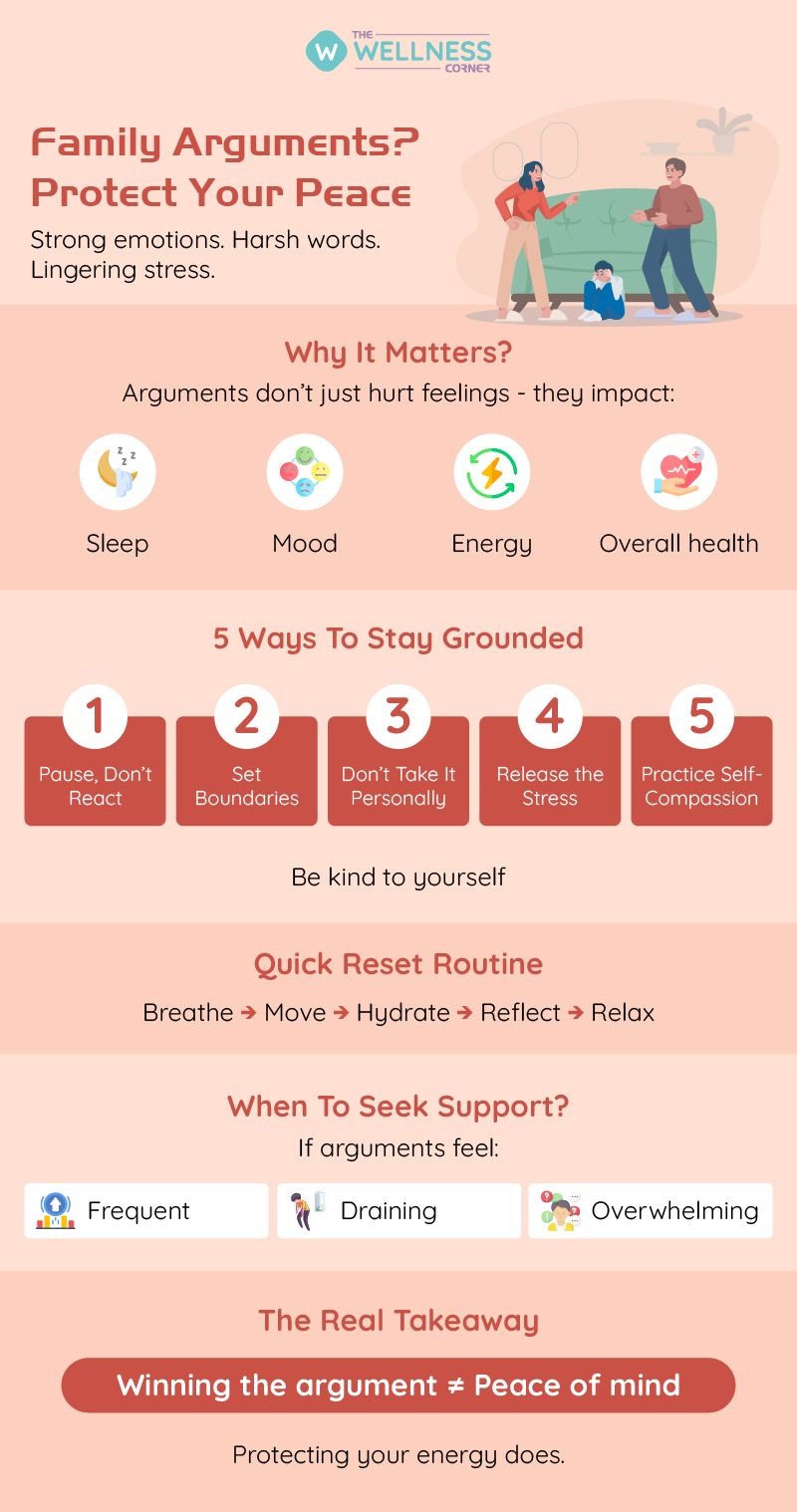
1. Pause Before You React: The Power Of Emotional Breathing
When an argument starts heating up, your nervous system switches into survival mode. Your heart rate increases, your breathing becomes shallow, and rational thinking takes a back seat. This is why people often say things they later regret.
The most powerful tool in this moment is a pause.
Take three to five slow, deep breaths. Inhale through your nose, hold briefly, and exhale slowly through your mouth. This simple act signals your brain to calm down and re-engage your logical thinking.
A pause does not mean you are avoiding the conversation. It means you are choosing to respond thoughtfully instead of reacting impulsively. Even a few seconds of conscious breathing can change the tone of the entire conversation.
If the situation feels overwhelming, politely excuse yourself for a short break. A walk, a glass of water, or stepping into another room gives your emotions space to settle before continuing the discussion.

2. Protect Your Boundaries Without Guilt
Family relationships often blur boundaries. Because of emotional closeness, people may feel entitled to comment on your choices, lifestyle, career, or personal decisions. During arguments, these boundaries get pushed even further.
Healthy boundaries are not walls. They are guidelines for respectful interaction.
If a conversation becomes hurtful, disrespectful, or repetitive, it is okay to say, “I need to step away from this conversation for now,” or “Let us talk after we both calm down.” It is not your responsibility to manage the emotions of others, while undermining your own mental health.
Boundaries also include knowing when not to engage in topics that consistently trigger conflict. Choosing peace over winning an argument is a sign of emotional maturity, not weakness.
Also Read - Mental Health First Aid: Why It Should Be As Common As CPR?
3. Don’t Personalize Every Word
During emotionally charged moments, people often speak from frustration rather than logic. Harsh words may reflect their stress, fear, or unresolved pain rather than your actual behavior or character.
Learning not to internalize every statement protects your self esteem and emotional stability.
Instead of thinking, “They are attacking me,” try reframing it as, “They are expressing their own emotional discomfort.” This mindset reduces emotional reactivity and prevents unnecessary self blame.
You can acknowledge feelings without accepting disrespect. Listening does not mean agreeing. Emotional intelligence allows you to separate facts from emotional noise.

4. Release The Stress From Your Body
Arguments do not just affect the mind. They create physical tension in the body. Shoulders tighten, jaw clenches, digestion slows, and fatigue increases.
After a heated discussion, prioritize physical stress release.
Gentle movement such as stretching, walking, yoga, or light exercise helps regulate stress hormones. Warm showers relax tense muscles. Calming music can help soothe the nervous system.
Hydration is equally important. Stress dehydrates the body and worsens fatigue and headaches. Drinking water supports faster recovery.
Sleep quality may get disrupted after emotional conflicts. Try calming bedtime routines such as journaling, breathing exercises, or screen reduction to help the body reset.
Your body processes emotional stress just like physical stress. Supporting it speeds up emotional recovery.
5. Give Yourself Emotional Validation And Compassion
Many people invalidate their own feelings during family conflicts. They tell themselves they should not feel upset because it is family or that they are being overly sensitive. This self criticism intensifies emotional pain.
If you are having feelings, they are valid.
Allow yourself to acknowledge sadness, anger, disappointment, or confusion without judgment. Talking to a trusted friend, writing in a journal, or speaking with a counselor can provide clarity and emotional release.
The meaning of self-compassion is to treat yourself with the same kindness you would offer someone you love. Emotional healing begins when you stop fighting your own feelings.
If family conflicts are recurring or deeply distressing, professional support can help you build emotional resilience, communication skills, and healthier coping strategies.
Also Read: How To Be Less Judgmental This Year?

Why Self-Care During Conflict Protects Long-Term Health?
Chronic emotional stress impacts immunity, heart health, digestion, sleep, and mental clarity. When arguments become frequent or unresolved, they slowly erode overall well being.
By practicing emotional regulation, setting boundaries, and prioritizing recovery, you prevent stress from becoming a long term health burden.
Healthy relationships grow when individuals take responsibility for their emotional health first.
How To Create A Personal Conflict Care Routine?
Developing a simple post conflict routine strengthens emotional resilience.
Start with a calming activity such as deep breathing or walking. Follow with hydration and a nourishing meal. Spend a few minutes reflecting on what you learned rather than replaying the argument. End with something that brings joy or relaxation.
This routine trains your nervous system to recover faster after emotional stress.

When Professional Support Makes A Difference?
Some family dynamics involve long standing patterns, unresolved trauma, or communication breakdowns that self care alone cannot fully resolve. In such cases, speaking with trained mental health professionals offers valuable tools and perspective.
Therapy supports emotional awareness, boundary setting, stress management, and conflict resolution skills that improve both personal well being and relationship quality.
Your Well-Being Comes First
Family arguments are part of life, but emotional exhaustion does not have to be. Looking after yourself during conflict is not selfish. It is responsible self-leadership.
When you stay calm, protect your boundaries, manage emotional reactions, release stress physically, and practice self-compassion, you protect both your peace and your health.
Reconnect With Balance At The Wellness Corner
If you are navigating emotional stress, relationship challenges, or mental fatigue, expert guidance can make a meaningful difference. The Wellness Corner offers holistic wellness programs, emotional health support, and personalized care designed to help you build resilience and inner balance.
Your peace matters. And it deserves your protection every single day.
Frequently Asked Questions (FAQs)
1. How can I stay calm during a family argument?
Taking a pause and focusing on slow, deep breathing can help you manage your emotional response and stay grounded.
2. Is it okay to walk away from an argument?
Yes, stepping away from a heated conversation can help prevent escalation and give everyone time to cool down.
3. How do I set boundaries without hurting my family?
Communicate your limits calmly and respectfully, focusing on your needs rather than blaming others.
4. Why do family arguments feel more intense than others?
Family relationships are deeply emotional, so disagreements often carry more personal weight and history.
5. When should I seek professional help for family conflicts?
If conflicts are frequent, emotionally draining, or affecting your mental health, seeking support from a professional can be helpful.
Leave a Comment

Sign-Up Now & Unlock
₹100 Cashback
Recently Published
Related Articles


Health Checks @ Home
Service
Explore



Follow us on:


© 2026 Truworth Health Technologies Pvt. Ltd.