The Office Parent: Are You Taking Care Of Everyone But Yourself?
6 hours ago
5 minute read.

There’s always that one person in every office. The one who remembers everyone’s birthdays. Who notices when someone’s unusually quiet. Who steps in when things go south, even if it’s not in their job description. Who has tissues, snacks, advice, and a comforting “you’ve got this” ready at all times.
If this sounds like you, you might be the Office Parent, the unofficial emotional support system of your workplace.
But here’s the problem: While you’re busy taking care of everyone else, who’s taking care of you?
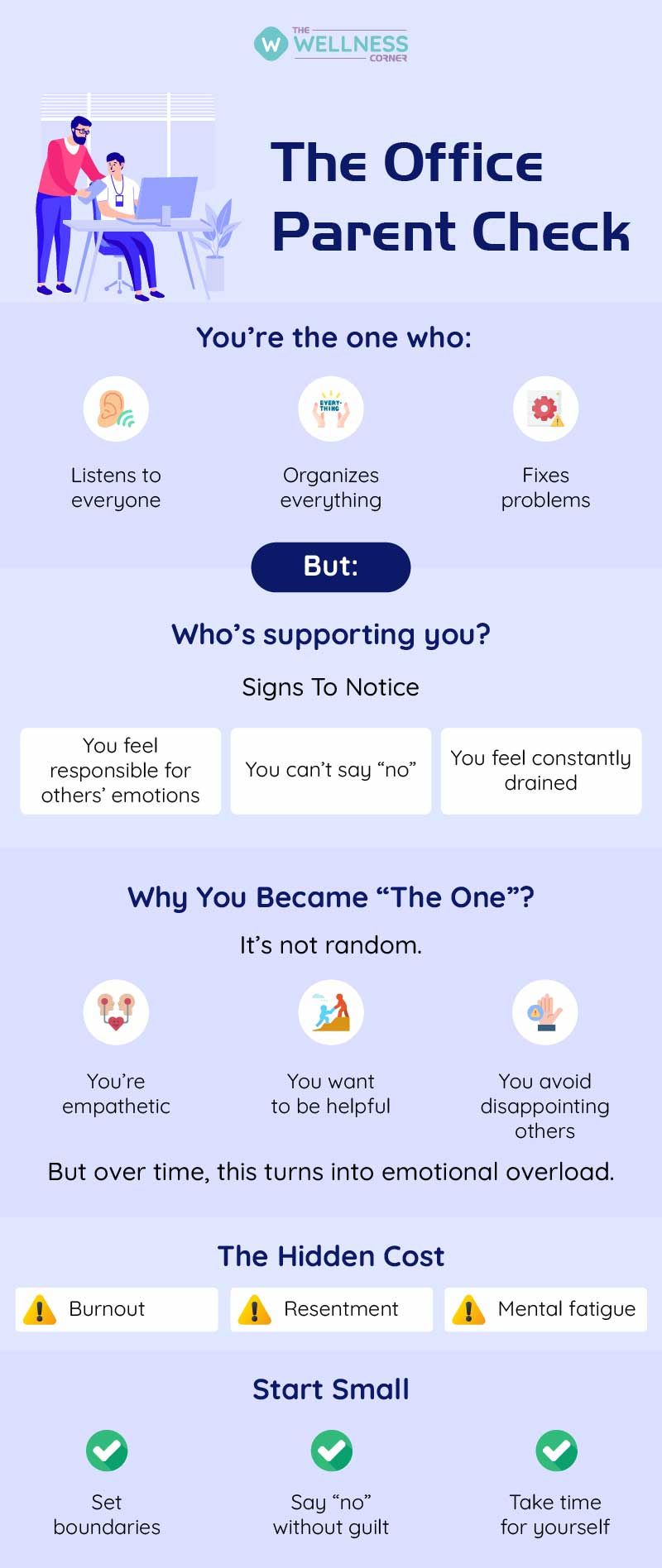
What Does It Mean To Be The Office Parent?
Being the “office parent” isn’t about age or title. It’s about being the nurturer. The glue that keeps everyone from falling apart when stress peaks. You’re the one people vent to, lean on, and run to in crisis mode. While others stick to job roles, you carry invisible responsibilities: peacemaker, problem-solver, team cheerleader, and sometimes even the group therapist.
You’re praised for being “so reliable,” “always there,” and “such a team player.” But beneath that praise can lie emotional exhaustion, burnout, and neglected self-care.
Also Read: Psychology-Backed Ways To Deal With People Who Stress You Out
Signs You're The Office Parent (And Might Be Overdoing It)
Here are a few signs you may be taking on more than you should:
- You check in on others’ workloads but haven’t thought about your own.
- You’re always the one organizing team lunches or office celebrations, without being asked.
- You’re the “safe space” for colleagues to cry, vent, or complain.
- You feel responsible for how others feel at work.
- You feel guilty for setting boundaries.
- You prioritize harmony over your own needs or opinions.
- You're constantly mentally and emotionally drained, but can't figure out why.
Sound familiar? You might be pouring your energy into everyone else's cup, leaving yours bone dry.
Also Read: The Art Of Self Nurture

Why Do We Become The Office Parent?
This role is rarely assigned. Most people grow into it because of their personality, upbringing, or past work experiences.
1. Empathy Is Your Superpower (And Your kryptonite)
You’re tuned in to people’s emotions. You notice the sighs, the silence, the stress. You care deeply, and that’s beautiful-but it can become a burden when you don’t have limits.
2. You’ve Learned To Associate Worth With Helpfulness
Somewhere along the way, you started believing that being useful equals being valuable. So you take on more, fix problems, and try to be everything for everyone-even when it costs you.
3. You Fear Being Seen As Selfish Or Unkind
Saying “no” or prioritizing yourself feels like you're letting people down. But in trying to please everyone, you often abandon yourself.
4. The Workplace Culture Enables It
In some workplaces, emotional labor is invisible but expected. You might not be officially in charge of people’s well-being, but you’re subtly relied on for it. And the longer you do it, the more it becomes your role by default.

The Emotional Cost Of Being The Caregiver At Work
On the outside, it looks like you have it all together. But on the inside, being the office caregiver can come with real consequences:
Burnout
Caring constantly for others, especially in high-stress environments, can wear you down emotionally, mentally, and even physically. You might start feeling numb, irritable, or detached.
Resentment
As others depend on you more and more, you may begin to feel taken for granted. Especially if your own work, ideas, or boundaries go unnoticed.
Neglecting Your Goals
You spend so much time making others feel seen and supported that your own career ambitions take a back seat. You’re so busy helping others climb that you forget to climb yourself.
Emotional Drain
You absorb everyone else’s stress, anger, anxiety, and trauma-without releasing your own. Over time, this leads to compassion fatigue.

How To Care For Others Without Abandoning Yourself?
You don’t have to stop being kind. But you do need to balance your giving nature with self-preservation. Here’s how:
1. Create Emotional Boundaries
Start by realizing: You are not responsible for managing everyone’s feelings.
Yes, be supportive-but don’t absorb. Practice phrases like:
"I really want to be there for you, but I'm exhausted right now." Can we discuss this later?"
or
“I can listen, but I don’t think I can give advice right now.”
Boundaries aren't walls, they’re fences with gates you control.
2. Say “No” Without Apologizing
You are allowed to decline. You don’t have to justify why.
"I'd love to help, but I can't take this on right now."
When you say "yes" to something you don't want or can't handle, you're actually saying "no" to yourself.
Also Read: Is Your Brain Wired For Guilt? How To Break Free From Over-Apologizing?
3. Reclaim Your Time And Energy
Block out time in your day for you. Whether it’s a walk, lunch alone, or an uninterrupted hour of deep work-treat it as non-negotiable. You wouldn’t cancel a meeting with your boss, so don’t cancel meetings with yourself.
4. Share The Load
Encourage collective responsibility. Instead of being the only one checking in on a teammate, ask the group,
“Can someone else help X with this?” Empower others to step up.

5. Advocate For Your Contributions
Be vocal about your achievements. Don’t let your emotional labor overshadow your actual work. Make sure you’re not just seen as “helpful,” but also as competent, strategic, and capable.
6. Get Support Yourself
Even office parents need a parent. Speak with a mentor, therapist, or trustworthy friend. Don’t suffer in silence. You’re allowed to be vulnerable too.
So the next time you’re checking in on everyone else, ask:
“How am I doing today?”
Because if no one’s asked you that in a while, let this blog be your gentle reminder:
You matter. Your needs matter. Your rest, boundaries, and joy matter.
Frequently Asked Questions (FAQs)
1. What does it mean to be the “Office Parent”?
It refers to someone who naturally takes on a caregiving or supportive role at work - emotionally supporting colleagues, resolving conflicts, and looking out for everyone’s well-being, often beyond their actual job responsibilities.
2. Is being the Office Parent a bad thing?
Not at all. Being empathetic and supportive is a valuable trait. However, it can become unhealthy if it leads to burnout, emotional exhaustion, or neglecting your own needs.
3. How can I set boundaries at work without feeling guilty?
Start small by politely declining extra responsibilities and being honest about your capacity. Remember, setting boundaries is about protecting your energy, not rejecting others.
4. What are signs that I’m emotionally overextended at work?
Constant fatigue, irritability, feeling overwhelmed, difficulty focusing, and resentment toward colleagues can all be signs that you’re taking on too much emotional responsibility.
5. Should I seek professional help if I feel burned out?
Yes. If you’re feeling consistently drained or overwhelmed, speaking with a therapist or counselor can help you develop healthier coping strategies and restore balance.
Leave a Comment

Sign-Up Now & Unlock
₹100 Cashback
Recently Published
Related Articles




Health Checks @ Home
Service
Explore



Follow us on:


© 2026 Truworth Health Technologies Pvt. Ltd.